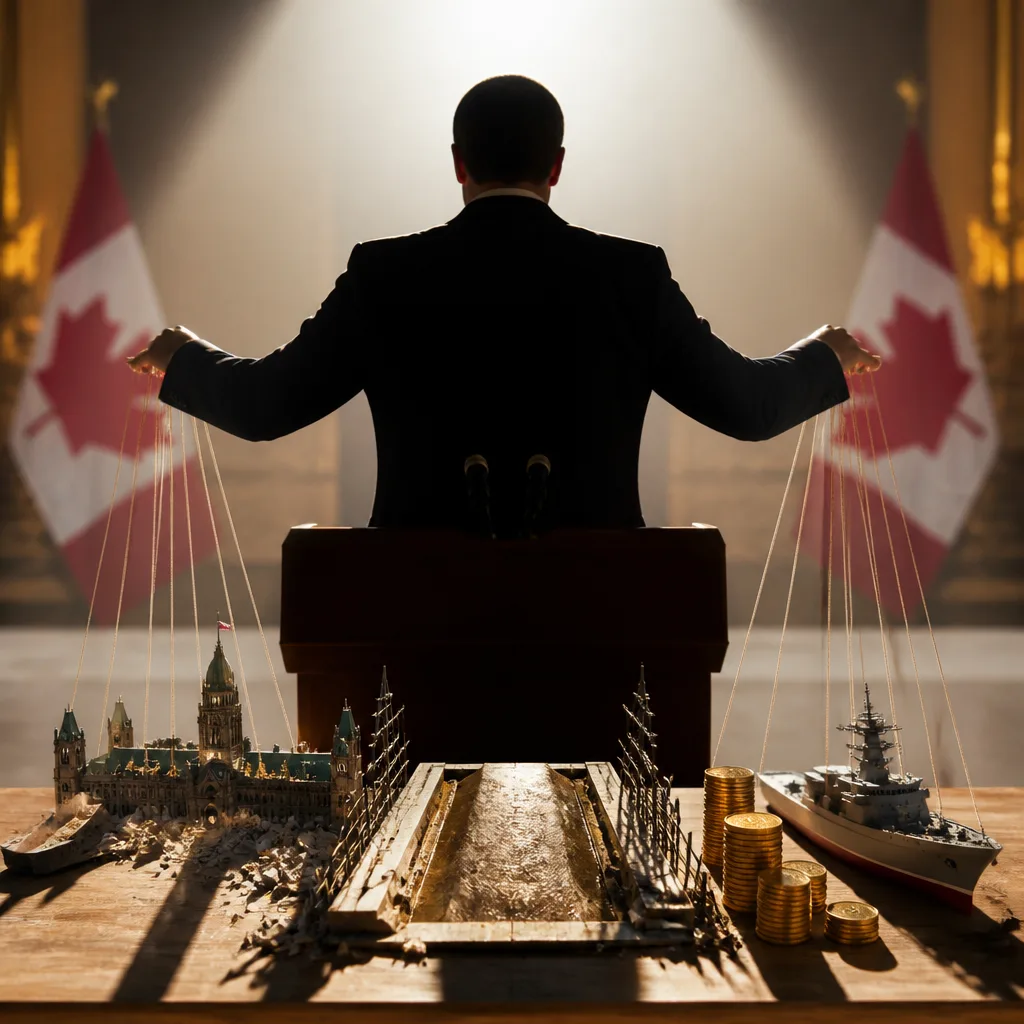
President Donald Trump has embraced a political posture that observers say places him at the centre of action while distancing him from blame when things go wrong. The approach, visible across policy debates from the economy to high‑profile infrastructure failures and foreign policy crises, raises questions about accountability in a presidency heading into consequential U.S. midterm elections.
Pattern of deflection
Political analysts and historians point to a recurring pattern: Mr. Trump claims credit for achievements but often attributes responsibility for problems to predecessors, opponents or outside events. The Fortune analysis cites several recent examples:
- Economic complaints, including concerns about persistent inflation and a slowing economy, are attributed by Mr. Trump to the policies of his predecessor, despite that president having left office more than a year earlier.
- The botched renovation of the Lincoln Memorial Reflecting Pool has been blamed on vandalism by the White House, even though a prosecutor appointed during Mr. Trump’s tenure concluded the damage stemmed from poor workmanship.
- Escalating tensions and a widening war in Iran — which have helped keep oil prices elevated and depressed Mr. Trump’s approval numbers — have been framed by the president as the product of long‑running failures of earlier administrations to counter Tehran’s ambitions.
Accountability and electoral stakes
Experts warn the rhetorical strategy carries political risks. When leaders refuse to acknowledge errors or to accept responsibility, voters seeking reassurance that problems will be solved can be left uncertain. That dynamic is especially relevant as Republicans work to maintain control of Congress in the midterms.
"Taking responsibility being a characteristic of presidential leadership — or any kind of leadership — is absolutely true,"
said Nicole Anslover, a historian at Florida Atlantic University and author of a book on President Harry S. Truman. Her remark, cited in Fortune, highlights a long‑standing expectation that national leaders at least partly accept responsibility for failures as a hallmark of governance.
How allies and critics respond
Administration supporters argue the president is correcting long‑standing difficulties left unresolved by previous administrations, portraying his posture as active problem‑solving rather than evasion. Critics counter that deflecting blame undermines confidence in presidential stewardship and complicates co‑ordination with Congress, state authorities and international partners when complex challenges arise.
Observers note the tactic is not unique to Mr. Trump; modern presidents often shift responsibility to others, including predecessors and Congress. What sets the current approach apart, they say, is the scale and consistency with which blame is redirected and the extent to which the president publicly denies the existence of certain problems.
Consequences beyond messaging
The consequences extend beyond political rhetoric. Refusing to acknowledge managerial or policy failures can hinder efforts to marshal resources, hold contractors or agencies to account, and reassure markets and allies. The Lincoln Memorial episode — where a prosecutor concluded shoddy workmanship explained the damage — illustrates how technical findings can be sidelined in public debate, complicating efforts to assign responsibility and implement corrective steps.
| Area cited | Administration stance | Reported finding |
|---|---|---|
| Economy and inflation | Blamed on predecessor | Complaints about weak indicators persist |
| Lincoln Memorial Reflecting Pool | Blamed on vandalism | Prosecutor: damage due to poor workmanship |
| Iran conflict and oil prices | Framed as long‑term failure of earlier presidents | Escalation linked to higher oil prices, lower approval |
For voters and lawmakers, the central question is whether a presidency that asserts command but resists responsibility can still offer credible management of policy risks — from domestic economic pain to volatile foreign conflicts. The answer will be tested not only in campaign rhetoric but in how the administration handles the next crisis that demands a candid assessment and an accountable response.
As the midterms approach, Republicans will weigh whether Mr. Trump’s approach energises the base and shields candidates, or whether it leaves them exposed to voter doubts about competence and accountability. The debate matters for Canadians and the international community, too: consistent U.S. leadership depends as much on ownership of problems as it does on the decisions taken to solve them.