The Storage Networking Industry Association (SNIA) has launched a provisional community aimed at protecting digital records over the long term, bringing together vendors, preservation organisations and researchers to create interoperable methods for keeping data accessible as technology changes.
Why it matters
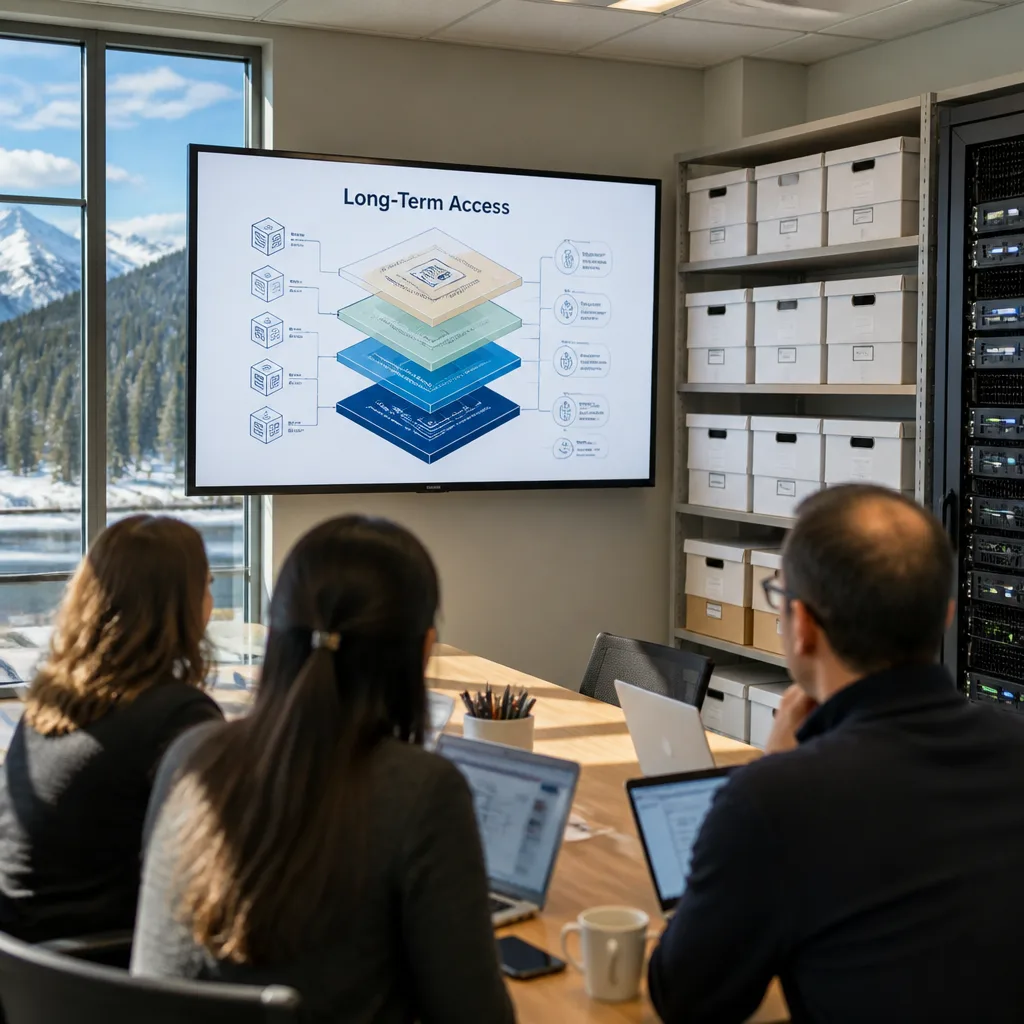
Organisers say the new Long-term Access, Storage & Technology Community will develop a resilient technical framework, reference architecture and shared vocabulary to help organisations retain access to digital files as hardware, software and file formats evolve. The effort is explicitly framed as a response to concerns that, without coordinated action, valuable digital records could be lost — a scenario often described as a “digital dark age.”
The group’s founding participants include storage and preservation firms, academic and research institutions, and individual stakeholders with long-standing roles in internet and archive infrastructure. Among the initial members named are Biomemory, Cerabyte, CERN, Lyrasis, SPhotonix, Versity Software, Western Digital, Vint Cerf and Coughlin Associates, Inc. SNIA said earlier, staff from the Library of Congress took part in pre-community discussions.
| Founding members |
|---|
| Biomemory |
| Cerabyte |
| CERN |
| Lyrasis |
| SPhotonix |
| Versity Software |
| Vint Cerf |
| Western Digital |
| Coughlin Associates, Inc. |
Goals and next steps
SNIA intends the new community to produce practical, technical deliverables that could eventually be formalised by an external standards body. The announcement specifically cites the possibility of working toward an IEEE standard, using the community’s output as groundwork for a formal specification. The stated objectives include codifying terminology and reference architectures that would make it easier for vendors and institutions to interoperate in long-term storage solutions.
- Define a common vocabulary around long-term data preservation and access.
- Develop a reference architecture and framework for resilient digital storage over extended timeframes.
- Lay technical groundwork that could be taken forward into formal standards processes.
Context from SNIA’s past work
This initiative builds on SNIA’s earlier preservation and archive activities. The association pursued integrated approaches for managing fixed-content data in the mid-2000s, and related efforts around online, power-efficient active archives began in the following decade. The new community represents a renewed focus on long-term access as storage media, formats and supporting software continue to advance rapidly.
Participants say the pace of innovation in storage technology is one of the central technical challenges: solutions and formats that are commonplace today may not be supported — or even readable — in future decades. That prospect increases the stakes for libraries, archives, research organisations and enterprises that hold records they are legally or culturally required to retain.
Implications for governments, archives and industry
For national institutions and cultural organisations, the lack of interoperable standards can mean higher costs, duplicated effort and uncertainty about whether preserved data will remain usable. A commonly accepted technical framework could reduce vendor lock-in, improve migration planning and make it easier to certify long-term access strategies.
For the technology industry, the community’s work could steer product design decisions and interoperability commitments. If the community’s outputs are accepted and later formalised by a standards body, vendors may face pressure to adopt specific interfaces or metadata practices to remain compatible with archival requirements.
SNIA’s new Long-term Access, Storage & Technology Community marks a coordinated attempt — spanning private companies, established research organisations and preservation specialists — to move the conversation from conceptual concern to technical solutions. The group has signalled an intention to produce usable resources that other standards bodies or industry groups might formalise in future work.