South Korea unveiled a comprehensive technology strategy on Aug. 12 that sets hard milestones across seven priority sectors as it seeks new engines of growth beyond semiconductor manufacturing and artificial intelligence. The plan, dubbed “Seven Major SEED,” was announced at the Blue House in a meeting chaired by President Lee Jae Myung.
Seven strategic areas, measurable targets
The roadmap covers nuclear energy, nuclear fusion, renewable energy, quantum development, space and aviation, biotechnology, and critical minerals and materials. The government attached concrete timelines to several high‑profile goals, signalling an outcome‑oriented approach rather than a broad research agenda.
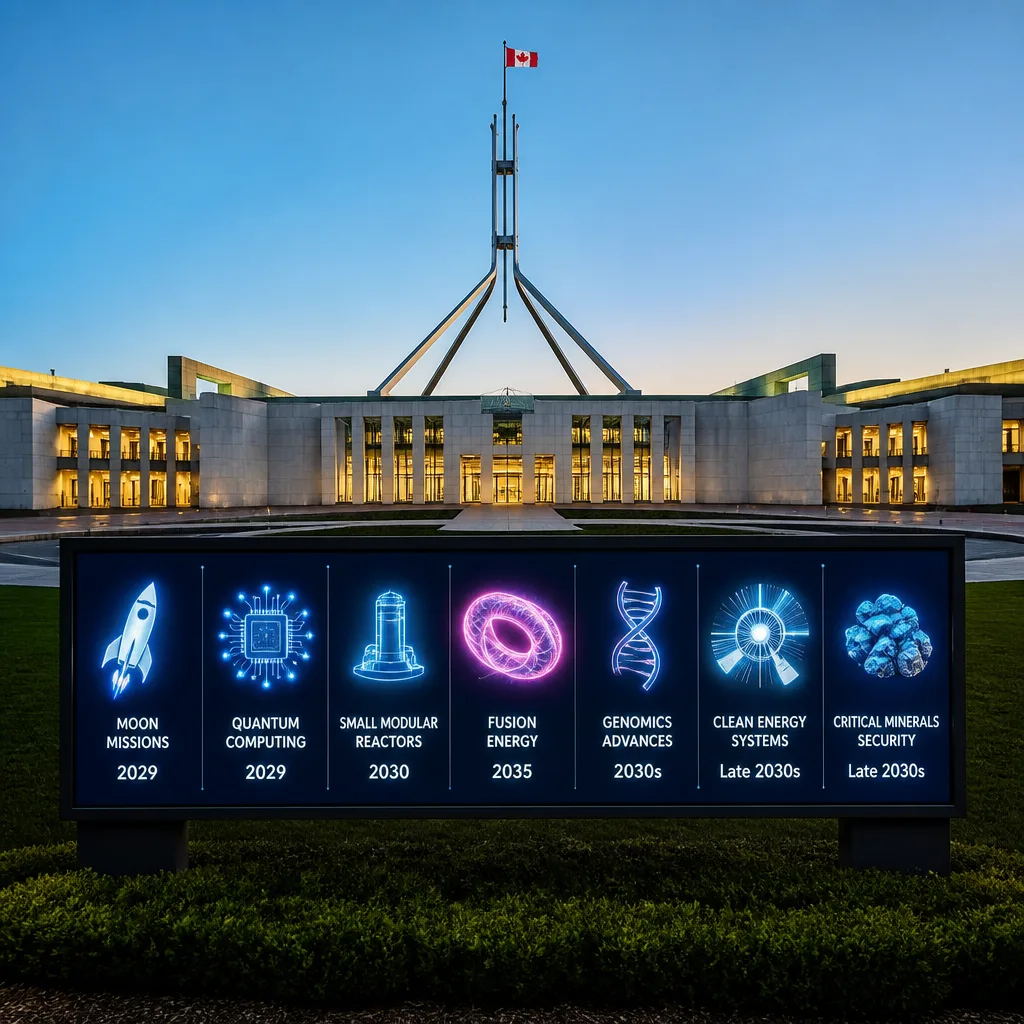
Among the publicly stated milestones are:
- Commercial deployment of a domestically developed small modular reactor (SMR) by 2035.
- Construction of non‑light‑water reactor designs beginning in the 2030s.
- Initial electricity generation from nuclear fusion in the late 2030s.
- A South Korean Moon landing in 2030.
- A domestic 100‑qubit quantum processor with error correction by 2029, and ambitions to be a global leader in quantum chip manufacturing by 2035.
- Commercial products based on brain‑computer interfaces (BCI) by 2035.
“The seven SEED projects we are discussing today will become drivers of next‑generation growth and key strategic national assets.” – President Lee Jae Myung
Practical implications and industrial strategy
The initiative signals a deliberate effort to broaden South Korea’s technology base. For decades the country has relied heavily on semiconductors and consumer electronics for export‑led growth. The SEED roadmap identifies specific industrial targets — from SMRs to quantum chips — that require coordinated public‑private investment, supply‑chain development and workforce training.
On energy, the plan combines short‑ and long‑term bets: SMRs and alternative reactor types aim to deliver commercial nuclear capacity by the mid‑2030s, while fusion is listed as a parallel, longer‑term priority with electricity generation projected for the late 2030s. The renewable energy strand emphasises higher‑efficiency solar cells, offshore wind technologies, hydrogen systems and AI‑driven grid management — a mix intended to bridge baseload reliability and decarbonisation goals.
Quantum computing ambitions are similarly specific. A 100‑qubit processor with error correction by 2029 is a demanding target that implies rapid scale‑up of hardware engineering, cryogenic and control systems, and the development of a domestic manufacturing ecosystem for quantum chips ahead of the 2035 leadership objective.
Space, biotech and minerals: strategic bets
The Moon landing target for 2030 places South Korea among an expanding set of nations pursuing national lunar capability rather than purely commercial or scientific satellite programmes. Space and aviation are grouped with advanced materials and critical minerals, reflecting concerns about supply‑chain resilience for electrification, battery production and strategic manufacturing.
Biotechnology is included as a standalone pillar, though the government statement focused on the sector’s role in economic growth rather than listing specific product or clinical milestones beyond brain‑computer interfaces by 2035.
What to watch next
Execution will be the key test. Delivering on high‑technology milestones across multiple domains requires sustained funding, regulatory frameworks, talent pipelines and industrial coordination. Expect future announcements to clarify funding levels, public‑private partnerships, procurement plans and international collaboration — areas that will determine whether these targets are aspirational or achievable.
| Target | Timeline |
|---|---|
| Moon landing | 2030 |
| 100‑qubit quantum processor | 2029 |
| Commercial SMR deployment | 2035 |
| Commercial fusion electricity | Late 2030s |
| BCI products | 2035 |
The Seven Major SEED initiative refocuses South Korea’s technology policy around measurable, national strategic assets. Whether the timetable yields tangible industrial leadership will hinge on how effectively Seoul translates targets into programmes, partnerships and sustained investment over the coming decade.