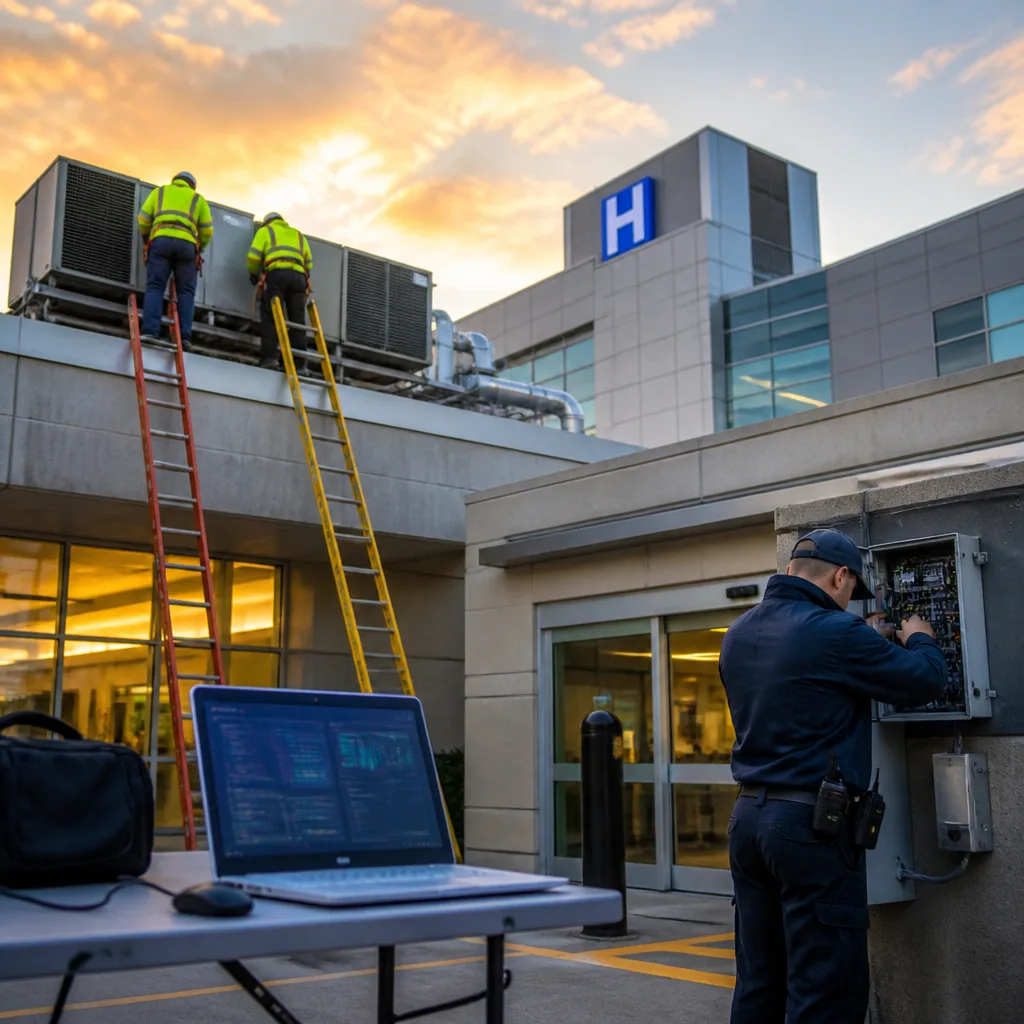
Health Sciences Centre Winnipeg (HSC) is investigating a ransomware incident that has affected certain facility maintenance systems, including heating, ventilation and air-conditioning (HVAC) controls and electronic door access, Shared Health confirmed.
Immediate impact and response
Shared Health said the hospital launched an immediate inquiry after detecting the issue and has treated the matter as a high priority. The organisation emphasised that clinical services and patient care have continued without interruption while teams work to determine the scope and nature of the cyber intrusion.
"The safety and well-being of patients is always HSC’s top priority,"
In its statement, Shared Health also urged anyone who needs care to continue to attend HSC, noting that, based on the investigation to date, there is no indication that patients have been affected.
Who is involved in the response
Officials said they have notified the provincial government and relevant partners and engaged third-party cybersecurity experts to assist with containment and recovery efforts. The investigation is ongoing and HSC has pledged to provide updates as additional information becomes available.
- Affected infrastructure: HVAC and door access systems at the facility.
- Clinical impact: None reported; clinical operations remain fully operational according to Shared Health.
- Response actions: Internal investigation launched, provincial authorities informed, external cybersecurity specialists retained.
What is known and what remains uncertain
The hospital's public statement provides clear assurances about patient safety and the continuity of care, but it offers limited technical detail about how the ransomware affected building systems or whether any data were accessed or exfiltrated. Shared Health has not released details on the timing of the initial detection, the specific strain or vector of the ransomware, or whether any ransom demand was made.
Officials say they are focusing on determining the full extent of the incident and restoring affected systems safely. Given the involvement of third-party cybersecurity specialists, the response will include technical forensic work to identify vulnerabilities, determine the malware's behaviour and advise on mitigation.
Why facility systems matter
Modern hospitals depend on a mix of clinical and non-clinical technology. While electronic medical records and diagnostic equipment often receive attention in cyber-preparedness discussions, the integrity of facility infrastructure—such as HVAC, power management and door controls—is also critical to safe operations. Disruption to those systems can complicate infection control, staff movement and access to clinical spaces.
Shared Health's insistence that patient care is unaffected is intended to reassure the public. Nevertheless, the incident underscores broader concerns about the vulnerability of health-care institutions to cyberattacks and the importance of coordinated incident response and resilience planning across the health sector.
Comparative notes and next steps
Shared Health said the matter is being treated as a high priority and that updates will be provided as the investigation continues. The engagement of external experts and notification of government partners signal a multi-layered response that combines technical remediation with operational continuity measures.
| Area | Status |
|---|---|
| Patient care and clinical operations | Operational — no reported impact |
| Facility maintenance systems (HVAC, door access) | Affected — under investigation |
| External support | Engaged — third-party cybersecurity experts and provincial partners |
As the investigation proceeds, the key questions for patients and the public will include whether any personal or clinical data were accessed, how long remediation will take, and what measures will be implemented to reduce the risk of recurrence. HSC has committed to keeping the public informed as it learns more.
The incident adds to a string of cyber threats confronting Canadian institutions in recent years and will likely prompt renewed scrutiny of cybersecurity investments, contingency planning and the protection of both clinical and non-clinical technology in health-care settings.