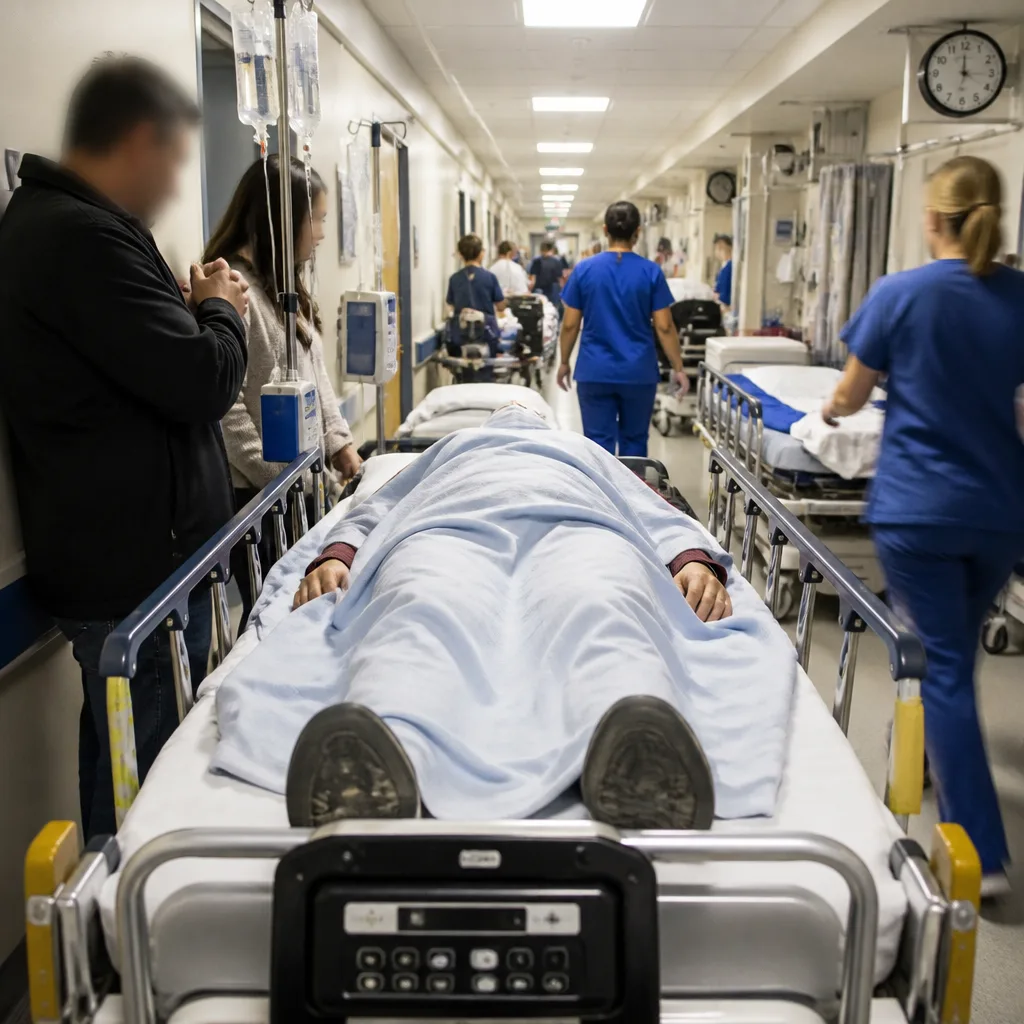
A woman with advanced cancer spent about 21 hours on a gurney in a hallway at the Health Sciences Centre emergency department in Winnipeg, her daughter says, an incident that highlights acute pressures on emergency services and the difficulties families face when a loved one’s condition deteriorates.
Family describes distressing scene in overcrowded ER
Theresa Chanowski told media her mother, Colleen Titanich, was brought to the hospital after a sudden decline in condition following a family barbecue. The family says Titanich, who has stage four cancer that began in the lungs and later involved the brain and spine, experienced severe pain and other alarming symptoms that prompted the visit.
Chanowski described the emergency department as "jam-packed," and said she was given only a brief chance to be with her mother when she was first assessed. She recounted seeing patients in distress, with some displaying behavioural symptoms associated with withdrawal. The daughter characterised the situation in the hallway as "appalling" and "disgusting."
"Seeing what was happening in that hallway, it was appalling, it was disgusting,"
According to Chanowski, Titanich remained on a gurney in the hallway for approximately 21 hours while awaiting emergency care. The family said they returned the next morning to find her in pain and confused, and they later say the woman was moved to palliative care after contact with the provincial health minister.
What the case signals about system pressures
The episode points to several longstanding issues in Canadian hospitals: overcrowded emergency departments, limited capacity for inpatient beds, and the challenges of providing appropriate care for patients with serious chronic and terminal illness. While this account is centred on one family’s experience in Winnipeg, similar reports have emerged across provinces in recent years as hospitals face staffing shortages and rising demand.
Health systems commonly rely on emergency departments for urgent needs when alternative pathways — such as rapid access to palliative teams or timely inpatient admissions — are not available. For patients with advanced illness, extended stays in ED hallways can be distressing and may not provide the symptom control or privacy typically sought in palliative settings.
- Patient experience: Long waits in hallways can worsen pain, confusion and emotional distress for seriously ill patients and their families.
- Systemic drivers: Bed shortages, staffing constraints and high ED demand contribute to hallway care.
- Palliative access: Timely transfer to palliative care teams is crucial but not always feasible when hospitals are at capacity.
The family’s report also raises questions about how hospitals triage and prioritise patients with complex needs, and whether there are adequate protocols to expedite care for those requiring symptom management and end-of-life support.
Context and next steps
The Health Sciences Centre is a major tertiary care centre serving Manitoba and surrounding regions. Incidents like this often prompt public and political scrutiny, particularly when contact with elected officials is reported as a factor in accelerating a transfer to a more appropriate level of care.
Health officials and hospital administrators are typically asked to respond to specific cases to explain circumstances, identify any lapses in care and outline steps to prevent recurrence. Families and patient advocates often call for improved strategies to reduce hallway care, such as increasing inpatient and palliative capacity, improving community supports to prevent emergency visits, and bolstering staff resources.
For this family, the immediate concern was relief and dignity for a loved one in the final chapter of life. For the broader public, the episode underscores the ongoing tension between patient needs and system capacity — a central issue for health-care planners and policymakers across Canada.