A newly compiled dataset from researchers at the Université de Sherbrooke shows deaths among people experiencing homelessness in Quebec rose by about 180 per cent between 2020 and 2024, underscoring a widening public-health crisis for an already vulnerable population.
Numbers, regions and demographics
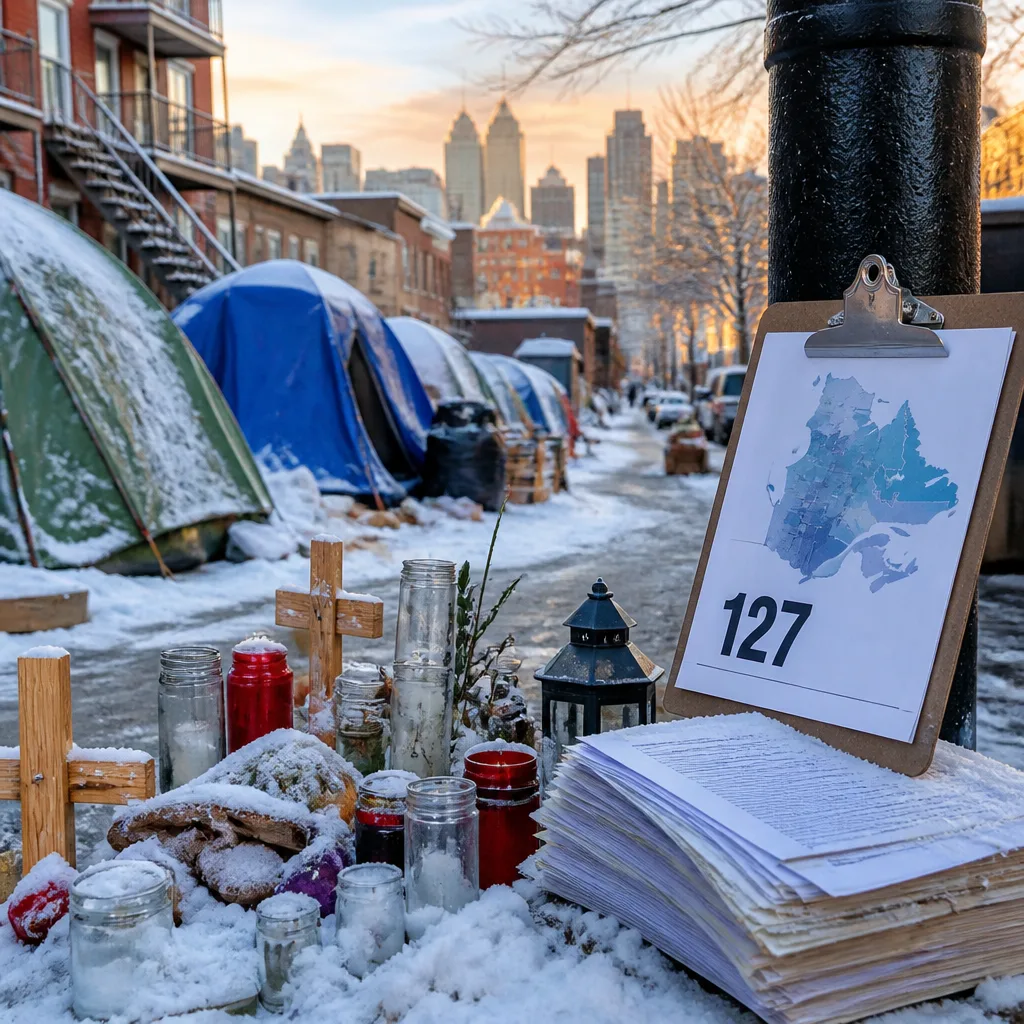
The research team found that 45 unhoused people died in Quebec in 2020, increasing to 127 deaths in 2024. Over the five-year period, the study recorded a total of 400 deaths of people without stable housing.
| Year | Deaths (unhoused) |
|---|---|
| 2020 | 45 |
| 2024 | 127 |
| Total 2020–2024 | 400 |
Geographically, Montreal registered the highest rate of deaths per capita, followed by the Outaouais region.
Life expectancy and gender differences
The study highlights dramatic life-expectancy disparities between people living without stable housing and the housed population. For men experiencing homelessness, average life expectancy was about 47 years, compared with 80 years for those with stable housing. For women, the gap was larger: 42 years for unhoused women versus 84 years for women with a fixed address.
Researchers also documented divergent trends by gender over the period: deaths among unhoused men rose by approximately 175 per cent, while deaths among unhoused women climbed about 211 per cent.
Filling a data gap
Before this project, no central compilation existed to quantify how many people experiencing homelessness were dying each year in Quebec. The first phase of the research relied on coroners' reports, which by their nature do not capture all deaths of unhoused people because coroners typically investigate only deaths with unclear circumstances. The research team therefore launched an online reporting form this month to allow members of the public and frontline workers to notify the project of deaths among people without stable housing.
"It's a very, very sad and unfortunate event," said Dr. David-Martin Milot, a public health physician and one of the project's supervisors, about the rise in deaths documented by the study.
Milot said the work was prompted by requests from health and public-health authorities to better understand the scope and characteristics of the phenomenon so interventions could be tailored more effectively.
Service providers and urgency
Advocates and shelter operators say the findings reflect lived realities they see on the ground. The Native Women's Shelter of Montreal, whose executive director was cited in the study coverage, has raised concerns about the compounded risks faced by Indigenous and racialized women who lack safe, stable housing.
- Data gaps: Coroner-based figures undercount deaths among the unhoused because some deaths from known illnesses are not referred to coroners.
- New reporting tool: An online form has been launched to collect more comprehensive reports of deaths.
- Geographic concentration: Montreal and Outaouais show the highest per-capita rates.
The research adds to mounting evidence across Canada that life expectancy and mortality among people without stable housing are dire and that better data is needed to shape targeted public-health and housing responses. Provincial and federal policymakers, health authorities and community organisations will need to consider how resources, outreach and shelter capacity align with the scale and characteristics of this mortality trend.
As the study's reporting tool begins collecting broader notifications, researchers say they hope the fuller dataset will inform more precise interventions and guide public-health planning aimed at preventing further deaths among people experiencing homelessness.