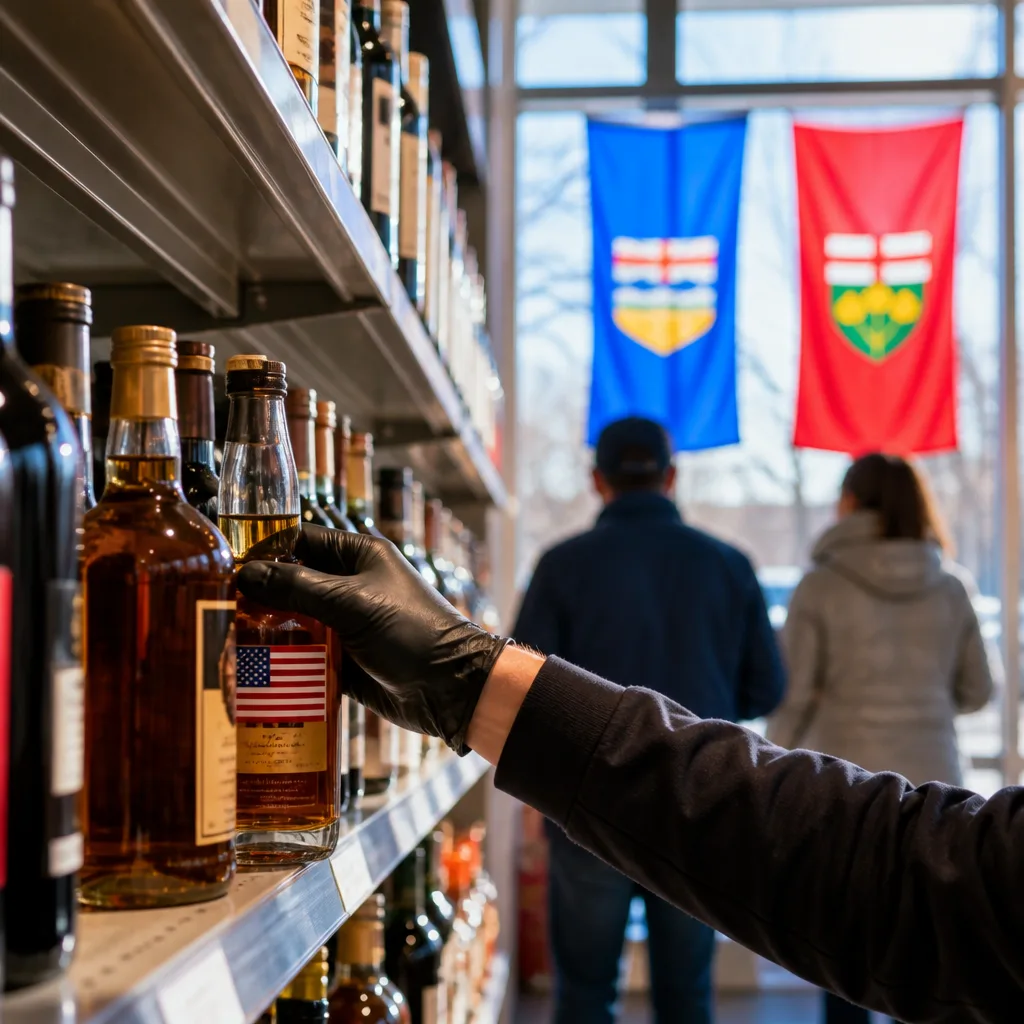
Prime Minister Mark Carney has asked provincial premiers to allow American alcoholic beverages back onto provincial store shelves as part of efforts to resolve a major sticking point in trade discussions with the United States, federal and provincial officials say.
Premiers say they will consider reintroduction, but reservations remain
The request was relayed during a call between Carney and the premiers, according to Newfoundland and Labrador Premier Tony Wakeham, who said the group agreed on the idea as a signal of good faith.
“The prime minister gave us an update on his talk with President Trump. He’s confident they will reach an agreement, and as part of this agreement, he asked all of the provinces, as a sign of good faith, (to put) U.S. liquor back on our shelves and we all agreed.”
Despite that apparent consensus, some premiers and provincial leaders are signalling caution about immediate changes. Manitoba Premier Wab Kinew told reporters the province has no plans to rush U.S. products back into stores. He suggested that, even if regulators relist American brands, Manitobans should favour domestic products.
“If we put the booze back on the shelves, don’t buy it. Let it sit on the shelf … and buy the Canadian stuff instead,” Kinew said at the Council of the Federation meeting in Charlottetown.
Consumer attitudes appear mixed
Nationwide reaction varies. Some shoppers say they will continue to purchase Canadian-made alcohol even if American products return to shelves, citing preference or principle.
- Aubrey Fernandez, a Toronto resident: “I’m Canadian and I buy Canadian.”
- Clint Smith: “I won’t be buying American booze at all.”
Those comments reflect a broader uncertainty about whether restored availability would translate into renewed sales. Retail steps to relist U.S. liquor would be only part of a more complex arrangement to avert proposed tariffs.
Background: tariffs, bans and the stakes
Last year, every province removed American liquor from store shelves in response to tariffs imposed by U.S. President Donald Trump. As of now, the bans remain in place everywhere except Alberta and Saskatchewan, which continued to carry U.S. alcohol.
The request to relist U.S. products is intended to help unlock a deal that would avoid steep duties—reports have referenced potential 50 per cent tariffs on approximately $28 billion in goods. Officials describe the relisting as a goodwill measure to help smooth negotiations.
| Province status | U.S. liquor on shelves |
|---|---|
| Alberta | Available |
| Saskatchewan | Available |
| All other provinces | Removed (ban in place) |
Trade between Canada and the United States is substantial: more than $1 trillion in typical annual bilateral commerce was cited during discussions among leaders. The liquor question is one component of broader negotiations aimed at preventing significant tariffs that could affect wide-ranging sectors of the economy.
Political and commercial implications
The premiers convened in Charlottetown for a Council of the Federation meeting where the federal update was provided. Bringing U.S. alcohol back to shelves would be a visible, politically sensitive move for provinces that originally removed those products in solidarity or in retaliation for U.S. trade actions.
Provincial decisions on relisting will intersect with consumer choices and provincial liquor board rules. Some premiers appear prepared to offer cooperation as part of a national bargaining strategy, while at least one provincial leader is encouraging citizens to keep buying Canadian if U.S. products return.
As discussions continue, the relisting proposal will test whether symbolic gestures can translate into tangible progress at the negotiating table and whether Canadian consumers will shift their buying habits if U.S. options reappear.