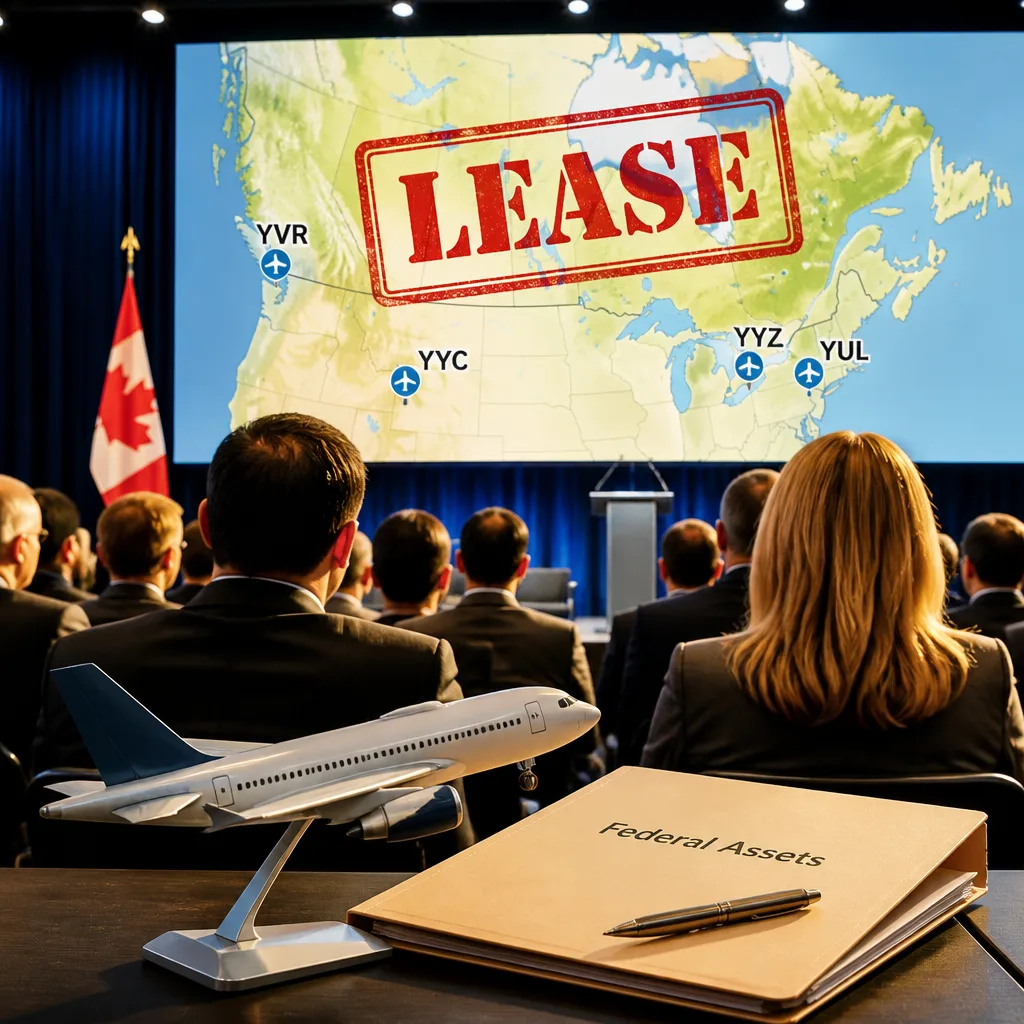
Prime Minister Mark Carney unveiled a plan Tuesday to invite private investors to operate the country’s four largest airports — in Toronto, Montreal, Calgary and Vancouver — while the federal government would retain ownership of the underlying land and assets. The announcement, made at a government‑led investment summit in Toronto, offered few mechanics but framed the shift as a way to reallocate federal spending and relieve costs for travellers in smaller markets.
How the government says the model would work
Under the proposal, private investors would be able to manage airport operations under set lease periods. Regulatory authority and oversight would remain with Transport Canada, according to the federal outline presented at the summit. The government said the move is designed to "unlock" value tied up in major airports so that federal spending now devoted to major airport operating costs could be redirected toward smaller regional airports.
The announcement stopped short of detailed legal or financial terms. It did not specify the length of leases, the procurement process, how fees would be set at individual airports, or how guarantees for service levels would be enforced.
Current structure versus proposed approach
Canada’s present system places operational control with local, not‑for‑profit airport authorities that lease airports from the federal government and run day‑to‑day functions such as runway maintenance, baggage systems and terminal operations. These authorities are financially independent and set their own fees to recover operating costs.
| Element | Current model | Proposed model (announced) |
|---|---|---|
| Ownership of land and assets | Federal government | Federal government (to be retained) |
| Operational control | Local airport authorities (not‑for‑profit) | Private investors under set leases |
| Regulatory oversight | Transport Canada | Transport Canada |
Lawyers and industry observers say the practical implications will turn on the fine print of any lease or concession agreements. One lawyer cautioned the shift would not amount to an unfettered transfer of control.
"This isn't going to be the situation where the concessionaire is allowed to just take over," a lawyer said.
Why Ottawa is pitching the change
The government framed the policy as a way to free up federal resources currently used to cover major airports' operating costs so they can be targeted to smaller regional airports. The stated objective is to reduce costs for travellers in those destinations by redirecting subsidies and spending.
- Private management under leases could bring new capital and business expertise to major airport operations.
- Maintaining federal ownership aims to preserve national oversight and control over key infrastructure.
- Transport Canada would continue to regulate safety and compliance.
Questions remain about how concession agreements would protect public interests, including fee levels, service standards, labour relations and long‑term planning. The announcement did not address whether airport authorities would continue to exist in their current form, or how existing contracts and pensions would be treated.
Experts say much will depend on the terms of competitive processes, lease lengths and the legal structure used to transfer operational responsibilities. The government will need to balance attracting private capital with preserving affordability, accessibility and national oversight of critical air transport infrastructure.
As Ottawa moves from announcing intent to drafting concrete proposals, stakeholders including municipal leaders, airport authorities, airlines, employees and passenger advocates will be watching for details on governance, accountability and the distribution of any proceeds from new investments.
The prime minister’s pitch marks a notable shift in federal thinking about airport stewardship in Canada, but the policy’s ultimate shape and impact will be determined by forthcoming legislation, regulations and contractual terms yet to be released.