
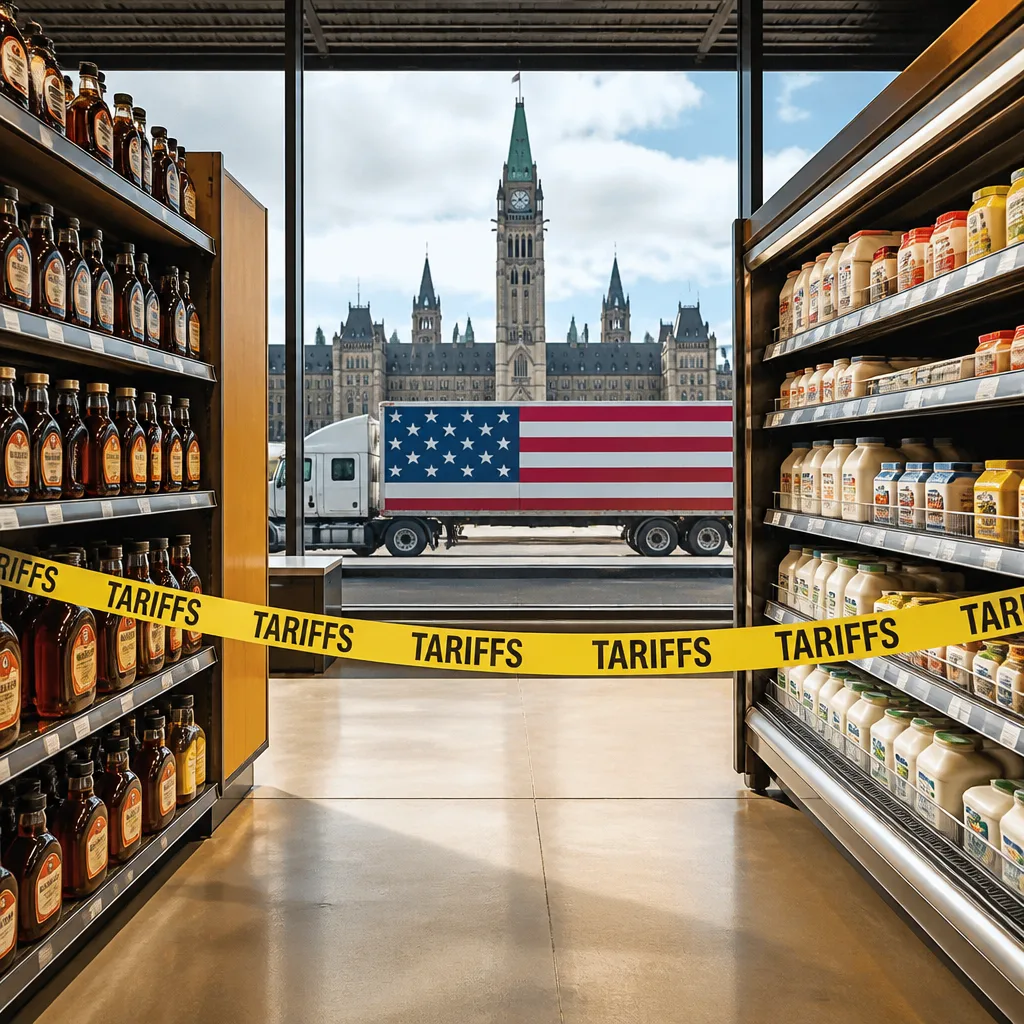
With the threat of sweeping U.S. tariffs looming, a new national poll finds Canadians divided on how the federal government should react — but united in expecting pain for households and local economies.
Canadians split on response; concessions are unpopular
The Abacus Data survey of 1,499 Canadians, conducted Aug. 7–12, asked respondents how Canada should respond if U.S. President Donald Trump’s proposed round of tariffs were to take effect. Similar proportions favoured either retaliatory measures or continued negotiations without immediate counter-tariffs: 36 per cent backed counter-tariffs and 30 per cent preferred to keep negotiating.
Less than one in five Canadians — 18 per cent — said Canada should make concessions to the United States, such as lifting provincial boycotts of American alcohol or easing dairy protections, if that would prompt Washington to remove tariffs.
"offer concessions to the US, such as ending bans on American alcohol and easing dairy restrictions, if that gets the tariffs removed."
Timing and odds: many expect tariffs to land
Respondents were asked how likely it was that the new tariffs would be implemented before the survey’s referenced Wednesday. Only 10 per cent predicted Trump would reverse course before that deadline, while a further 1 per cent said the tariffs would "definitely not happen." About 12 per cent were unsure.
On prospects of tariffs taking effect, the public was broadly sceptical about avoidance: 40 per cent judged there was a "50/50 chance" Canada could face the measures, and 38 per cent said the tariffs were likely to hit.
Economic impact is widely expected
Canadians also reported concern about the domestic effects of escalation. Seven in 10 respondents said the tariffs would have either a "somewhat negative" or a "very negative" impact on the local economy where they live, and 74 per cent said the trade dispute had already affected their household finances.
- 36% favour counter-tariffs.
- 30% favour continued negotiation without counter-tariffs.
- 18% favour making concessions to get tariffs removed.
- 70% expect negative local economic impact.
- 74% say the trade war has already affected their household finances.
Why this matters nationally
The numbers outline a political challenge for the federal government. Trade disputes with the United States can quickly ripple through Canadian supply chains and consumer prices, touching sectors from agriculture and dairy to retail and manufacturing. Public reluctance to offer concessions on sensitive policy areas such as provincial alcohol boycotts and dairy protection signals limited appetite for compromises that might be perceived as ceding Canadian policy autonomy.
At the same time, substantial support for counter-tariffs suggests Canadians are open to reciprocal measures — even with the risk of further escalation. That mix of responses constrains Ottawa’s options: policymakers must weigh the economic pain anticipated by most respondents against the diplomatic and commercial risks of a tit-for-tat spiral.
| Poll item | Share of respondents |
|---|---|
| Support counter-tariffs | 36% |
| Keep negotiating without counter-tariffs | 30% |
| Offer concessions to remove tariffs | 18% |
Public opinion will shape the political environment in which federal officials negotiate with U.S. counterparts. As Ottawa calibrates any response, federal ministers must consider both how to protect Canadian industries and supply chains and how to maintain public confidence that government action is defending household incomes and local economies.
The Abacus Data results provide a snapshot of public sentiment at a tense moment in cross-border relations, with many Canadians bracing for imminent economic consequences while divided on whether to signal toughness or seek accommodation.