Bridgewater State University has received roughly $380,000 from the Massachusetts Technology Collaborative’s Technology and Innovation Ecosystem programme to add three advanced quantum systems to its undergraduate labs, officials said.
Direct skills training in quantum technologies
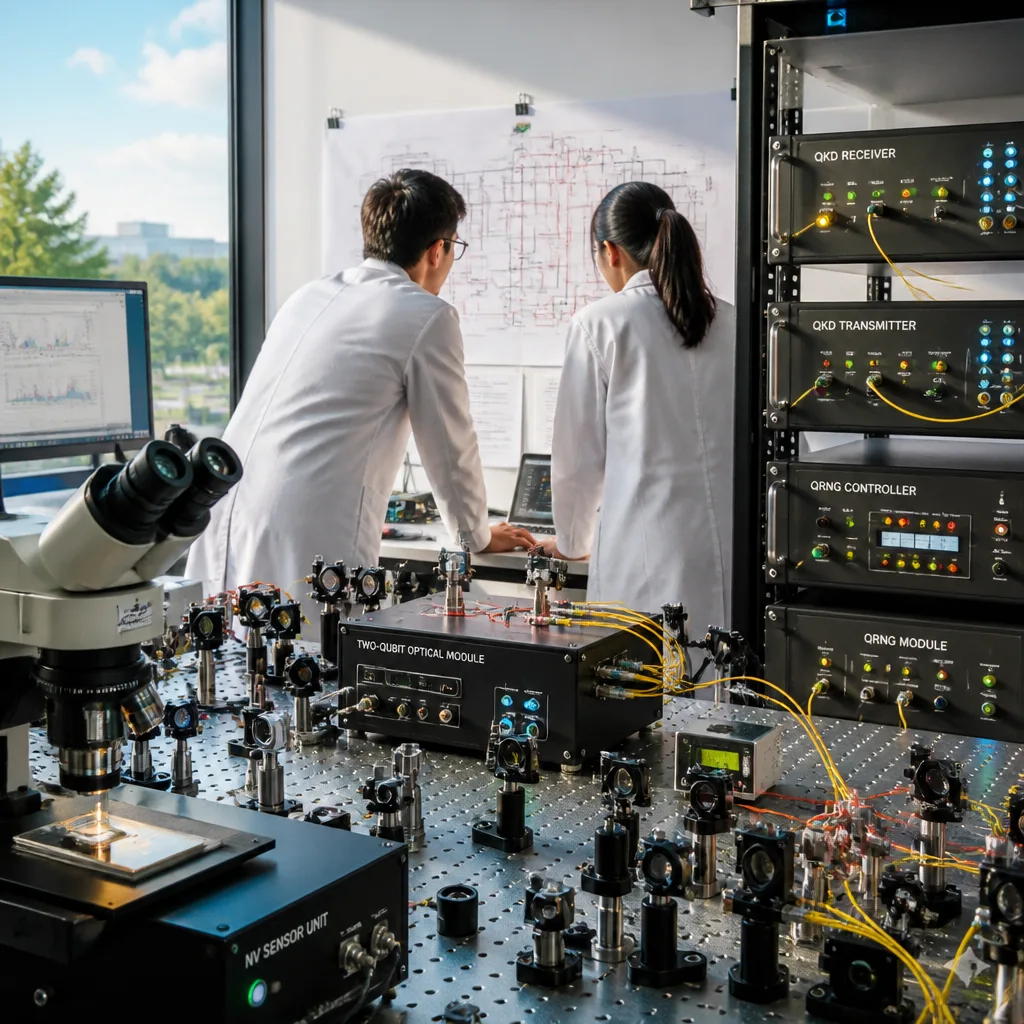
The grant will fund acquisition of a two‑qubit optical quantum computer, an NV‑defect diamond quantum sensor and two‑qubit system, and a commercial quantum key distribution (QKD) and quantum random number generation (QRNG) system. Together, the equipment is intended to give students practical exposure to three key areas of the so‑called second quantum revolution: computing, sensing and quantum communications — including cybersecurity applications.
“This is about making sure the second quantum revolution is not something our students simply read about, it is something they can experience, work with and help build,” said Ed Deveney, professor of physics.
Why hands‑on access matters
Educators and industry groups have been stressing that quantum technologies require a broad workforce: from PhD researchers to technicians and engineers with bachelor’s degrees. The MassTech award explicitly targets that gap at the undergraduate level, aiming to prepare students in physics, photonics and optical engineering, computer science and cybersecurity for careers or advanced study in quantum fields.
Practical access to functioning hardware is a critical differentiator. Classroom study and cloud‑access to simulated or remote quantum processors are valuable, but on‑campus instruments allow students to develop skills in system setup, calibration, troubleshooting and experimental protocol — competencies employers regularly cite as lacking in early‑career hires.
What the grant buys
- Two‑qubit optical quantum computer — for foundational quantum computing experiments and instruction.
- NV‑defect diamond quantum sensor and two‑qubit system — for quantum sensing and related applied research.
- Commercial QKD and QRNG system — to expand coursework and practice in quantum‑secure communications and cybersecurity.
The QKD system in particular is aimed at expanding the school’s cybersecurity capabilities by introducing a communications technology that leverages quantum properties to distribute encryption keys with security properties not achievable by classical means.
| Item | Purpose |
|---|---|
| Two‑qubit optical quantum computer | Hands‑on quantum computing instruction and experiments |
| NV‑defect diamond sensor & two‑qubit system | Quantum sensing and applied lab training |
| QKD & QRNG commercial system | Quantum communications and cybersecurity practice |
Broader ecosystem implications
Massachusetts positions itself as a global hub for quantum research and commercialisation, and programmes like MassTech’s aim to build a layered workforce to sustain that role. The Bridgewater State award addresses a frequently cited bottleneck: the shortage of technicians and bachelor‑level engineers who can operate and maintain quantum hardware in research labs and emerging commercial settings.
By embedding equipment at the undergraduate level, the university can offer earlier career pipelines into industry or graduate study, and potentially support regional partners who need workforce training in photonics, quantum communications and sensing.
Officials said the systems will be used across multiple programmes, signalling an interdisciplinary approach that blends physics fundamentals with applied cybersecurity and engineering practice.
While the grant is modest in dollar terms compared with large national research projects, its focus on undergraduate capability represents a practical step toward broadening access to a technology sector where hands‑on experience is increasingly a prerequisite for employment.