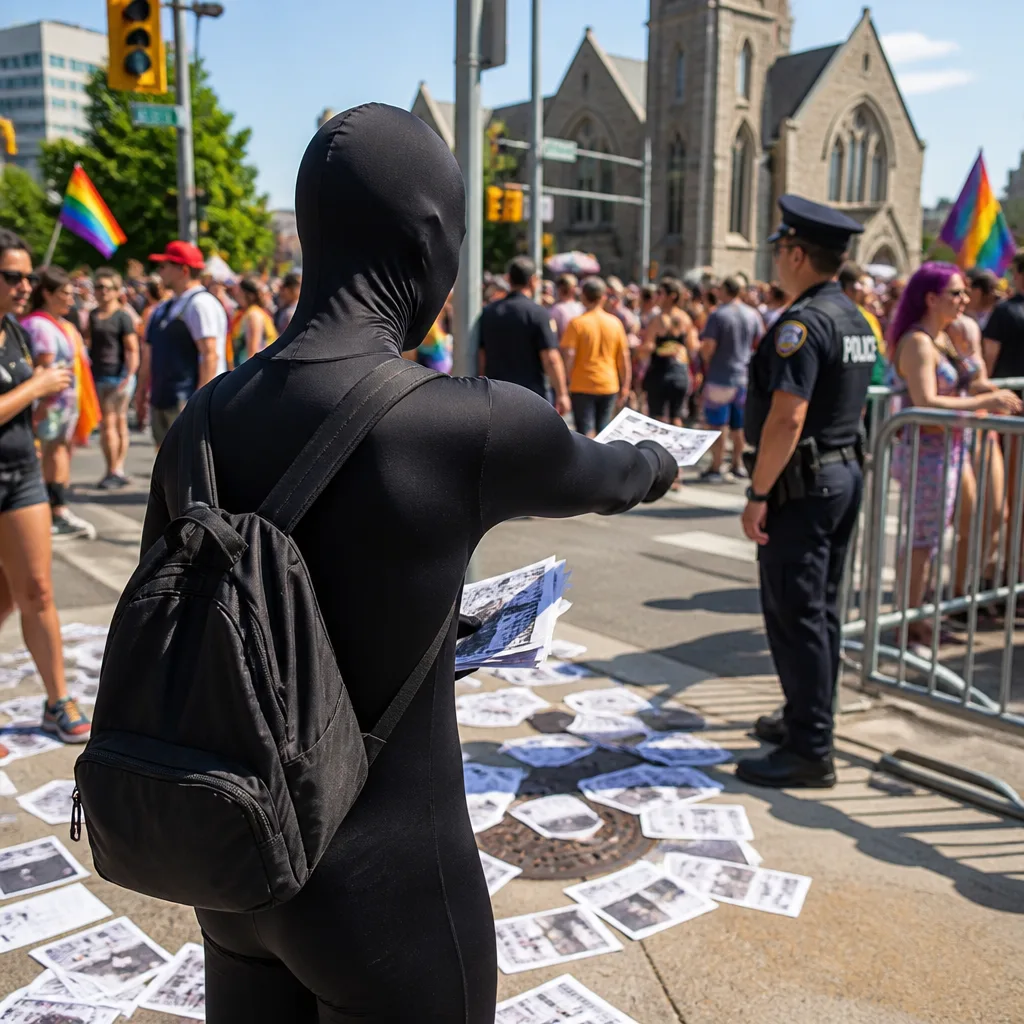
A Ontario court has convicted a man of promoting hatred for handing out anti‑gay material at the Toronto Pride Parade, a decision that underscores the criminal law’s role in policing hateful conduct at public gatherings.
Court finds intent to vilify during Pride event
Superior Court Justice Anne Molloy reached the verdict after hearing that the accused, publicly known for anti‑LGBTQ positions, attended the downtown Toronto parade dressed in disguise and distributed leaflets that the judge determined were intended to denigrate gay men. Court records show the pamphlets circulated at the intersection near Church and Wellesley, a focal point for the city’s LGBTQ community.
The accused entered the parade in costume described in court materials as a ruse to blend with participants and handed out approximately 3,000 flyers. The judge characterised the conduct as a deliberate effort to portray gay men negatively and to spread hateful ideas masked as religious conviction.
Legal and community implications
The ruling highlights the boundary between protected expression and criminal conduct in Canada. Under the Criminal Code, advocacy that rises to the level of promoting hatred against an identifiable group can attract charges and convictions. Legal analysts cited in coverage of the case noted the decision reinforces that the right to free expression does not extend to material that seeks to incite or legitimise hatred targeting vulnerable communities.
Community advocates said the conviction will be closely watched by organisers of public festivals and parades, who balance open celebration with safety concerns. The decision may prompt event planners to increase vigilance and coordination with police and legal advisers when large public gatherings coincide with demonstrators or counter‑protesters.
- Location: Toronto Pride Parade, near Church and Wellesley
- Items distributed: About 3,000 anti‑gay flyers
- Disguise used: Attendee costume to blend into parade
- Judge: Superior Court Justice Anne Molloy
| Element | Detail |
|---|---|
| Charge | Promoting hatred against gay men |
| Verdict | Guilty |
| Alleged conduct | Distribution of approximately 3,000 leaflets while disguised at parade |
The case also raises questions about how authorities detect and respond to hate‑motivated conduct at events designed as safe spaces. Organisers of Pride and similar gatherings have increasingly forged protocols with police to deter and respond to incidents that threaten participants’ safety. Legal observers say prosecutions in matters of hateful expression can serve both punitive and deterrent functions, signalling that targeted abuse in public forums will be met with legal consequences.
At the same time, civil liberties advocates caution that prosecutions must be carefully circumscribed so that interventions target the promotion of hatred rather than controversial or offensive viewpoints that remain within protected speech. This balance is a recurring theme in Canadian jurisprudence, where courts weigh freedom of expression against harms that speech may cause to identifiable groups.
For the LGBTQ community, the conviction represents a formal recognition by the criminal justice system that targeted campaigns of denigration at public events constitute more than mere offence: they amount to conduct the law can punish. Municipal and provincial officials will likely review how public‑safety planning, volunteer training and legal remedies intersect to protect participants at future events.
No additional penalties or sentencing details were contained in the available court summary. The decision is expected to inform both community organisers and legal practitioners about how courts may approach similar incidents in the future.