
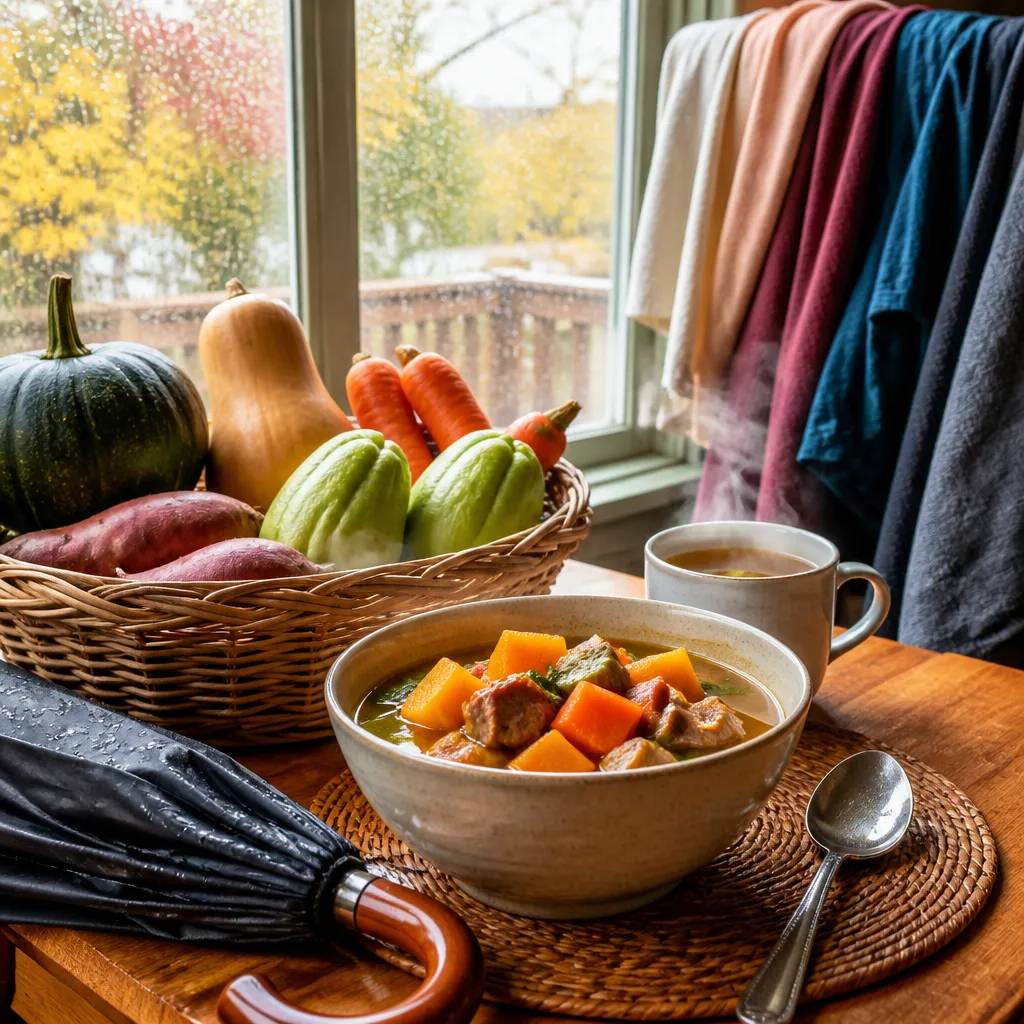
The rainy season is not just an inconvenience; it’s a cue from nature to slow down and take extra care of our health. In the Philippines, where the rainy months run roughly June to November, the change in weather coincides with shifts in food availability and a rise in common ailments such as colds, flu, and joint aches. Rather than reaching for complicated remedies, many households turn to tried‑and‑tested foods and simple prevention methods to stay well.
Eat with the season
One obvious signal the season sends is what’s abundant at market. With modern agriculture it can be harder to tell what is naturally in season, but the rainy months typically bring an increase in yellow and orange vegetables. Think squash, carrots, camote (sweet potato) and sayote (chayote) — the latter not yellow but related to squash in use and texture. These vegetables are rich in vitamins and fibre and can be incorporated into soups and stews that are warming and hydrating on wet days.
Kitchen remedies you already have
The pantry and garden often supply what is needed to soothe early respiratory symptoms and to support general wellbeing. Local oregano — sometimes called Mexican oregano — is one example that many homes use for steeped teas. Hot drinks can provide immediate comfort, help maintain body warmth and encourage hydration.
- Steeped herb teas (oregano or other available herbs) for warmth and mild relief.
- Vegetable‑based soups and broths using in‑season squash, carrots, camote or sayote.
- Layered clothing, umbrellas and waterproof jackets to avoid prolonged dampness.
Prevention is the simplest medicine
While colds are caused by viruses, being chilled and wet can make the body more susceptible to infection if exposed. Longstanding advice remains practical: keep warm, avoid getting wet, and reduce exposure to cold drafts. Many people find carrying a lightweight sweater, waterproof outerwear and an umbrella makes a measurable difference in comfort and in avoiding the initial chill that can precede sickness.
Prevention tips emphasise common sense rather than pharmaceuticals. These measures are best understood as steps to reduce risk:
- Cover the head and feet when outdoors in cold rain to preserve body heat.
- Change out of damp clothing as soon as possible; staying wet lowers the body’s defences.
- Choose hot, nourishing liquids and soups to maintain warmth and hydration.
Why simple remedies still matter
In an era where productivity is often equated with constant activity, seasonal shifts invite a different approach: to rest, to eat what’s abundant and to use straightforward, low‑cost measures to protect health. The rainy season’s pattern of wetter weather, heavier traffic and the occasional outbreak of mosquito‑borne illness in some regions makes it sensible to prioritise prevention.
That doesn’t mean ignoring medical advice when it’s needed. But for day‑to‑day resilience, many households find comfort and effectiveness in preparing warm, nutrient‑rich meals from seasonal produce and in returning to practical habits passed down through families and communities.
Adapting these ideas for Canadian readers means paying attention to local seasonal produce and weather patterns. The principle is the same: let seasons guide your food choices, keep warm and dry, and use simple, accessible remedies first. They’re affordable, rooted in the foods and herbs people already have on hand, and designed to prevent illness before it starts — which, in the case of rainy seasons, is often the best defence.