
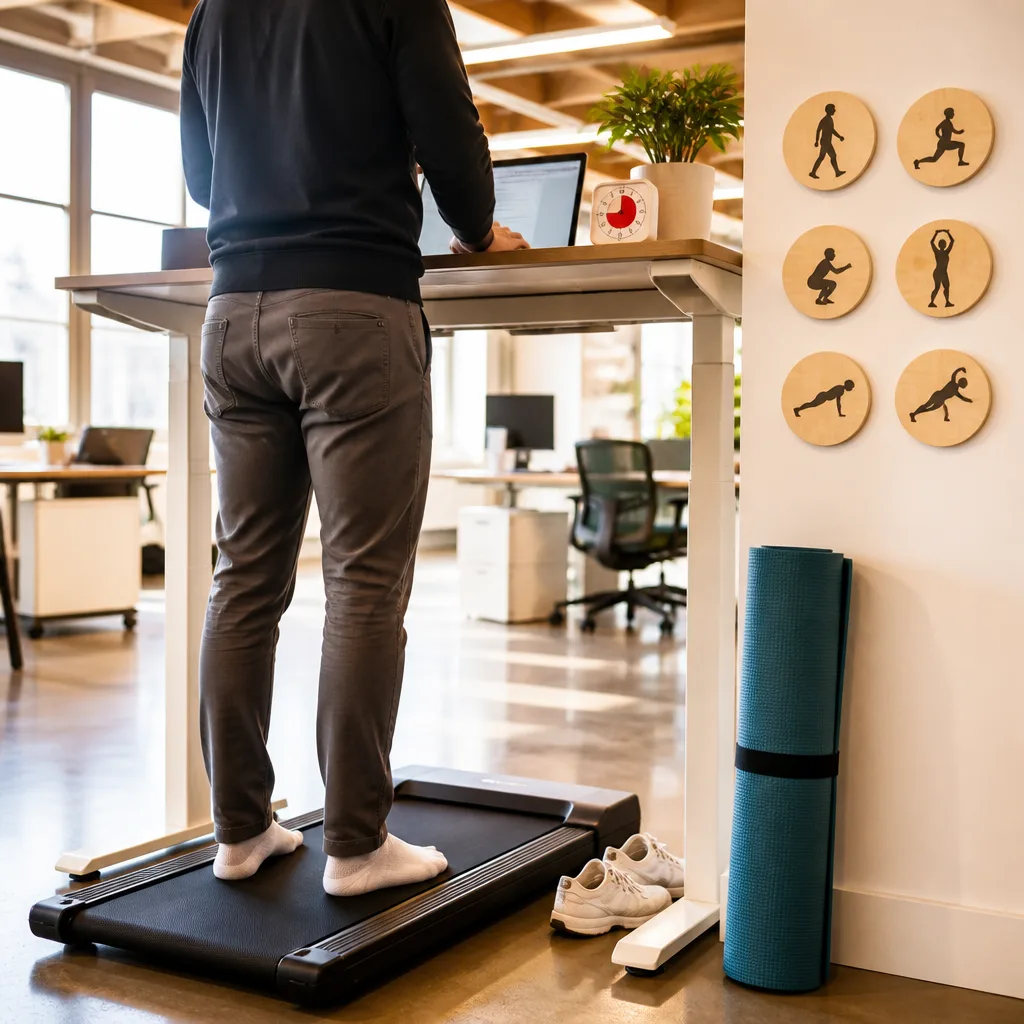
For many office workers, swapping a chair for a standing desk feels like a simple, proactive step toward better health. But multiple recent analyses indicate that standing alone delivers only modest benefits and may introduce its own risks. What appears to matter most is movement — adding short bouts of activity across the day — rather than simply trading sitting for standing.
Small metabolic gains, mixed cardiovascular results
Long-term research has repeatedly linked prolonged sitting with poorer health. A 2012 review found that the most sedentary people were more than twice as likely as the least sedentary to have or develop diabetes and faced higher risk of premature death. Subsequent studies have qualified that picture: while some coverage compared sitting to smoking, later assessments judged that claim exaggerated the danger, placing sitting at roughly a tenth of that risk by one estimate in 2018.
Comparative research on standing versus sitting offers limited reassurance. A 2018 analysis concluded that standing burned only about nine extra calories per hour compared with sitting. A 2020 review pooled nine trials involving 877 people, where participants stood on average about 1.3 hours more per day over roughly four months. The pooled findings showed slight improvements in body fat and blood-sugar control, but no meaningful changes in blood pressure, insulin, cholesterol or triglycerides.
Standing has downsides
Standing is not risk-free. A study published in the International Journal of Epidemiology in 2024 examined data from 83,013 British adults followed for nearly seven years and found that people who stood more than two hours a day had a higher incidence of varicose veins and venous ulcers. Researchers suggested that prolonged standing may encourage blood pooling in the legs, increasing venous strain.
“Sitting for long stretches was associated with ‘deleterious health outcomes regardless of physical activity,’”
The quoted phrase was used in a 2015 review and reflects concern that long bouts of inactivity can be harmful even when people meet exercise guidelines. Yet other work shows the harms can be largely offset by additional movement.
Movement trumps posture
Perhaps the clearest public-health message to emerge is that modest amounts of extra activity can substantially reduce risk. A large-scale 2024 study of nearly 482,000 Taiwanese adults reported that adding just 15–30 minutes of extra daily exercise could erase most of the excess mortality risk tied to occupational sitting. In short: standing more might help marginally, but short, regular activity breaks appear to be far more important.
That finding helps explain why some workplace interventions focus on so-called “active seating” — stools and chairs designed to wobble, tilt or rock to prompt continual postural adjustments. Evidence on those options is still emerging, and early trials show mixed results. They may engage postural muscles and increase blood flow compared with passive sitting, but robust long-term health data are limited.
- Standing: Burns about nine more calories per hour than sitting; small improvements in body fat and blood sugar in some short trials.
- Prolonged standing: Associated with higher risk of varicose veins and venous ulcers when exceeding roughly two hours daily.
- Regular movement: Adding 15–30 minutes of extra daily activity may offset most excess mortality risk linked to sitting at work.
Practical takeaways
For Canadians trying to reduce sedentary time at work, the research suggests several straightforward strategies:
- Prioritise frequent, short activity breaks — a few minutes every hour — rather than prolonged standing sessions.
- Combine sitting, standing and light movement across the day to avoid long static postures in either position.
- Be cautious with prolonged standing if you are on your feet for extended periods; consider compression hosiery or scheduled seating breaks if venous issues are a concern.
The evidence does not rule out standing desks or active seats as useful tools, but it reframes them: they are best viewed as components of a broader strategy to increase daily movement, not a single fix. Employers and workers who want to reduce the health impacts of sedentary work should focus on opportunities to move more frequently — stair breaks, walking meetings, micro-exercises at the desk — rather than relying solely on posture changes.
| Year | Sample / Source | Key finding |
|---|---|---|
| 2012 | Review | Most sedentary had >2× risk of diabetes and higher premature death |
| 2020 | 9 trials, 877 people | Standing ~1.3 hr/day improved body fat, blood sugar slightly; no change in BP, insulin, cholesterol |
| 2024 | 83,013 adults (UK) | Standing >2 hr/day linked to higher risk of varicose veins and ulcers |
| 2024 | ~482,000 adults (Taiwan) | 15–30 min extra daily exercise largely removed excess mortality risk from sitting at work |
In short, small, regular movements matter more than where you put your laptop. Aim to interrupt long sitting or standing periods with brief activity — your circulation and your long-term health are likely to thank you for it.