
A Hong Kong activist convicted under a Beijing‑imposed national security law told a mitigation hearing that the court’s ruling effectively criminalises political dissent, saying the judgment means that “pursuing democracy is a crime.” The remark came as the three convicted pro‑democracy figures prepared for sentencing.
Conviction and mitigation hearing
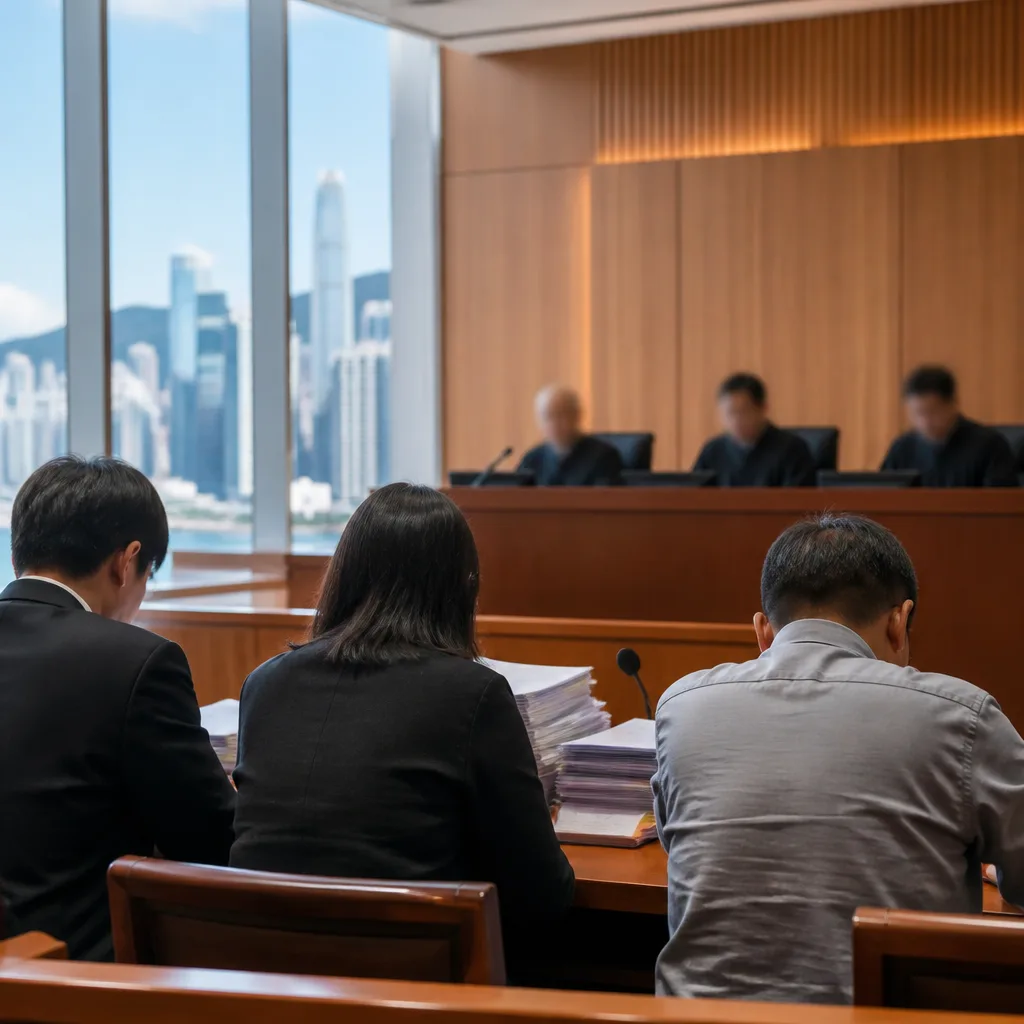
The activist, Chow Hang‑tung, was convicted last week alongside Lee Cheuk‑yan and Albert Ho of inciting subversion under the national security legislation imposed on Hong Kong. The three appeared before a panel of designated judges at the West Kowloon Law Courts Building for a mitigation hearing on Friday. The judges said sentencing will take place within two weeks.
Chow, a former leader of the now‑defunct Hong Kong Alliance in Support of Patriotic Democratic Movements of China, represented herself at the hearing. She was not permitted to read her full mitigation statement from the bench and was cut off by High Court judge Alex Lee when she began to speak.
“The 206‑page judgment, after all, boils down to saying that pursuing democracy is a crime,”
That sentence encapsulated the central thrust of Chow’s remarks before she was interrupted. In her submission, she argued that the court’s decision and the criminal charges brought against activists reflected a broader suppression of political expression tied to calls for democratic reform.
Context and reactions
The convictions have drawn a spectrum of reactions. Rights groups and the United Nations condemned the verdicts, while the local Hong Kong government praised the rulings. The case centres on long‑running activism connected to annual vigils that commemorated the 1989 Tiananmen Square crackdown, an activity that the Hong Kong Alliance historically organised.
Public gatherings that once drew large crowds in Victoria Park and elsewhere have been curtailed in recent years amid the changing legal and political landscape. The defendants’ prosecution for activities associated with the Alliance illustrates how authorities have invoked the national security law to pursue cases related to past political organising.
What was said in court
Chow told the court she found it “entirely unpalatable” that a political party could consolidate authority and then demand citizens uphold that arrangement. She added that those who advocate ending one‑party rule in mainland China—an element of the Alliance’s platform and a factor in the prosecution—“has nowhere left to stand.” The exchange with the judge curtailed the full airing of her mitigation arguments.
- Defendants: Chow Hang‑tung, Lee Cheuk‑yan, Albert Ho
- Charge: Inciting subversion under national security legislation
- Court: West Kowloon Law Courts Building; sentencing within two weeks
| Item | Detail |
|---|---|
| Convicted persons | Chow Hang‑tung; Lee Cheuk‑yan; Albert Ho |
| Charge | Incitement to subvert under national security law |
| Next step | Mitigation heard; sentencing to occur within two weeks |
Implications
The case underscores tensions between Hong Kong’s independent civic traditions and the legal framework introduced by Beijing in recent years. Rights organisations and international bodies have framed the convictions as emblematic of a shrinking space for dissent. Local authorities, by contrast, have defended the use of national security statutes as necessary measures.
As sentencing approaches, the outcome will be closely watched by human‑rights observers, legal commentators and activists. The proceedings also spotlight the broader legal effects of the national security law on activism and historical commemorations that were once routine in Hong Kong’s public life.
This report is based on court coverage and statements provided at the mitigation hearing; no additional witnesses or evidence beyond what was presented in court were used.