Flock Safety’s founder and CEO told Vanity Fair he was certain the company’s camera network could have solved the disappearance of Nancy Guthrie, a declaration that has revived national debate over private surveillance systems used by police departments.
Founder makes absolute claim as questions linger
Garrett Langley said in the interview that “
We would have solved that case. One hundred percent. There’s no doubt in my mind.” Guthrie vanished from her Pima County, Arizona, home in February; FBI investigators have said a masked man with a gun was seen on doorbell camera footage tampering with the device around the time she disappeared.
Pima County does not use Flock Safety’s network of licence-plate-reading cameras. Langley’s assertion follows a company claim that its technology helped resolve an estimated 10,000 missing-person cases in 2025. That figure was derived by extrapolating outcomes from a limited and self-selected sample of agencies to Flock’s entire customer base and attributing all reported “missing persons found” outcomes to the presence of Flock devices.
How the system works and why it matters
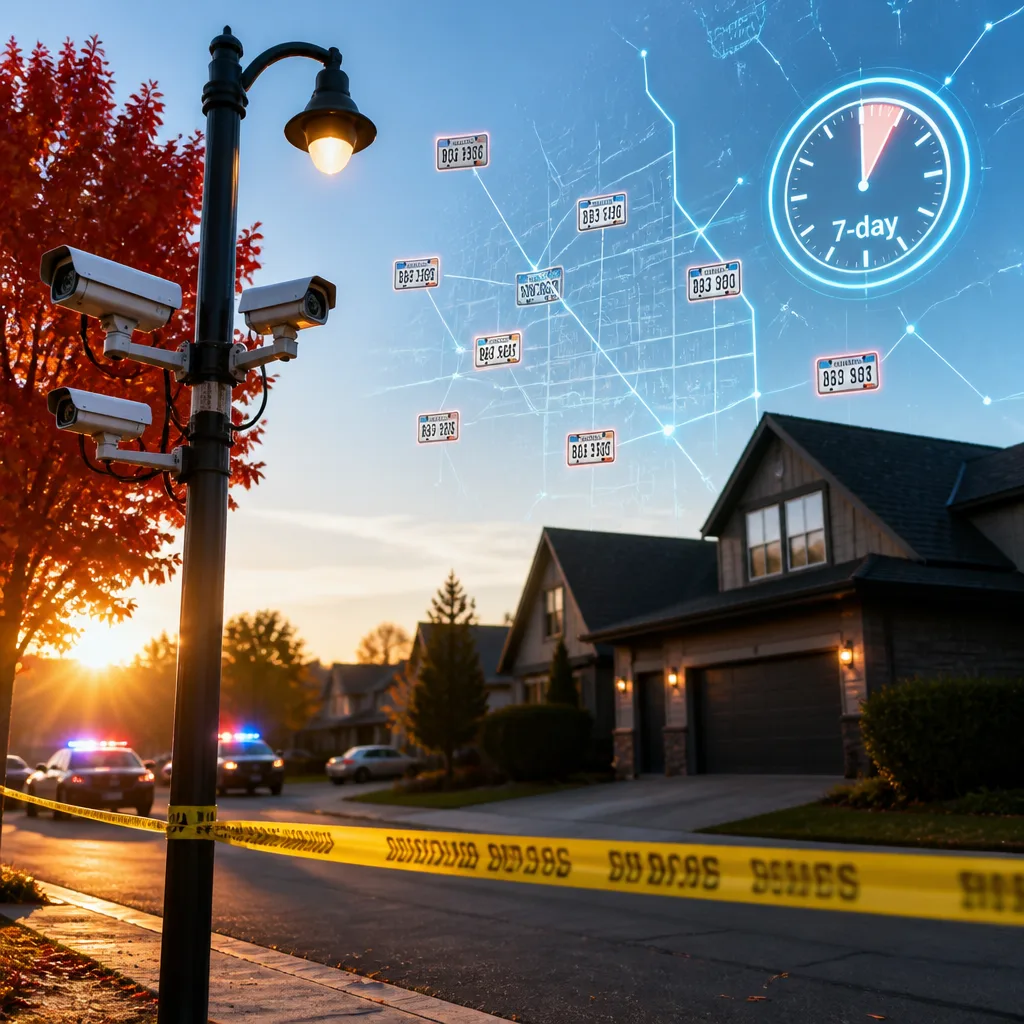
Flock deploys cameras that can read licence plates and build a searchable database for police. The devices are sold to law enforcement, homeowners’ associations and private businesses. Supporters highlight cases where the systems have apparently helped detect vehicles of interest quickly; critics warn the networks can enable broad monitoring of everyday movement and raise civil liberties concerns.
Recent controversies have also included examples of agencies misusing Flock cameras, and those incidents have contributed to calls for clearer oversight and stricter limits on access to the data.
Company moves to tighten controls
In response to criticism, Flock announced several policy changes intended to reduce risks and increase transparency. Among the measures the company publicised are:
- Reducing its recommended data-retention period from 30 days to seven;
- Publishing contractual language that clarifies agency ownership of collected data;
- Introducing an offence filter, requiring audit assistance, proactive lockouts and case codes.
| Metric | Previous | New |
|---|---|---|
| Recommended data retention | 30 days | 7 days |
| Missing-persons cases claimed helped (2025) | 10,000 (company estimate, extrapolated) | |
Implications for policing and privacy
Langley’s certainty that Flock would have solved the Guthrie disappearance illustrates a broader tension: private technology firms can promise crime-fighting benefits, but independent verification and context are necessary when those claims intersect with real-world investigations.
For communities and police services considering purchase or expansion of Flock networks, the crux is whether the operational gains outweigh the privacy trade-offs and whether robust governance is in place to prevent misuse. The company’s policy changes address some procedural risks, but they do not eliminate concerns about mass tracking through persistent licence-plate records and third-party access.
Law enforcement agencies must also consider how vendor claims are presented publicly. When a company executive asserts that a tool would have solved a specific, unresolved disappearance, it can shape public expectations and influence trust in both investigators and the technology provider.
As this debate continues, questions likely to shape policy discussions include:
- What independent audits or evaluations will verify claims that Flock technology materially contributes to finding missing persons?
- How will data-retention and access controls be enforced across jurisdictions?
- Should there be standard contractual language or regulation governing ownership and secondary use of camera data?
The Guthrie case remains the subject of an active investigation by the FBI and local authorities. Langley’s remarks and Flock’s recent policy adjustments ensure the company’s role in policing and public safety will remain under scrutiny as officials, privacy advocates and communities weigh the benefits and risks of licence-plate-reading networks.