Montreal — A 64‑year‑old Quebec man has become the first person in North America to receive a liver regenerated and evaluated outside the body by a machine designed to expand the pool of usable donor organs.
New device used at CHUM
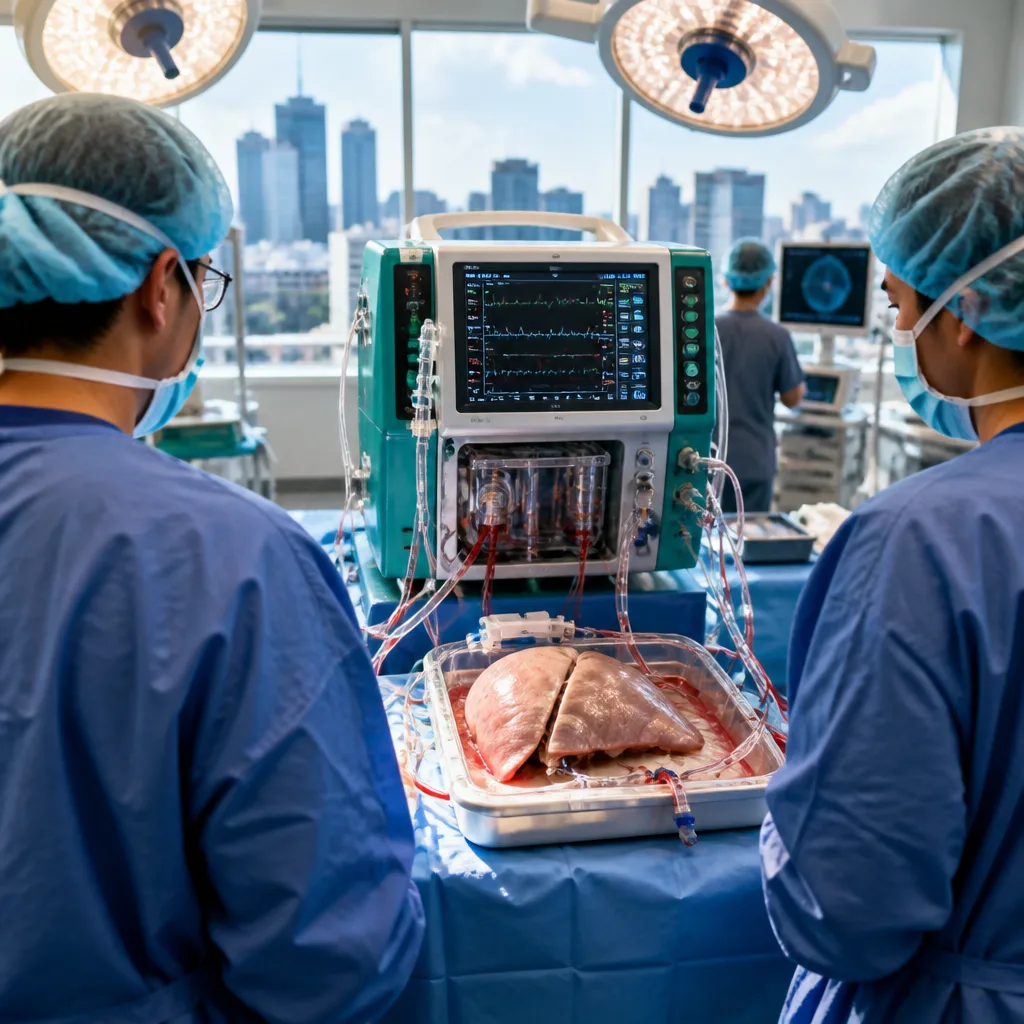
The procedure took place at the Centre hospitalier de l’Université de Montréal (CHUM). The technology, referred to as Liver Assist, lets clinicians treat and assess donated livers outside a recipient’s body before transplantation. Doctors involved say the process allowed them to use an organ that otherwise might have been considered too risky.
The recipient, Gérard Landry, a resident of Nouvelle on the south shore of Quebec’s Gaspé Peninsula, had spent about 15 years contending with liver disease that progressed to cirrhosis and liver cancer. Landry was told by his physician prior to surgery that the organ had been regenerated by the machine; he described the news as,
“It was like a Christmas gift.”
What the technology does
Liver Assist allows medical teams to keep a donated liver functioning outside the human body while they treat, monitor and assess it. That capability matters because many donated organs are currently declined for transplant due to concerns over quality or damage sustained before procurement. By rehabilitating and evaluating organs ex vivo (outside the body), clinicians can make more informed decisions about whether an organ is safe to transplant.
- Patient: Gérard Landry, 64
- Location: Centre hospitalier de l’Université de Montréal (CHUM)
- Technology: Liver Assist (machine for treating and assessing livers outside the body)
- Clinical history: About 15 years of liver disease culminating in cirrhosis and liver cancer
Potential impact and cautious optimism
CHUM says the technique could make dozens of additional livers available for transplant in its first year alone. That projection, if realised, would address a long-standing bottleneck in transplant medicine: the persistent shortage of organs and the number of patients who die waiting.
Ex vivo organ perfusion systems have been under study for several years in different forms for lungs, hearts and livers. They aim to revive marginal organs, allow targeted therapies and provide real‑time assessment of function. The CHUM use is notable because it represents the first documented North American case using this particular Liver Assist platform to regenerate and then transplant a liver into a patient with cancer and cirrhosis.
While the early result for this patient appears positive, broader adoption will depend on peer‑reviewed evidence about safety, durability and outcomes compared with standard transplantation, as well as regulatory approvals, training and cost considerations. Hospitals will also need to confirm whether projected gains in usable organs translate to sustained increases in successful transplants across varied donor and recipient populations.
Clear implications for transplant medicine
For patients on waiting lists and the transplant teams that care for them, ex vivo regeneration technology promises three practical benefits:
- Increase the number of usable donor organs by rehabilitating livers previously judged marginal.
- Improve assessment of organ function before implantation, reducing the risk of early organ failure.
- Provide a platform for targeted therapies to treat infections or cellular damage while the organ is on the device.
This individual case will be watched closely by transplant centres, regulators and companies developing organ preservation and repair platforms. If outcomes remain favourable and evidence accumulates, the technology could change how hospitals evaluate donor organs and potentially reduce wait‑list mortality.
| Item | Detail |
|---|---|
| Recipient age | 64 |
| Hospital | CHUM (Montreal) |
| Technology | Liver Assist |
| Clinical background | ~15 years of liver disease, cirrhosis and liver cancer |
The case marks a step forward in the application of machine‑based organ rehabilitation in Canada. For the patient involved, it has meant a new chance at life; for the wider transplant community, it raises the prospect of more available organs and a shift in how doctors approach marginal grafts.