
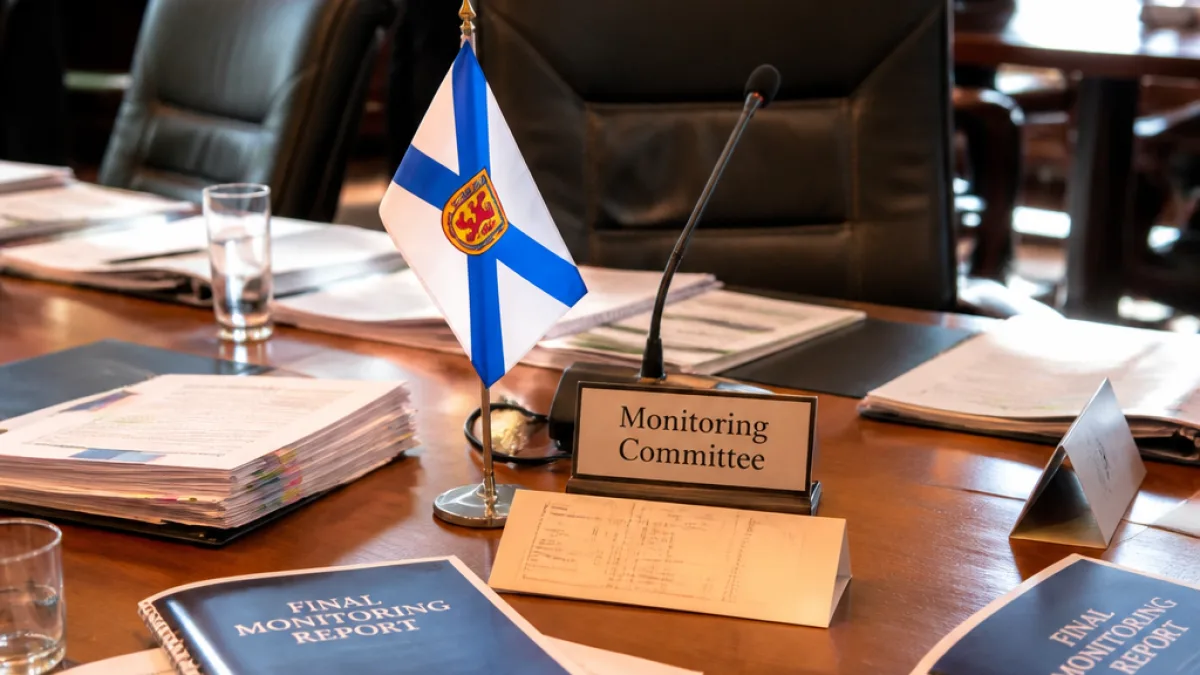
The final progress monitoring report on the implementation of recommendations stemming from the 2020 Nova Scotia mass shooting has for the first time explicitly included gender‑based and intimate‑partner violence among the issues it tracks — and the finding has renewed calls from advocates for faster, deeper change.
Committee says progress made, but much remains
Myra Freeman, chair of the independent monitoring committee, said the province is in a stronger position than it was in 2020 but cautioned that substantial work is still required to complete the inquiry’s reforms. Of the 130 recommendations released in 2023, the committee’s final report notes that 40 still require what it described as “significant work.”
Freeman told reporters the inclusion of gender‑based and intimate‑partner violence in the monitoring framework reflected an essential recognition of the roots of the Portapique attacks, and of the broader societal patterns that contributed to the tragedy.
“We know that change takes time and government cannot address gender‑based violence, intimate partner … violence by themselves,”
The April 2020 attacks began in Portapique when the shooter, Gabriel Wortman, assaulted his partner, Lisa Banfield. Over a 13‑hour rampage that included multiple shootings and fires, 22 people were killed before Wortman was shot and killed by RCMP.
Advocates say the response still overlooks intimate‑partner violence
For some advocates, the committee’s acknowledgement is overdue and does not go far enough. Liz Leclair, who speaks publicly on gender‑based violence, said the origin of the spree in an intimate‑partner assault is often downplayed.
“Whether people like it or not, we have to note that the findings found that this all sparked off because of an incident of intimate partner violence, which was a massive red flag,”
Leclair argued political rhetoric and actions from the premier’s office and government caucus have not demonstrated the degree of seriousness she believes the issue demands.
Survivors and experts describe ongoing harm
Members of the monitoring committee who have professional backgrounds in trauma care also warned that survivors continue to experience harm from systems that have not fully reformed. The report and its contributors stress the need for government, community agencies and service providers to coordinate more effectively to reduce system‑induced trauma.
The committee’s final monitoring document frames gender‑based violence as a social epidemic requiring broad cultural change and the cooperation of many sectors, not only government ministries.
Where implementation stands
The report does not offer a timetable for completing the outstanding items, but it sets a clear inventory of unfinished work and highlights areas where additional resources, policy change and public education will be needed.
- Total recommendations: 130 (from 2023 inquiry report)
- Still requiring significant work: 40
- New monitoring focus: Gender‑based and intimate‑partner violence
| Item | Count |
|---|---|
| Recommendations in original report | 130 |
| Recommendations needing significant work | 40 |
Community groups and experts have urged the provincial government to accelerate work on outstanding recommendations, to publicly report measurable benchmarks and to increase supports for survivors of intimate‑partner violence.
Officials involved in implementation have previously said change takes time and that co‑operation across policing, health care, social services and community organisations is essential. The monitoring committee reiterated that no single department can resolve the problem alone.
What this means locally
For residents of communities affected by the 2020 attacks and for Nova Scotians concerned about public safety, the committee’s final report is both a progress check and a warning: important reforms are underway, but several remain incomplete, and the newly highlighted connection to gender‑based violence demands a wider, sustained response.
Advocates are pressing for concrete steps: clearer pathways to support for survivors, mandatory training and accountability measures in public institutions, and public awareness campaigns that address the cultural drivers of violence.
The report’s inclusion of gender‑based and intimate‑partner violence in the monitoring framework may mark a turning point in how the province tracks and prioritizes reforms arising from one of the darkest days in Nova Scotia’s recent history.