Halifax, like many older cities, has landmarks that are easy to point to — the harbour, the Citadel, the Boardwalk. But for generations of people who grew up here in the 1970s, 1980s and 1990s, another kind of landmark existed on the airwaves: the short, relentless commercial jingle that played between Switchback, ATV News, Saturday-morning cartoons and Sunday-night movies.
Small businesses, big hooks
Those three- or four-line melodies were not just advertising; they became shared memory. They threaded through daily routines until entire neighbourhoods could sing them from memory. In many cases the businesses behind the jingles were local — and that localness helped the tunes embed themselves in everyday life.
- TK’s Carpets — Perhaps the most famously persistent Halifax jingle:
"You get more for your floor… at your TK Store!"
- Casino Taxi — A telephone number turned into a refrain; the ad made two numbers (429-6666 and 425-6666) nearly impossible to read without hearing the melody in your head.
- Green Gables — One of several local names whose ads found their way into family living rooms and radios.
Even today, mention of TK’s often elicits the jingle before a reply. The company itself closed around the time of the COVID-19 pandemic, but the tune persists. Casino Taxi’s campaign, which began in the 1980s, became so entwined with the brand that the company still celebrates it as part of its identity.
Why jingles stuck
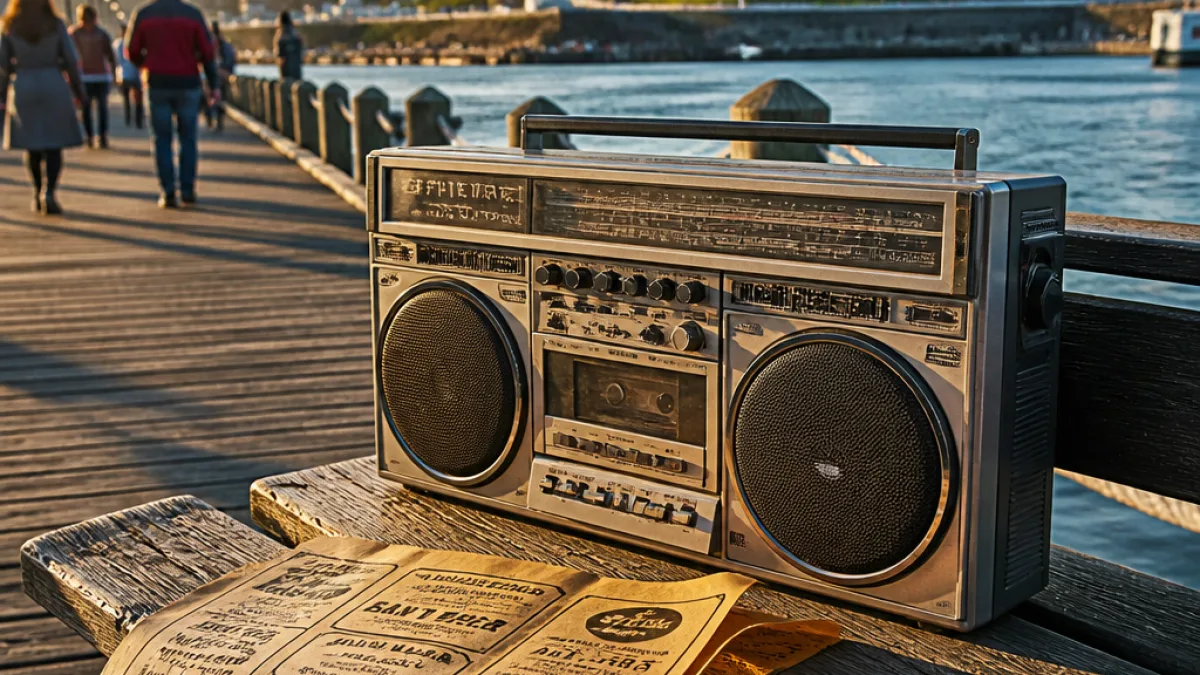
Before the era of smartphones and on-demand streaming, television and radio environments were comparatively compact. Local stations carried a regular rhythm of programs and breaks. Commercials played at predictable times, and families — gathered around a single television or tuned to the same radio station — heard the same spots over and over.
That repetition, combined with simple melodies and catchy hooks, made the jingles easy to recall. They were short, often featured a clear refrain or phone number, and were built to be hummed between shows. For many, they became mnemonic devices for life in Halifax: the places to shop, the numbers to call, the services to trust.
Echoes across generations
The effect of those jingles can be more than nostalgia. They are cultural signposts that mark how commerce and media shaped community life. For older Haligonians, the jingles evoke afternoons of television and radio routines. For younger residents, they are a kind of retro curiosity — the pop-culture equivalent of finding vinyl in an attic.
| Jingle / Brand | Era | Notable detail |
|---|---|---|
| TK’s Carpets | 1970s–1990s | Often cited as Halifax’s most recognisable jingle; business closed around COVID-19 |
| Casino Taxi | 1980s onward | Turned phone numbers (429-6666 / 425-6666) into an unofficial city anthem |
| Green Gables | 1970s–1990s | Representative of many local retailers whose ads became familiar |
As media consumption fragmented — more channels, more choices, the arrival of the internet and streaming — the era of the city-wide jingle faded. Commercials became more targeted and less likely to reach such a broad local audience repeatedly. Yet the ones that did the job well left an imprint that lasts decades.
Walking through Halifax today, it is still possible to hear echoes of those melodies. They surface in conversation, at reunions, and online when people exchange clips and reminiscences. For a city with a strong sense of place, these small musical souvenirs are strangely powerful: the jingles are musical postcards from the Halifax of a different age.
There is a practical memory as well — numbers remembered, stores located, services trusted — and an emotional one: the warm certainty that came from a predictable soundtrack in households across the city. Those little songs may have been written to sell carpets or taxis, but they ended up, for many, selling a sense of shared time and place.