The National Capital Commission (NCC) and Kruger Products Inc. have officially opened Confluence Park, a new public green space developed on the grounds of Kruger’s Laurier plant in Gatineau. The project converts part of the industrial site into a riverside park designed to improve public access to the Ottawa River and to highlight the area’s industrial heritage.
From industrial site to riverside park
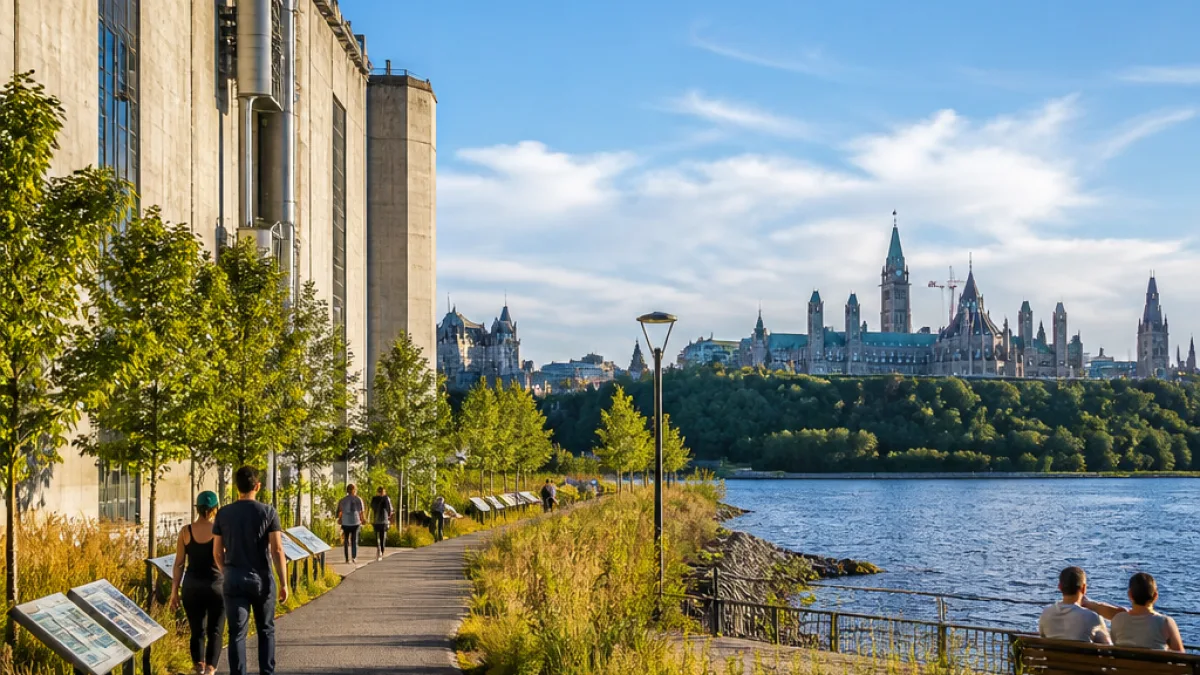
Developed in several phases since its launch in 2022, the transformation repurposed approximately 13 per cent of the plant’s land into a landscaped area on Laurier Street, adjacent to the Capital Pathway. The park covers roughly 10,000 m² and offers new views of the Ottawa River and Parliament Hill, along with streetscaping and architectural enhancements to the plant façade.
Confluence Park includes a permanent outdoor exhibition along Laurier Street that traces the site’s history through photographs and panels. The exhibition is intended to place the site in the context of the Ottawa River’s role in the region’s economic and industrial development.
- Tree planting: more than 400 deciduous trees and nearly 20 conifers.
- Shrub and ground cover: about 830 shrubs and over 7,500 m² of seeded grass and ecological restoration areas.
- Accessibility: direct access by foot and bicycle via the Capital Pathway; riverside viewpoints.
The plant's lighting was modernized as part of the work, and the landscaping relied on native plants selected for resilience to the local climate.
“The Confluence Park reflects the kind of future we want to build,”
The inauguration brought together local and federal representatives and project partners, including Steven MacKinnon, Member of Parliament for Gatineau and Minister of Transport; Greg Fergus, MP for Hull–Aylmer; Suzanne Tremblay, Member of the National Assembly for Hull; Gene Kruger, co-president of Kruger Inc.; Maryse Gaudreault, chairperson of the NCC; and Tobi Nussbaum, chief executive officer of the NCC.
What the park delivers to Gatineau residents
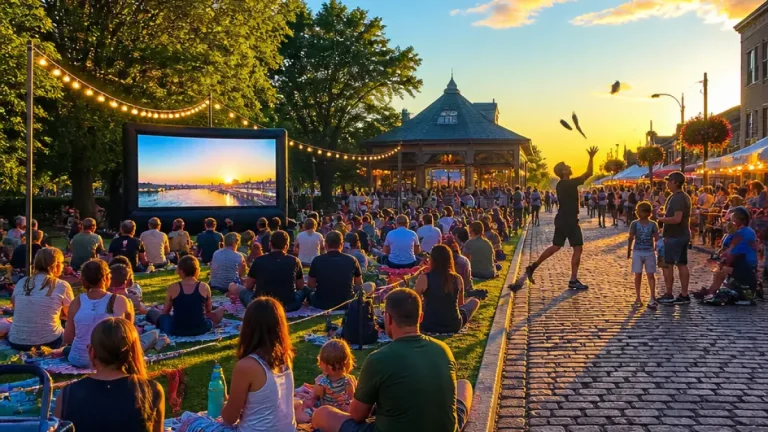
Confluence Park provides Gatineau residents with new green space near the river within an industrial corridor that for decades supported local employment. By converting a portion of private industrial land into publicly accessible waterfront, the project adds recreational and ecological value while preserving and interpreting elements of the site's industrial past.
Officials emphasised multi-party collaboration in the development: the effort combined corporate redesign of the plant frontage, public agency stewardship of the riverfront corridor and municipal connectivity through the Capital Pathway. The park’s vegetation strategy focuses on native species to strengthen ecological resilience in an urban riverside setting.
| Feature | Detail |
|---|---|
| Site area converted | 10,000 m² (about 13% of plant land) |
| Trees planted | 400+ deciduous; ~20 conifers |
| Shrubs and grass | ~830 shrubs; >7,500 m² seeded grass/ecological areas |
For Gatineau residents who use active transportation, the park’s location along Laurier Street and the Capital Pathway makes it readily reachable by walking and cycling. The permanent exhibition offers neighbours and visitors a visual history of how the riverside area evolved and the role industry played in shaping the local economy.
As urban riverside redevelopment draws attention across the National Capital Region, Confluence Park represents one of the more visible examples in Gatineau of private land being partially reoriented toward public amenity and ecological restoration. The site will likely be watched as a model for how industrial property can be integrated into the public riverfront without erasing the history of local industry.