LaSalle College has been granted creditor protection by the Quebec Superior Court after receiving hefty penalties tied to the province’s recent language legislation, the Montreal institution said as it pressed the provincial government for urgent talks.
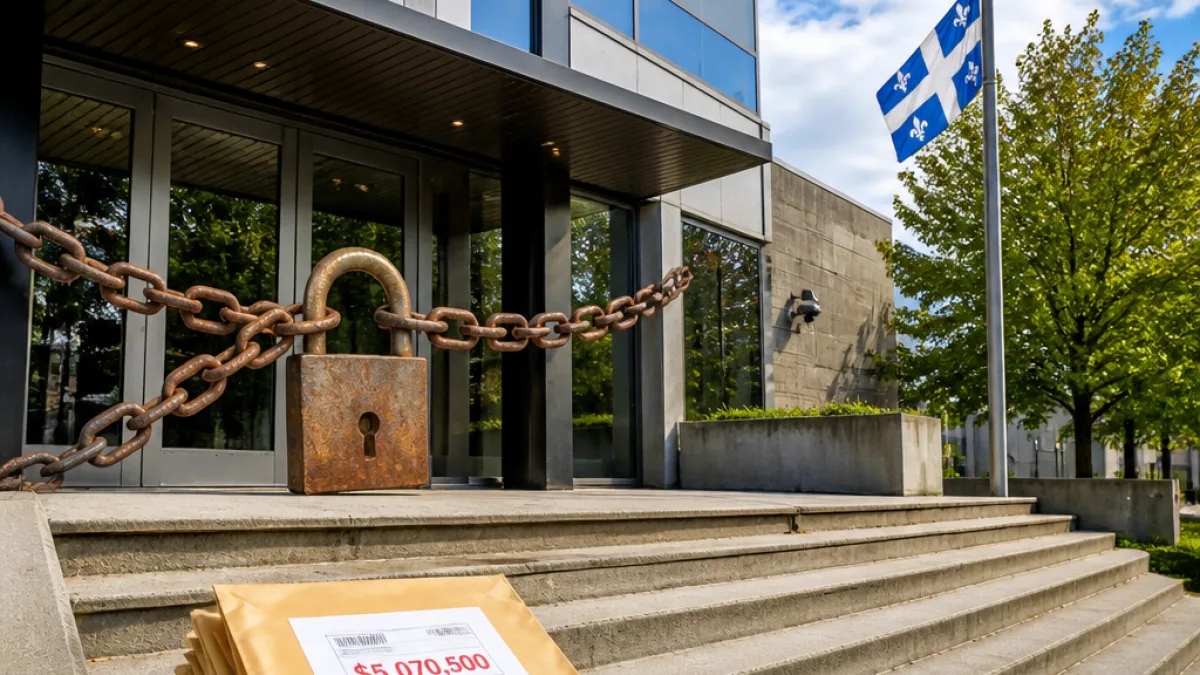
The privately administered, publicly subsidized college — one of the few in Quebec that runs both English- and French-language programmes — was fined after exceeding caps set on the number of students allowed in English-language programmes under a 2022 law. The fines amount to about $30 million, and the school must also reimburse roughly $17.9 million in subsidies received last year, pushing total liabilities to close to $48 million.
How the penalties accumulated
LaSalle says the penalties arose when the college surpassed the statutory enrolment limits in successive years. In the 2023–24 academic year, the institution exceeded the cap by 716 students and was fined $8.8 million. The following year, it exceeded the quota by 1,066 students, drawing an additional penalty of $21 million. Combined with the required reimbursement of subsidies, the school’s debt burden became substantial enough that management moved to secure creditor protection.
| Academic year | Excess students | Fine |
|---|---|---|
| 2023–24 | 716 | $8.8 million |
| 2024–25 | 1,066 | $21 million |
| Subsidy reimbursement | — | $17.9 million |
College leadership calls for intervention
LaSalle’s management framed the sanctions as catastrophic for the institution. The college’s representatives told reporters and officials the penalties were “unfair and unprecedented” and urged the provincial government to intervene with a practical solution that would allow the campus to continue operating.
“I think no company in Quebec can survive a $30‑million fine,”
In a letter to the premier obtained by media, the college requested several measures, including permission to launch a new science programme and a realistic timetable for repaying the subsidies. The school also said it had asked for a two‑year transition period when the law was introduced in 2022 but did not receive it; that request, LaSalle argues, would have eased the adjustment to the new enrolment caps.
Unions warn of ripple effects on staff and students
Two unions — the Office and Professional Employees Union and the Quebec Federation of Labour — publicly urged the provincial government to engage with the college to prevent closure and to safeguard jobs. They stressed the wider consequences that a shutdown would have for both employees and students, including disruption to ongoing programmes and uncertainty for those mid‑stream in their studies.
- Students: potential interruption to classes and delayed credentials.
- Employees: risk of layoffs or contract renegotiations if the college downsizes.
- Community: loss of a bilingual post‑secondary option in Montreal.
What this means for anglophone education in Quebec
LaSalle College’s plight illustrates the tension between Quebec’s language policy objectives and the operational realities of bilingual educational institutions. The 2022 law sought to reinforce French in the province’s public life by limiting the intake in English‑language college programmes; critics have warned that sudden enforcement without transitional measures could destabilize institutions that have long served both francophone and anglophone students.
College officials say they now comply with the enrolment limits but need government co‑operation to resolve liabilities accrued before their adjustment. The institution is pressing Premier Fréchette to provide a positive decision that would allow it to move forward with proposed programme expansions and a manageable repayment plan.
What comes next
Under creditor protection the college gains time to negotiate with creditors and the government while continuing operations. Any long‑term resolution will depend on discussions with the Quebec administration and whether officials agree to measures such as staggered repayments, programme approvals or other accommodations. For students and staff, the priority will be clear communication from the college and the province about programme continuity and employment security.
As the situation unfolds, Montreal’s anglophone education sector will be watching closely: decisions made here could set precedents for other bilingual institutions grappling with the new legal framework.