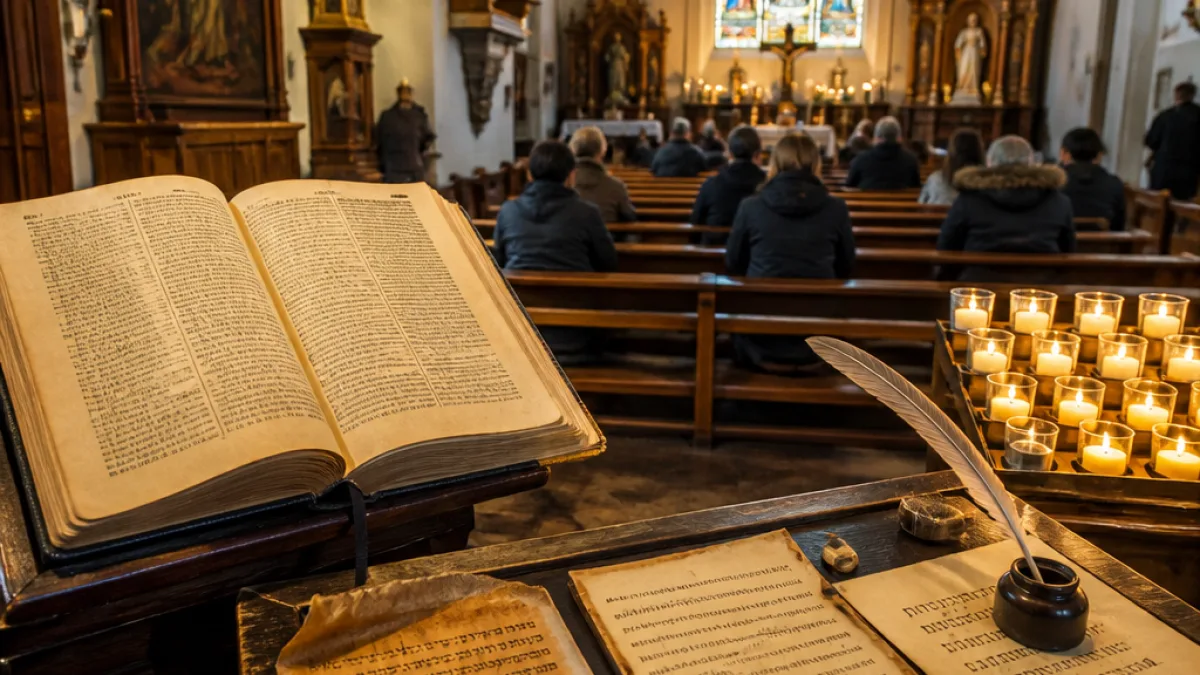
On Sept. 30 the Christian calendar marks the memorial of Saint Jerome, a fourth- and early fifth-century scholar whose insistence on reading Scripture in its original languages shaped the Latin biblical tradition. For residents of Saint-Jerome and the broader region, the feast is an occasion to reflect on the role of Scripture in personal faith and communal life.
Jerome’s lasting contribution
Jerome’s era was one of doctrinal formation and textual consolidation within the early Church. Latin-speaking Christians lacked a single, reliable Latin Bible grounded in the Hebrew and Greek texts. Jerome set himself to the task of studying Hebrew and Greek, comparing existing manuscripts and earlier Latin translations, and clarifying difficult passages — work he carried out during long periods of study and while living in Bethlehem.
That labour eventually became associated with the Latin tradition known as the Vulgate. Jerome revised the Latin Gospels and Psalms and proceeded to translate the Old Testament directly from Hebrew, an exacting and controversial enterprise in his time. His work informed later councils and generations of scholars, and it remains a touchstone in discussions about translation, authority and the place of Scripture in Christian life.
Scripture and encounter
The liturgical readings appointed for the memorial highlight the spiritual seriousness Jerome attached to Scripture. The daily readings listed for Sept. 30 include Job 9:1-12, 14-16 and Luke 9:57-62. The gospel scene in Luke presents seekers who express willingness to follow Jesus, but Jesus’ replies stress the urgency and demands of discipleship — a theme Jerome brought into sharp focus by urging Christians to know Scripture as a route to knowing Christ.
- Reflection date: Sept. 30 (Memorial of Saint Jerome)
- Daily readings: Job 9:1-12, 14-16; Luke 9:57-62
- Key conviction: Scripture is a privileged place where believers encounter Christ
“Ignorance of the Scriptures is ignorance of Christ.”
This often-cited line from Jerome summarises his conviction: access to the biblical texts — read carefully and in conversation with their original languages and contexts — is indispensable to Christian formation. The Second Vatican Council later echoed this emphasis, urging Christians to become familiar with Scripture to gain the “excellent knowledge of Jesus Christ.”
Local resonance
For communities in and around Saint-Jerome the memorial provides an opportunity to consider how that conviction translates into parish life, catechesis and personal devotion. The gospel reading’s emphasis on the cost and urgency of following Jesus can prompt discussion about what discipleship looks like in contemporary settings: how communities prioritise study, mutual support and the translation of belief into action.
| Item | Detail |
|---|---|
| Memorial | Saint Jerome |
| Date | September 30 |
| Readings | Job 9:1-12, 14-16; Luke 9:57-62 |
Whether read in quiet devotion or in a communal liturgy, the texts appointed for Sept. 30 invite a renewed look at how Scripture shapes belief and conduct. Jerome’s painstaking work as a translator and exegete remains a reminder that engagement with sacred texts is both an intellectual and spiritual enterprise — demanding study, discipline and a readiness to be formed by what is read.
As local parishes mark the day, the memorial of Saint Jerome can serve as a prompt for workshops, study groups or moments of parish reflection that reconnect daily faith with the textual sources that have shaped Christianity for centuries.