Nova Scotia businesses — most notably the seafood sector — say they are wrestling with a new layer of uncertainty after Ottawa placed seafood on a list of dollar-for-dollar counter-tariffs responding to fresh U.S. duties.
Tariff fight hits integrated supply chains
The federal government’s countermeasures cover $27.6 billion worth of U.S. goods, a list compiled in response to recent U.S. tariffs of up to 50 per cent on Canadian items. For some Nova Scotia industries, that has become a “double whammy”: facing import costs from the U.S. and retaliation at home.
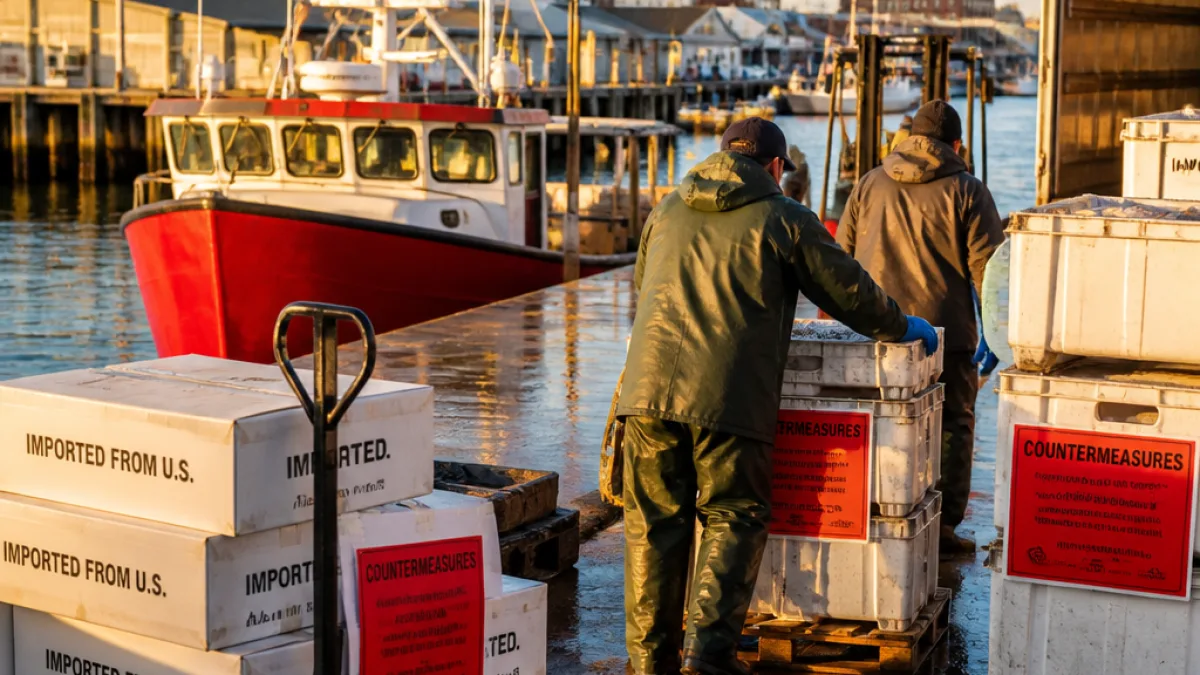
The Nova Scotia Seafood Alliance said it was taken aback when Ottawa included seafood on the retaliatory list. The alliance warned the decision could disrupt highly integrated cross-border seafood supply chains — chains that rely on U.S. raw materials that are processed in Canada and then exported as finished seafood products.
“We’re disappointed to see ourselves included in this without having the benefit of being able to advise our federal government colleagues about what the implications may be and how we might have better tuned this list,” Kris Vascotto, executive director of the Nova Scotia Seafood Alliance, told Radio‑Canada.
Vascotto said Canada imports about $1 billion worth of fish and seafood from the United States each year and that “pretty much every single item that we import” was on the retaliatory list. That suggests processors who rely on U.S. inputs could face higher costs or disrupted access — with potential knock-on effects for jobs, prices and exports.
Industry calls for fixes and relief
Businesses and industry groups in Nova Scotia are urging Ottawa to consider adjustments to the list or to create a remission program that would exempt certain items affected by the countermeasures. The hope is to avoid unintended consequences for domestic processors and the broader supply chain while still signalling a firm federal response to U.S. tariffs.
- Concern: Nova Scotia processors may face increased input costs when U.S. raw materials are subject to duties at both ends.
- Request: Industry groups want either a correction to the tariff list or a remission program for items essential to integrated Canada–U.S. supply chains.
- Risk: Potential cancelled orders, higher consumer prices, and operational disruption for processors who import U.S. seafood inputs.
What the numbers show
| Item | Value / Rate |
|---|---|
| Counter-tariff list value | $27.6 billion |
| U.S. tariff cited in response | 50% |
| Canada’s annual seafood imports from U.S. | $1 billion |
The inclusion of seafood on Ottawa’s list was implemented quickly, officials have said, and that speed appears to have limited prior consultations with affected industries, according to the Seafood Alliance’s response.
Local consequences and next steps
For Nova Scotia — a province with a long history tied to fisheries and seafood processing — the stakes are practical and immediate. Processing plants often rely on steady flows of raw inputs that cross the border. If those inputs suddenly attract tariffs, processors must either absorb added costs, pass them on to buyers, or seek alternative suppliers, each with economic consequences.
Industry leaders are now pressing for avenues to mitigate harm while Ottawa and Washington piece together a path forward in the trade dispute. Options raised by the sector include a targeted remission program, narrow exemptions for specific raw materials used in processing, and expedited consultations to refine the tariff list.
Until federal decisions change the landscape, some Nova Scotia operators may face tightened margins or order cancellations, underscoring how quickly international trade measures can ripple through local communities and maritime supply chains.
Reporting in this story is based on statements from the Nova Scotia Seafood Alliance and details about the federal counter-tariff measures and U.S. tariff actions.