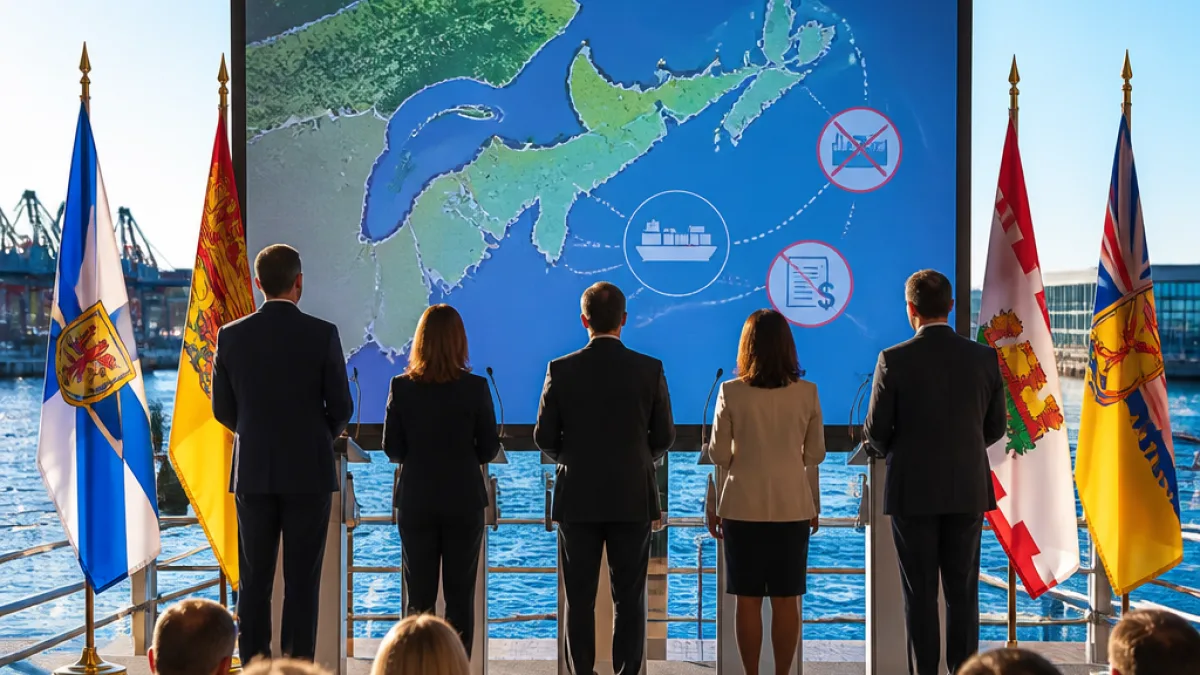
Premier Tim Houston of Nova Scotia stood alongside other Maritime leaders this weekend as new U.S. tariffs on Canadian goods came into force, urging a coordinated national response and pressing provincial colleagues to make it easier for jurisdictions to work together in the face of external trade pressures.
Provincial solidarity and a call for self-reliance
In interviews and statements over the weekend, premiers from Nova Scotia, Prince Edward Island and New Brunswick voiced solidarity with the federal government and with each other, describing a need for unity as Ottawa navigates the dispute with the United States.
Houston told CBC News he supports a united “Team Canada” approach and warned that the U.S. is “no longer a reliable partner.” He said the tariff measures underline the importance of building domestic resilience—by developing the province’s own energy and natural resources and by seeking new export markets.
“We can't have tariffs within our own country [when] we're trying to deal with these threats from outside of our country,” Houston said, urging the removal of interprovincial trade barriers.
Speaking after a first ministers’ meeting, the Nova Scotia premier said he had pressed other premiers to act on internal trade barriers that he said hamper domestic development. The thrust of his comments was that provinces must not impede each other as they respond to external economic shocks.
What premiers are saying
The responses from Maritime leaders showed a common thread: public backing for Ottawa’s negotiation stance, a stress on unity, and a desire to strengthen regional economic options.
- Tim Houston (Nova Scotia): Backed the federal response, urged provincial cooperation and domestic development of energy and natural resources.
- Rob Lantz (Prince Edward Island): Said the Team Canada approach has united the country for trade negotiations and will remain vital.
- Susan Holt (New Brunswick): Expressed solidarity with the federal government and other premiers.
Each premier framed the tariffs as a test of national cohesion—one that demands both a federal response on the international stage and provincial action at home to ensure internal markets can support adjustment.
Policy measures under discussion
While premiers publicly emphasized unity, Houston’s comments about interprovincial trade barriers point to concrete areas for policy work. He argued that reducing internal frictions—regulatory, logistical or jurisdictional—would allow provinces to respond more nimbly to disruptions in external markets.
The weekend’s first ministers’ meeting provided a forum for those conversations, though detailed policy steps were not laid out in public remarks. The premiers’ statements, however, signal pressure on both Ottawa and provincial governments to consider changes that would ease the movement of goods and resources across provincial lines.
Local impact and what to watch
For Nova Scotia exporters and resource-sector businesses, the tariffs could mean short-term uncertainty and renewed attention to diversification. Houston’s emphasis on developing local energy and resources suggests the provincial government may accelerate efforts to expand domestic production and to pursue new trading partners beyond the United States.
Observers will be watching for:
- Any federal-provincial agreements to reduce internal trade barriers;
- Provincial strategies to expand domestic energy and resource development;
- Ottawa’s next diplomatic and trade steps in negotiations with the U.S.
| Premier | Province | Key message |
|---|---|---|
| Tim Houston | Nova Scotia | Support for federal response; urge removal of interprovincial barriers |
| Rob Lantz | Prince Edward Island | Backed Team Canada approach; stressed unity |
| Susan Holt | New Brunswick | Expressed solidarity with federal government |
For Nova Scotia residents whose livelihoods depend on trade, the premiers’ united front will be welcome, but it is not a substitute for policies that address market access, supply chains and regulatory alignment. The province’s emphasis on self-reliance and market diversification is likely to shape regional economic planning in the months ahead.
Reporting from Halifax, this coverage will follow developments in Ottawa and Halifax as premiers press for practical steps to shield the region from fallout and to position Maritime industries for new opportunities.