
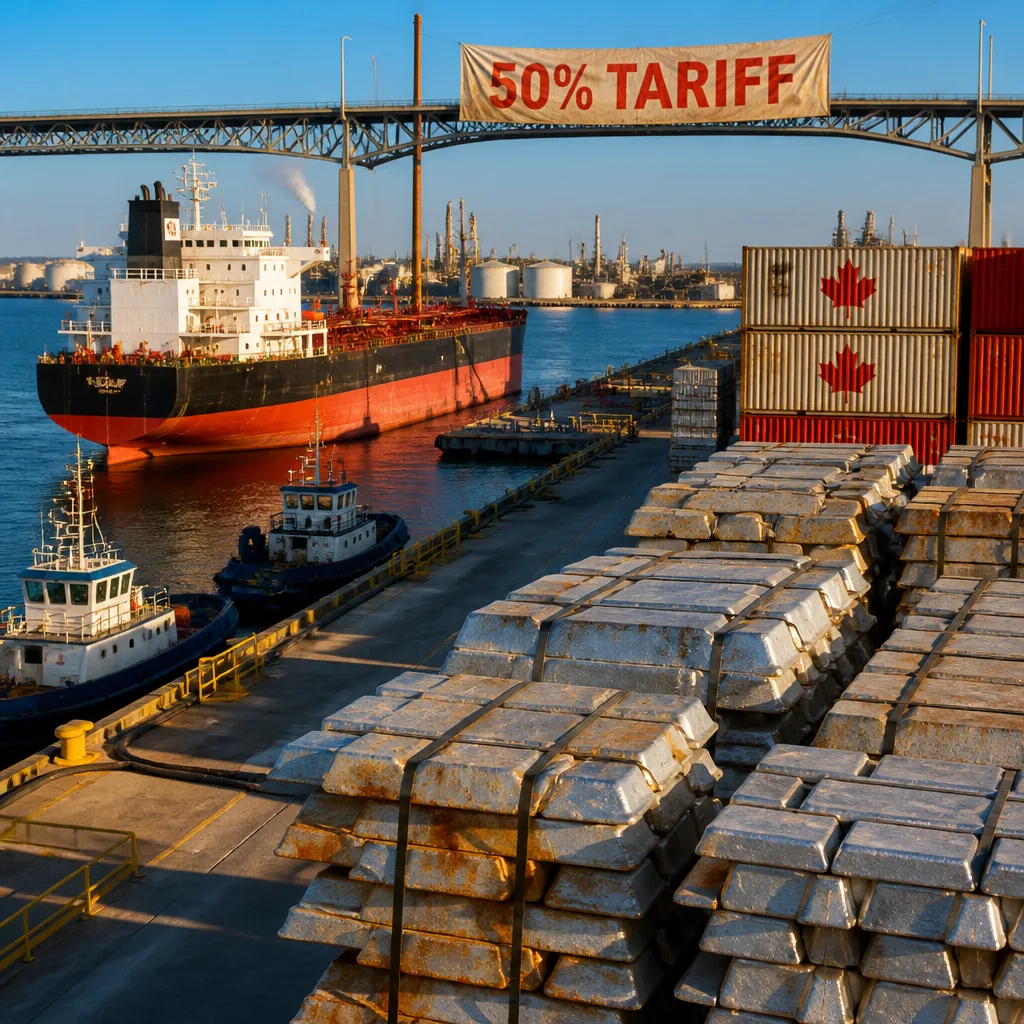
Canada's trade surplus contracted sharply in July, slipping to C$769 million as exports fell and imports rose, Statistics Canada data show — a development that leaves exporters facing a tougher environment just weeks after the United States imposed large new tariffs.
Exports slide, imports climb
Total exports declined 2.3 per cent to C$76.14 billion from June, while imports increased 2.2 per cent to C$75.37 billion, resulting in the narrow surplus reported for the month. The July outcome marks the fifth consecutive monthly trade surplus for Canada, but it represented a steep drop from the previous month’s four-year high of C$4.2 billion.
The statistics agency said the fall in exports was led by the energy sector, which makes up roughly a quarter of total Canadian exports and traditionally sends about 95 per cent of its shipments to the United States. Energy exports fell 4.4 per cent, with crude oil values down 5.5 per cent amid declines in both prices and volumes. Metal and non‑metallic mineral product exports also reversed course after a strong June, shrinking 8.5 per cent in July.
“Washington's 50% new tariffs imposed by last month will provide a tougher test for exporters in the coming months.”
Main drivers and cross‑border trade
- Energy exports fell by 4.4%, with crude oil down 5.5%.
- Metal and non‑metallic mineral product exports dropped 8.5%.
- Aircraft and transport equipment exports partially offset losses, rising 34.9%.
- Imports rose for a sixth consecutive month, led by motor vehicles and parts, up 11.4%, largely from the United States.
Trade with Canada’s largest trading partner was a particular factor in July’s swing. Exports to the United States fell 6.6 per cent, while imports from the U.S. rose 1.8 per cent. That combination cut Canada’s bilateral surplus with the United States to about C$5.9 billion. Overall, the U.S. accounted for roughly 66.35 per cent of Canadian exports in the month.
| Measure | June | July |
|---|---|---|
| Total exports | C$77.96 billion | C$76.14 billion |
| Total imports | C$73.76 billion | C$75.37 billion |
| Trade surplus | C$4.2 billion | C$769 million |
Context and implications
The July figures extended a run of trade resilience despite more than a year and a half of U.S. tariffs. But the timing of the new data is significant: Washington imposed fresh tariffs of 50 per cent last month on certain Canadian goods, a policy shift that now raises the stakes for exporters in coming months.
Economists surveyed ahead of the release had expected a larger surplus for July — a median forecast of C$3.57 billion — meaning the actual outcome fell well short of market expectations. While the headline slump in exports was largely accounted for by energy and metals, some sectors recorded gains: aircraft and other transportation equipment and parts saw a notable rebound, rising by nearly 35 per cent.
Rising imports, particularly vehicles and parts from the United States, also contributed to the narrower surplus. Imports have climbed for six straight months, reflecting ongoing demand for foreign goods and the deep integration of North American supply chains.
For policymakers and businesses, the data underscore two immediate challenges. First, Canada remains exposed to shifts in energy markets — declines in crude prices or volumes can quickly erode export values. Second, elevated U.S. tariffs add a new policy risk for firms that depend on American markets, especially energy and metals exporters that historically ship the bulk of their production across the border.
How the trade balance evolves in the coming months will be closely watched by economists, exporters and federal officials as they assess the economic impact of the U.S. tariff measures and prepare responses to support affected industries.