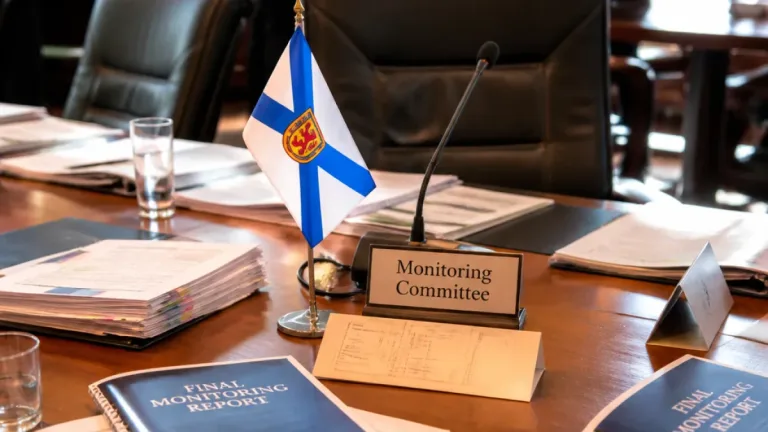

HALIFAX — Canada’s money-laundering watchdog has fined the Crown corporations that oversee gaming in Nova Scotia and New Brunswick for failing to report suspicious activity related to the Atlantic Lottery Corporation, the agency said in a news release.
Fines, payments and closed investigations
The Financial Transactions and Reports Analysis Centre of Canada (Fintrac) announced fines totalling nearly $632,000. The New Brunswick Lotteries and Gaming Corporation was hit with a penalty of almost $400,000, while the Nova Scotia Gaming Corporation was fined almost $232,000. Fintrac says both organisations have paid the fines and that the corresponding investigations are now closed.
| Organisation | Fine (approx.) |
|---|---|
| New Brunswick Lotteries and Gaming Corporation | $400,000 |
| Nova Scotia Gaming Corporation | $232,000 |
What Fintrac found
According to Fintrac, both Crown corporations failed to submit suspicious transaction reports when there were reasonable grounds to suspect money laundering or terrorist activity. In addition, the Nova Scotia Gaming Corporation was cited for two further shortcomings: a failure to develop up‑to‑date written compliance policies and a failure to document the risk of money laundering or a terrorist-activity financing offence.
“We will take firm action, when it is required, to ensure that businesses do their part and fulfil these obligations,”
— Stéphane Sirard, acting director and CEO of Fintrac, said in the release, stressing that regulated businesses must file reports to prevent criminals and terrorists from using the legitimate economy.
Scope: Atlantic Lottery Corporation online operations
Fintrac and provincial spokespeople said the fines relate to the Atlantic Lottery Corporation’s online casino operations. The Atlantic Lottery Corporation is jointly owned by the governments of the four Atlantic provinces.
New Brunswick’s finance minister, René Legacy, described the findings as administrative and said the audit produced no evidence of money laundering. In a statement, he noted that “the degree of real harm associated with any of the audit findings was minimal.”
Why this matters locally
The penalties throw a spotlight on how provincial agencies that run gambling operations meet federal anti‑money‑laundering rules. For many Nova Scotians and New Brunswickers, the Atlantic Lottery is a familiar institution — one whose online expansion in recent years has become a larger part of its business. Regulators expect entities involved in online gambling to maintain robust systems that flag and report suspicious transactions as part of a wide net of financial‑crime prevention.
The specific deficiencies cited — late or missing suspicious transaction reports, the absence of up‑to‑date written compliance policies and gaps in documenting risk — are the kinds of procedural lapses Fintrac targets when it enforces the Proceeds of Crime (Money Laundering) and Terrorist Financing Act. Such requirements are intended to ensure that casinos and gaming platforms do not become conduits for illicit funds.
Practical implications for players and the public
- There is no public indication from Fintrac that the fines were tied to identified instances of successful money laundering.
- Both Crown corporations have paid the penalties and the investigations have been closed, signalling regulatory resolution rather than ongoing enforcement action.
- Provincial governments and the Atlantic Lottery Corporation may still review and update compliance programs to prevent future lapses.
For now, the announcement is likely to prompt scrutiny of internal compliance at publicly owned gaming agencies and could lead to tighter controls or clearer documentation practices to ensure adherence to federal obligations.
What officials said
Fintrac framed the sanctions as a necessary enforcement of reporting duties. Officials for Nova Scotia and New Brunswick characterised the fines as administrative and connected to the Atlantic Lottery’s online operations.
Beyond the agency statements and the paid fines, Fintrac’s release did not disclose specific transactions or further operational details. That leaves broader questions about how provincial Crown corporations will shore up controls to meet federal reporting standards.
The fines underline a growing regulatory focus on the online gambling sector and the expectation that even government‑owned operators maintain up‑to‑date anti‑money‑laundering frameworks and clear documentation of risk.
— Reporting from Halifax