
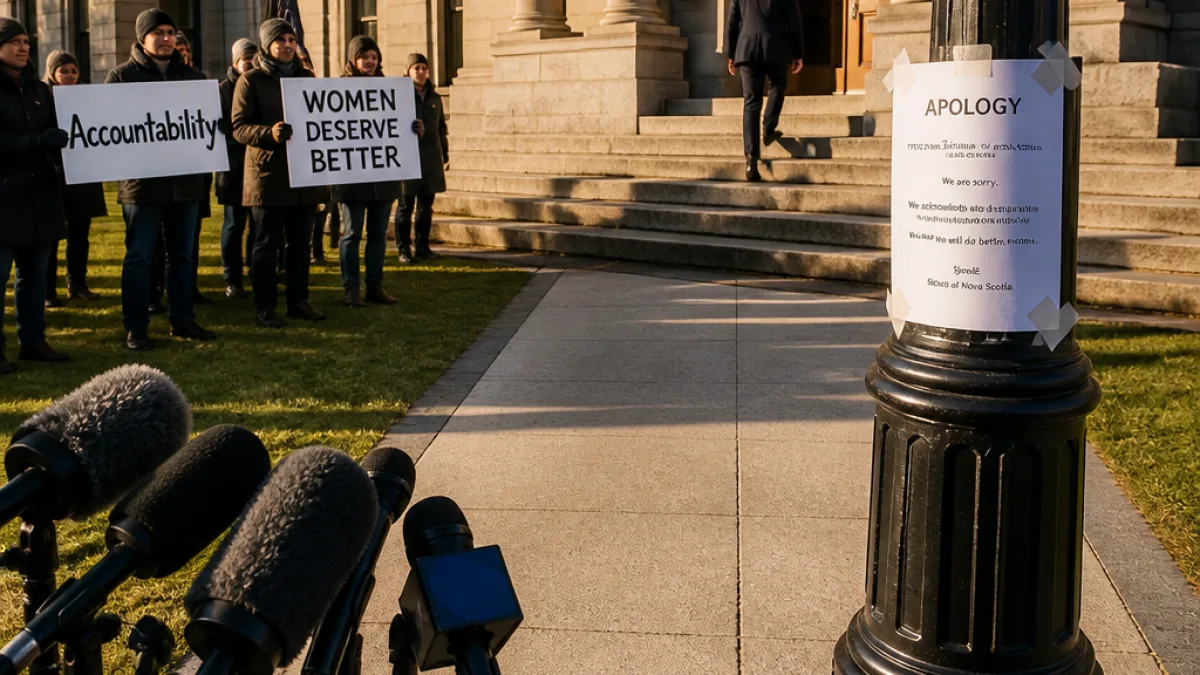
Nova Scotia’s Energy Minister, Marco MacLeod, is facing mounting criticism after a song he recorded before entering politics resurfaced with lyrics that critics describe as misogynistic and violent. The track, released under the artist name Meadowville and titled “George Jones,” includes language that has prompted calls for MacLeod to explain himself and for the provincial government to outline how the material was missed during candidate vetting.
MacLeod posted a note on social media over the weekend in which he apologised for the lyrics of two songs he said have caused hurt to women. The apology was widely reported but, as of Sunday, the minister had not responded to a request for further comment.
Opposition demands answers
The leader of the provincial New Democratic Party, Claudia Chender, said the matter is significant because it involves hate targeted at women from a serving cabinet minister. Chender has pressed MacLeod to clarify whether he still holds the views expressed in the song and to detail what steps he is taking to address the harm caused.
“We also call on this government to explain why this was missed in candidate vetting and what the repercussions will be for withholding this information,”
Chender’s statement framed the issue as not only about the content of the lyrics but also about the integrity of the vetting process that brought MacLeod into public office.
Community response and calls for resignation
Local advocacy groups responded sharply. Adsum House, a women’s shelter in Halifax, said it was “sickened” by the song and explicitly called for MacLeod’s resignation. The shelter’s reaction highlights the sensitivity of public figures’ past statements on gender-based violence and the expectations of survivors’ support organisations.
Observers and political commentators note that controversies over past creative work have, in other jurisdictions, led to resignations, reassignment of duties or formal investigations. In this case, within hours of the track gaining attention, demands for accountability came from political opponents and community groups alike.
What is known so far
- Song identity: The track is titled “George Jones” and credited to Meadowville.
- Content concerns: Lyrics include derogatory terms for women and a reference to using cocaine.
- Minister’s response: MacLeod issued a social media apology saying the lyrics were hurtful; he has not provided further comment to media requests.
- Political reaction: NDP leader Claudia Chender demanded an explanation and asked why the material was missed during candidate vetting.
- Community response: Adsum House called for MacLeod’s resignation.
The Canadian Press first reported the story on Aug. 17, 2026; local outlets have since carried the developments. At the time of publication, government officials had not publicly indicated any disciplinary steps.
Vetting and political consequences
Questions about vetting speak to wider concerns within political parties about public records, creative work and social media content produced before a candidate’s public life. The opposition’s demand for transparency centres on two points: whether the material was known to party officials before the election and, if it was not, why it was overlooked.
For ministers, issues of public trust can have tangible consequences: reassignment from cabinet, removal from portfolios, or resignation remain possible outcomes depending on party leadership decisions and public pressure. At this stage, the government has not signalled how it will respond beyond the disclosure of the minister’s apology.
What to watch next
Key developments to monitor in the coming days include any further public statement from MacLeod clarifying his views and actions to address the harm he acknowledged; an official response from the premier’s office about the vetting process; and whether community organisations continue to escalate calls for resignation.
| Actor | Position |
|---|---|
| Marco MacLeod | Issued social media apology; no further media comment |
| Claudia Chender | Called for explanation and vetting transparency |
| Adsum House | Described song as "sickening" and called for resignation |
The resurfacing of historic creative material raises persistent questions about how past behaviour should influence present public service. For many Nova Scotians, the episode is a test of political accountability and the standards to which elected officials are held. As reactions continue to unfold, the public will be watching for clear answers and any formal steps taken by government or the minister himself.