Federal figures for 2025 indicate the U.S. homicide rate has fallen to levels not recorded since the 1950s, and preliminary data for 2026 suggest the decline has continued into the first half of the year. The White House sought to draw a direct link between that turnaround and its enforcement priorities, while independent researchers cautioned against assigning credit to a single policy or leader.
White House presentation and claims
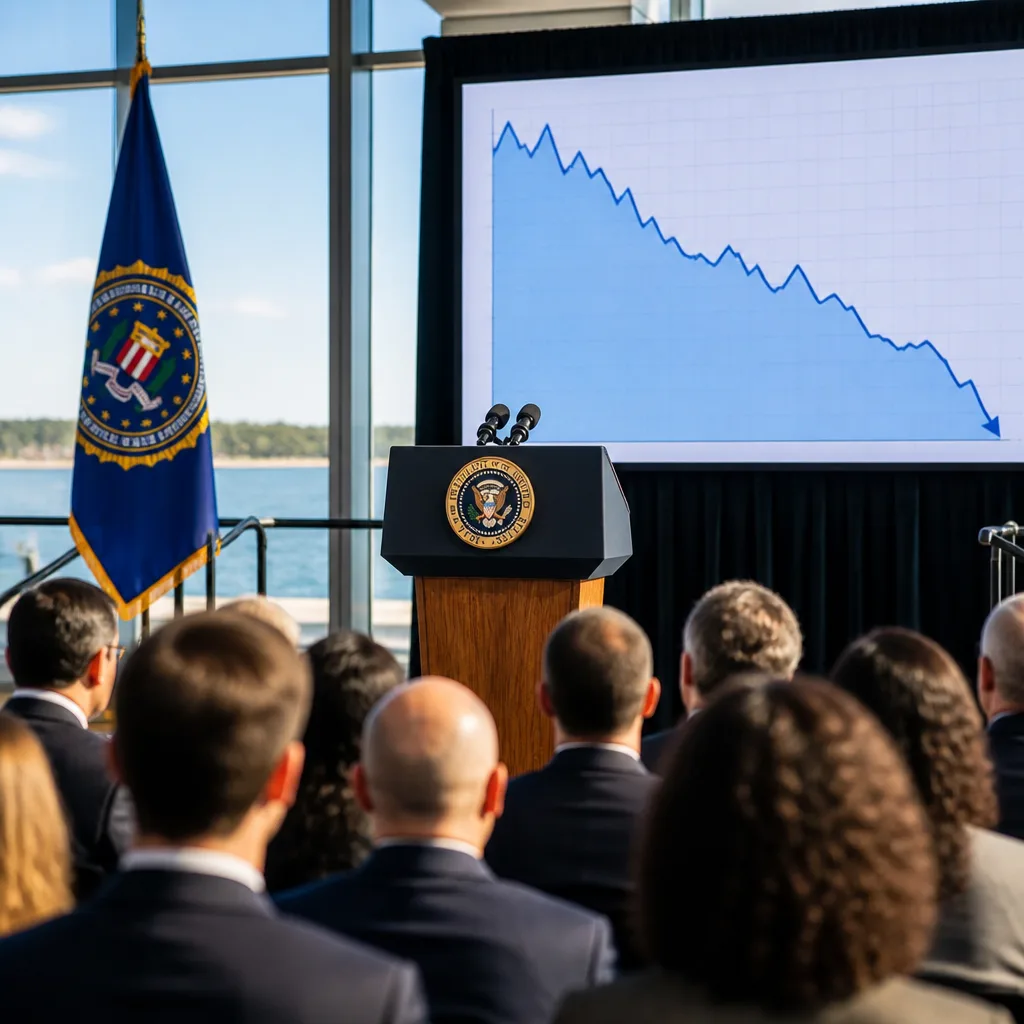
At an event on Long Island, the president and senior law enforcement officials highlighted the Federal Bureau of Investigation’s latest Uniform Crime Report as evidence of a sharp drop in violent crime. The president said the 2025 report showed "the single largest reduction in violent crime in American history" and asserted there were "over 3,100 fewer murders than the year before I took office."
Administration officials, including the FBI director present at the event, argued the federal surge of resources to several cities and a focus on allowing "good cops be cops" played a role in the turnaround. The White House framing ties the decrease in recorded homicides and other violent crimes to the government’s recent enforcement activity and priorities.
Experts urge restraint in drawing conclusions
Outside observers said the decline in violence is striking but complicated, noting it began before the current administration’s second term. The nonpartisan Council on Criminal Justice released its own analysis of 2025 crime figures and described the drop in homicides as historic while warning against simple causal claims.
“The homicide drop is historic and crystal clear. But right now, what’s driving it is about as clear as a glass of milk,” the council’s president said in commentary accompanying the report.
Researchers at the council told reporters that a variety of factors appear to be at play nationally, rather than a single policy or leader. Their review highlighted that declines are occurring across cities with different public-safety strategies, economic conditions and political leadership, which complicates efforts to name one decisive cause.
What the data show
The FBI’s 2025 report documents a substantial reduction in homicides following peaks in the early 2020s, a period that coincided with the onset of the COVID-19 pandemic. Early 2026 data from the FBI and other independent organisations indicate that rates of murder, violent crime and robbery continued to trend downward in the first half of the year.
| Metric | Reported detail |
|---|---|
| Homicide rate | At levels not seen since the 1950s (FBI, 2025 report) |
| Year-over-year change cited by White House | President said there were "over 3,100 fewer murders" than the year prior to his term |
- Federal emphasis: Officials pointed to surges of federal resources and changes in enforcement as contributing factors.
- Independent view: Analysts say the decline predates some recent federal measures and varies across jurisdictions, suggesting multiple causes.
- Ongoing trend: Preliminary 2026 figures reported by the FBI and others show continued reductions in violent crime in the first half of the year.
Scholars and criminal-justice analysts cited in coverage emphasised that declines across diverse cities — regardless of local policy or political leadership — mean researchers need more time and evidence to isolate causes. Possible influences noted include shifts in enforcement practices, broader societal and cultural changes, and technological developments, among other factors.
For policymakers, the challenge will be distinguishing which interventions are associated with durable reductions and which changes reflect broader, non-policy drivers. For the public, the scale of the fall in homicides is likely to shape debates over policing, federal intervention and community-based prevention initiatives as further analyses of the 2025 data and 2026 trend become available.
As agencies and independent organisations continue to dissect the numbers, both the White House’s assertion of credit and the council’s cautionary stance are likely to feature prominently in political and policy discussions about public safety in the months ahead.