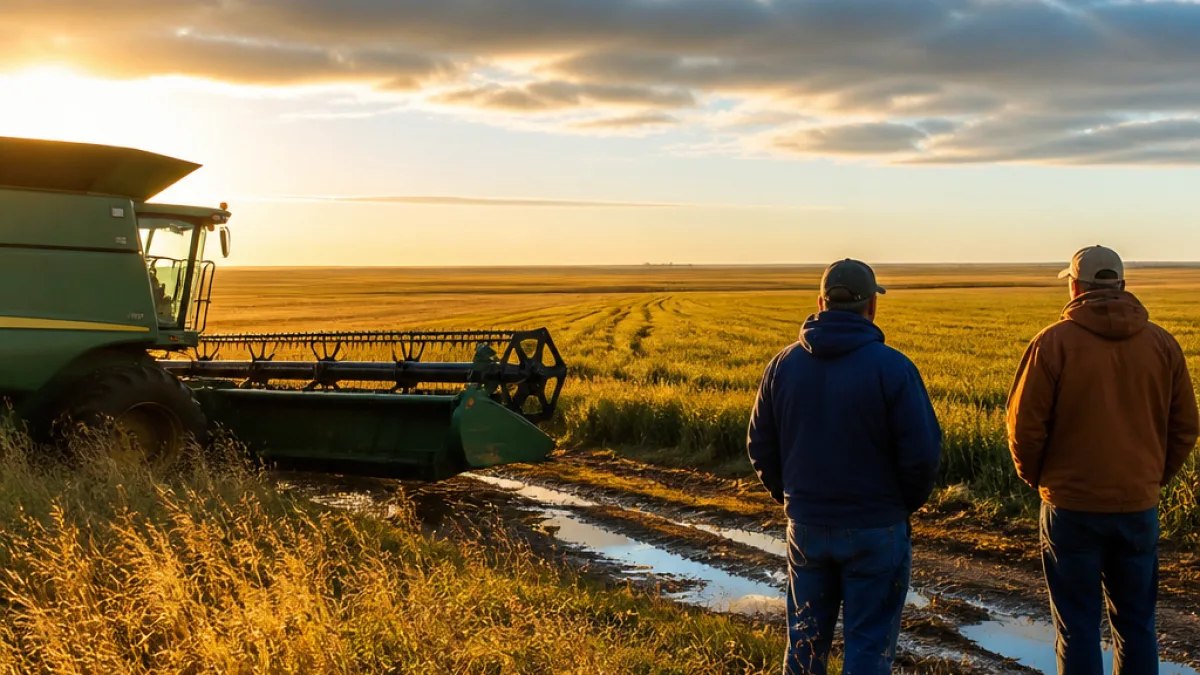
Cooler-than-expected weather over the past week has put a brake on the start of harvest across Saskatchewan, according to the latest crop report from the provincial Ministry of Agriculture.
Harvest progress and the numbers
As of the week ending Monday, harvest was reported at 2 per cent complete provincewide. That figure sits below the five-year average of 6 per cent and the 10-year average of 5 per cent, though it is ahead of the 1 per cent completion recorded at the same time in 2025.
The cooler conditions slowed crop development, particularly for cereal crops and early-seeded pulses that typically lead off the harvest. But the ministry noted the lower temperatures brought benefits in some areas by reducing stress on crops that had experienced hot, dry spells in preceding weeks.
"Scattered showers provided much-needed moisture, but overall conditions remain dry,"
The ministry added that additional precipitation would still be helpful, especially for later-seeded crops as they move through the grain-filling stage.
Moisture picture across the province
Rainfall was patchy. The Chesterfield and Milton areas recorded the highest amounts in the week covered, at 20 millimetres, while farms around Milden saw 16 mm of rain. Despite those local totals, most regions remained short of moisture.
| Land type | Surplus | Adequate | Short | Very short |
|---|---|---|---|---|
| Cropland topsoil | 1% | 48% | 43% | 8% |
| Hayland topsoil | 1% | 49% | 42% | 8% |
| Pasture topsoil | 1% | 39% | 46% | 14% |
What this means for producers
Producers in most parts of Saskatchewan are still waiting for crops to finish development before combining can begin in earnest. The ministry said the cool weather slowed the start of harvest for the earliest fields, but it also helped maintain overall crop condition by reducing heat and moisture stress.
Practical implications for farmers include extended field monitoring for disease and lodging risk as crops remain standing longer, and more attention to weather forecasts before scheduling combines and grain trucks. For later-seeded crops, additional rain would materially improve kernel fill and yield potential.
- Harvest pace: 2% complete — below five- and 10-year averages.
- Topsoil: nearly half of cropland rated adequate, but more than half of pasture in short or very short condition.
- Rainfall: localized showers helped, with up to 20 mm in some areas.
Local impacts and wider context
Delays to the start of harvest can tighten the fall work window for farm labour and equipment, pushing more activity into colder, wetter conditions that raise costs and risk. Regions that missed the recent showers remain vulnerable — pasture and hayland conditions affect livestock operations and winter feed availability.
For the province as a whole, modest shifts in the timing of harvest seldom change the final production picture on their own, but prolonged dryness during grain filling can reduce yields. The report’s combination of slowed development and improved crop condition in some pockets is a reminder of the uneven nature of Prairie weather and how local conditions can diverge sharply across short distances.
Looking ahead
The ministry’s note that additional precipitation would be beneficial is central for producers planning the weeks ahead. Farmers are watching forecasts closely and balancing the need to protect crop quality with the logistics of moving combines, trucks and labour into fields.
As harvest activity picks up in the coming weeks, local producers and buyers will be monitoring moisture levels, yields and quality reports to determine how the season’s weather ultimately affects deliveries and markets.
For now, the cooler temperatures have slowed the first moves into fields, but they have also offered a reprieve for crops that had been under heat stress — a mixed start to a critical period on the Saskatchewan Prairies.