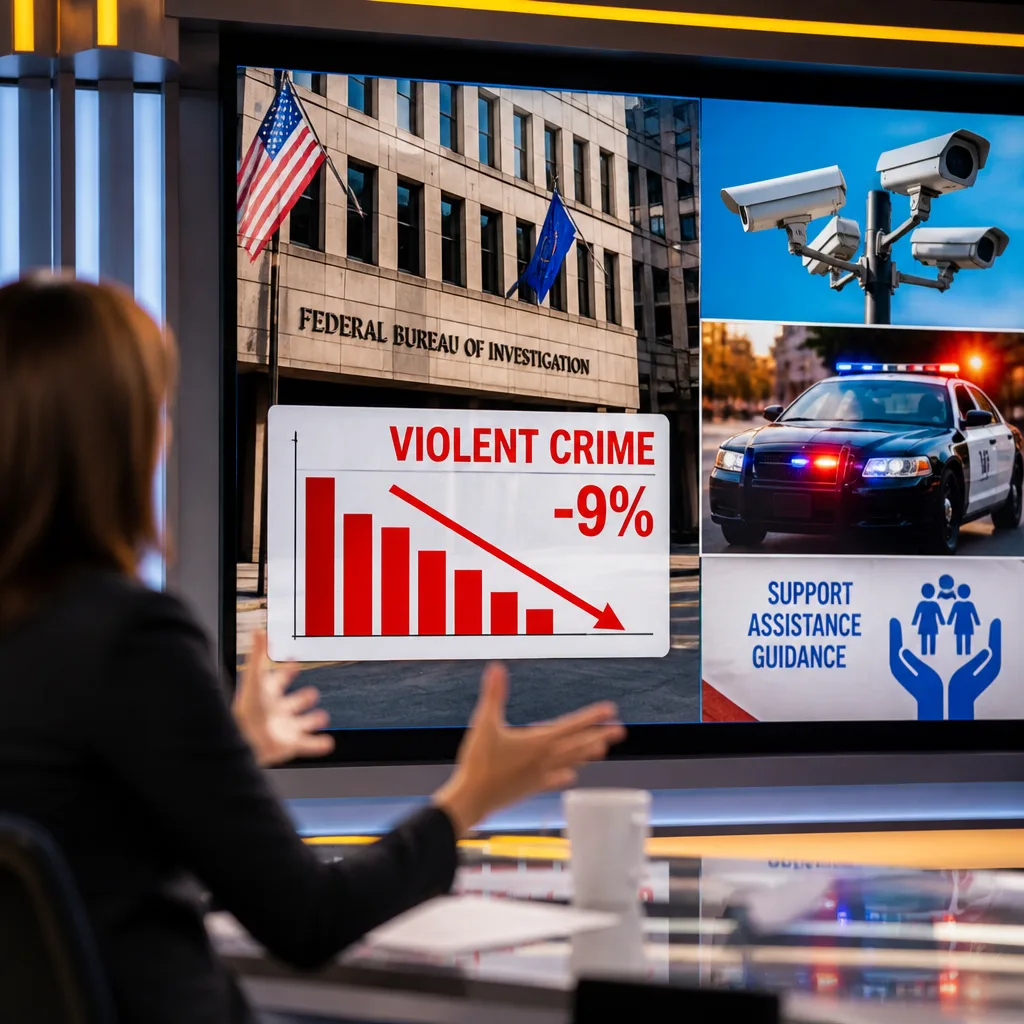
Comedian and television host Bill Maher on Friday suggested that President Donald Trump’s confrontational style may be one factor behind a recent nationwide decline in violent crime, a claim he made while discussing official data that show a measurable drop in several categories of reported offences.
Maher made the comments during an episode of HBO’s Real Time, saying that the president’s “tough‑guy” public persona could have influenced criminal behaviour even if the methods were controversial. He also pointed to technological surveillance and social policies as possible contributors to the trend.
“It’s also because when Democrats expand the safety net, there are less desperate people,” Maher said, adding that Trump is a “bad a–” whose approach may have deterrent effects.
FBI figures cited
Maher cited recent figures from the United States Federal Bureau of Investigation’s Crime Data Explorer showing an overall decline in reported violent crime nationwide. According to the figures he referenced, reported violent crime fell by 9 per cent for the 12‑month period from June 2025 through May 2026.
| Offence | Reported change |
|---|---|
| Robbery | 19.4% decrease |
| Homicide | 18.7% decrease |
| Rape | 10% decrease |
| Aggravated assault | 6.2% decrease |
Those figures were referred to on air; the FBI’s Crime Data Explorer is the underlying source for the percentage changes Maher discussed.
Attribution, deterrence and other explanations
On the programme Maher did not attribute the decline to a single cause. He suggested multiple, potentially complementary explanations:
- the increased ubiquity of surveillance and tracking technology;
- social and economic policies that reduce desperation, which he credited to Democratic expansion of the safety net;
- and the possible deterrent impact of a public leader projecting a “no‑more‑Mr‑Nice‑Guy” stance.
Maher acknowledged reservations about the methods associated with deterrence by force, saying he did not necessarily endorse all of the president’s tactics while still recognising a possible effect on crime rates.
Public figures and commentators frequently offer competing explanations for shifts in crime statistics. Crime trends can reflect a complex mix of policing practices, socio‑economic conditions, legislative change, demographic shifts, technology, and patterns of reporting — factors that require careful analysis before causal claims can be confirmed.
Context and consequences
If the FBI figures hold up and are borne out by longer‑term data, jurisdictions and policymakers will face pressure to evaluate which interventions have the greatest impact on public safety. Attribution matters for policy: identifying effective prevention and enforcement strategies shapes funding, legislation and operational priorities.
Observers caution that short‑term fluctuations in reported crime can mask underlying trends and that changes in reporting behaviour or recording practices can influence headline numbers. Analysts typically examine multiple data sources and longer windows to assess whether a decline represents a sustained reversal or a temporary variation.
Maher’s comments underscore how high‑profile rhetoric about crime — from both political leaders and media personalities — intersects with official data to shape public perception and policy debate. Whether a leader’s persona contributes to reduced offending, or whether other structural factors are primarily responsible, remains a contested question that will require further empirical study.
For now, the FBI’s Crime Data Explorer percentages provide a snapshot that has been seized upon in political and media discussions about the state of crime in the United States.