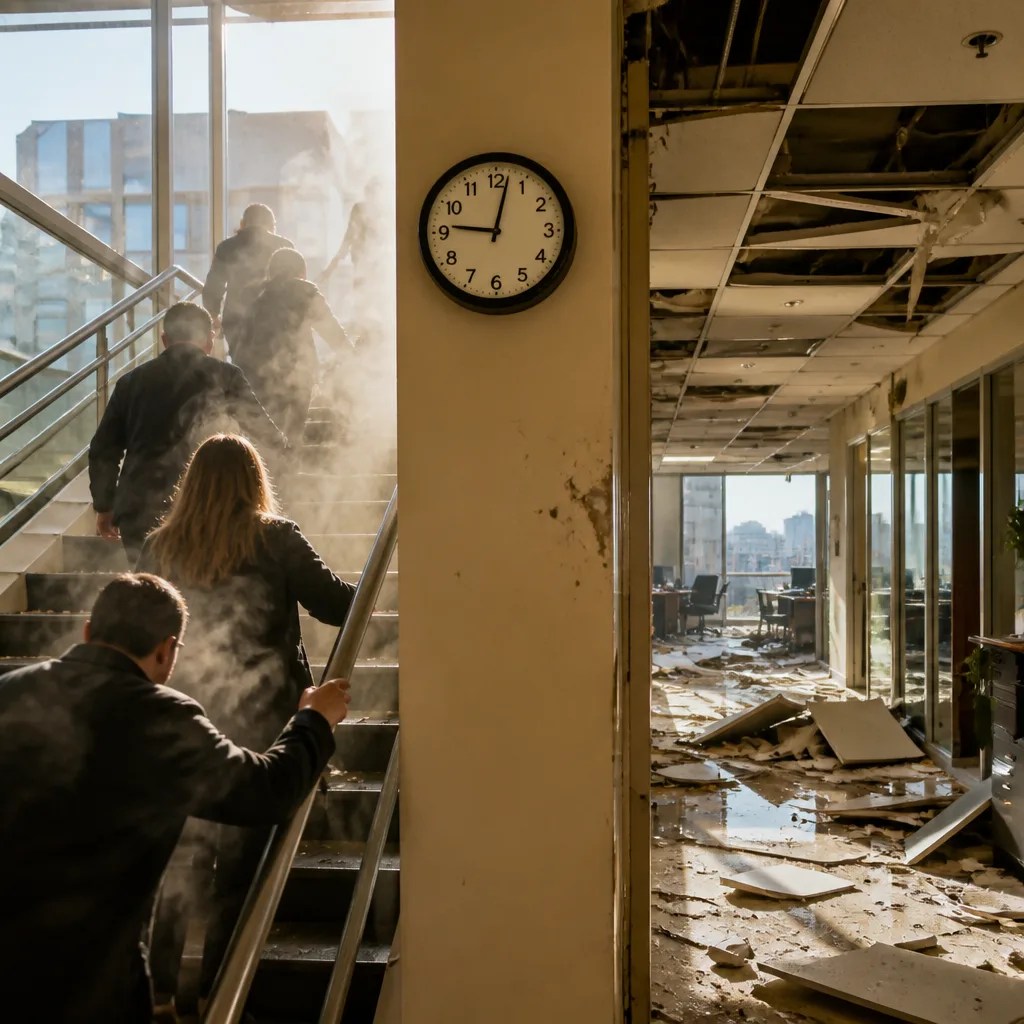
As the world prepares to mark the 25th anniversary of the Sept. 11 terror attacks, a Canadian survivor who escaped the World Trade Center’s South Tower has shared a vivid account of the moments before and after the second jetliner struck.
Immediate chaos after the second impact
The survivor, who was working on the west side of the South Tower, described hearing an initial noise shortly before the first plane hit the North Tower. He recalled that within minutes — at 9:03 a.m. — United Airlines Flight 175 collided with the South Tower. The impact was directly beneath his office.
“What happened in that first second was our room, exploded is the wrong word because you think of an explosion, I’m just saying everything was destroyed,” he said, describing how ceiling fixtures and office equipment rained down. For about 10 seconds he said he was terrified.
“I prefer to think about it as fortunate and blessed,” he told Global News, when asked how he views his survival.
Descent, rescue and the urge to tell the story
He immediately began to descend the stairs and encountered others on the evacuation route. He encountered a woman who told him to go up instead of down; he later said he never saw her again. At the 81st floor he heard someone calling from beneath debris and was able to free and help a man — someone he remains friends with to this day.
After reaching the lobby, evacuees were instructed to run and not to look back. The survivor phoned his wife and his father early in the sequence to tell them he was all right. Across his retelling runs a consistent thread: he does not prefer the label "lucky," instead calling his survival a matter of being "fortunate and blessed."
- 8:46 a.m. — American Airlines Flight 11 struck the North Tower.
- 9:03 a.m. — United Airlines Flight 175 struck the South Tower, beneath the survivor’s office.
- Evacuation involved descending many flights; the survivor assisted at least one person on the 81st floor and later reached the lobby with other evacuees.
| Event | Time |
|---|---|
| Impact on North Tower (Flight 11) | 8:46 a.m. |
| Impact on South Tower (Flight 175) | 9:03 a.m. |
Why the account matters now
Personal narratives such as this one serve to connect Canadians to the human dimension of a global tragedy. As the anniversary prompts reflection across generations, survivors’ accounts offer detail about decisions made under extreme pressure, the unpredictability of chaotic environments and the bonds formed during evacuations.
He said he tells his story when asked in part to help others understand both the experience and the loss of that day. His memory of people jumping from the towers, the sensory details of flickering lights and flames against glass, and the physical destruction within his office — air ducts, speakers and ceiling components raining down — are among the images he carries.
The survivor’s emphasis on gratitude — expressed as being “fortunate and blessed” rather than characterising himself as merely lucky — frames his testimony. It is an account grounded in the immediate sensory realities of the attack and in the subsequent acts of assistance he offered and received during the escape.
With a quarter-century now passed since the attacks, such firsthand recollections also contribute to national remembrance, helping younger Canadians grasp the scale and human cost of an event whose political and security reverberations remain part of public life.
As commemorations and remembrances proceed this week, accounts like this one will continue to inform public understanding and memorial observances, preserving both the personal and collective memory of a day that reshaped global history.