Canada and U.S. officials reported significant progress Thursday in negotiations aimed at averting a threatened doubling of U.S. tariffs on Canadian steel and aluminium, with Ottawa’s trade minister and lead Canadian negotiator remaining in Washington as discussions stretched into the evening.
Negotiators signal near-final agreement
Canada’s Trade Minister, who left the U.S. Trade Representative (USTR) building Thursday afternoon, told reporters negotiators were "very close" to a deal. Janice Charette, Canada’s lead negotiator, stayed in the USTR offices to continue talks with her American counterpart, according to reporting from CBC’s Washington bureau.
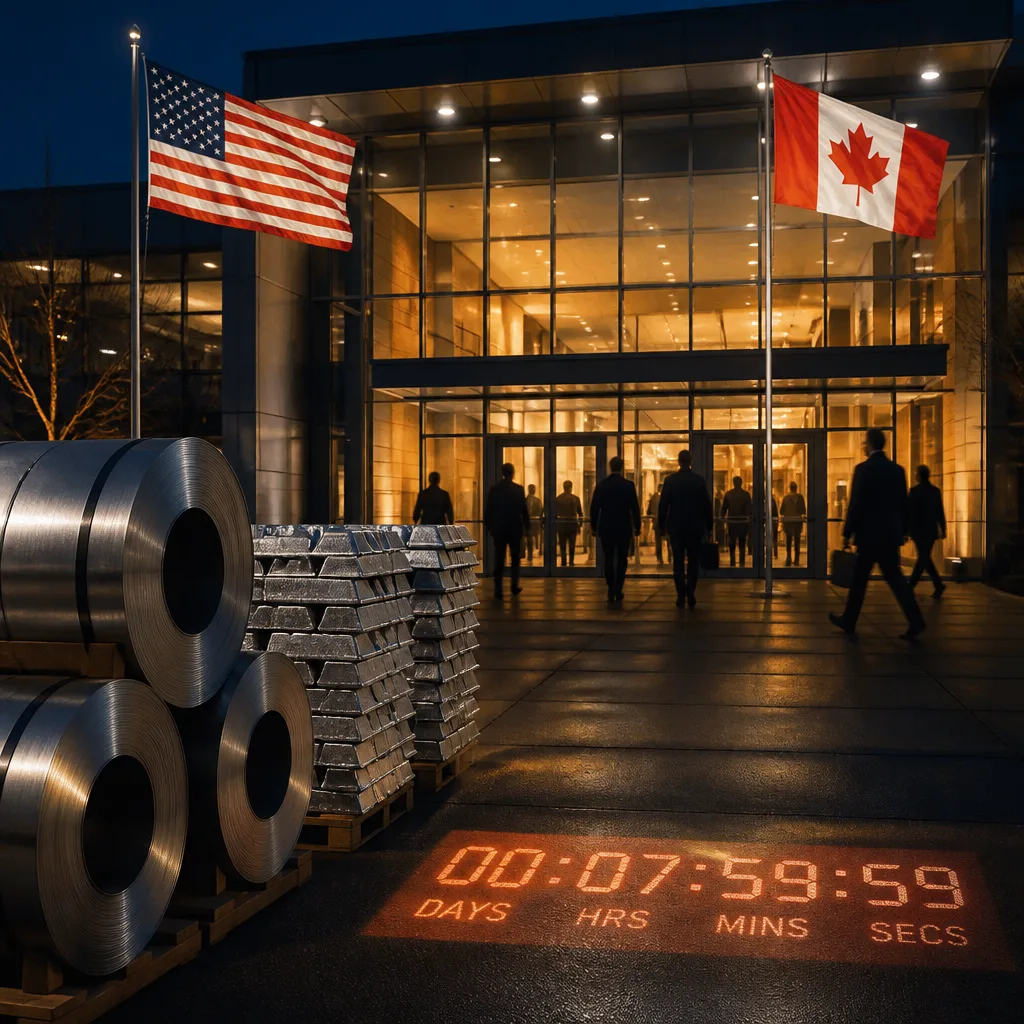
Industry sources and media reporting indicate the proposal being discussed would reduce proposed tariffs on steel and aluminium from a threatened 50 per cent to 25 per cent. A lower tariff on Canadian steel is also reported to include a quota, allowing only a set volume of imports into the United States at the reduced rate; volumes above that threshold would likely face higher duties.
Provinces weigh in on concessions
The prospect of concessions in return for tariff relief prompted immediate responses from provincial leaders, underscoring how any federal agreement will reverberate across Canada.
- Newfoundland and Labrador Premier Tony Wakeham said premiers had agreed to Prime Minister Mark Carney’s request to return U.S. alcoholic beverages to store shelves.
- Quebec Premier Christine Fréchette indicated her province will follow Ottawa’s lead only if the broader deal is "globally positive" for Quebec.
- Manitoba Premier Wab Kinew said he was willing to comply with the request but urged consumers to "buy the Canadian stuff instead," and criticized U.S. leadership, calling President Donald Trump "very weak" and saying the administration was "back on their heels."
- Nova Scotia Premier Tim Houston pushed back on Kinew’s characterisation of the federal-provincial exchange, saying the description was inaccurate.
Ontario Premier Doug Ford had not yet commented publicly at the time of Thursday’s reporting; he has previously advocated for strong retaliatory measures in response to U.S. tariffs.
Key details and outstanding issues
While the contours of a possible agreement have emerged, multiple elements remain under discussion. Reports say the tariff reductions would apply to both steel and aluminium and that exemptions and related derivative measures were still being negotiated.
Officials have not released formal text of any agreement and several important components—such as the precise quota volumes, enforcement mechanisms and any sector-specific carve-outs—remain to be confirmed.
"very close"
That brief phrase, uttered by Canada’s trade minister outside the USTR, captured the tenor of Thursday’s diplomacy: intensive, high-stakes and still unresolved on finer points.
| Item | Reported previous level | Reported proposed level |
|---|---|---|
| Steel & aluminium tariff | 50% (threatened) | 25% (reported proposal) |
| Steel imports | — | Quota at reduced tariff rate (reported) |
Why this matters nationally
Any agreement would have immediate implications for Canadian manufacturers, exporters and provincial economies that rely on steel and aluminium supply chains. Reduced U.S. tariffs at the levels reported would ease pressure on sectors exposed to cross-border raw material flows, but the introduction of quotas could shift trade patterns and create winners and losers depending on allocation and administration.
Provincial reactions suggest Ottawa will face scrutiny at home about concessions linked to market access — particularly when those concessions affect provincial control over liquor distribution and other regulated areas. The balance between securing tariff relief and protecting domestic producers and provincial prerogatives will be central to how any deal is received across Canada.
Negotiators remained in talks into the evening, and further details are expected if and when the two governments finalize terms. Until formal announcements are made, businesses and provincial governments will be watching closely for the specifics that will determine the deal’s economic and political fallout.