Lowestoft — A technology package deployed by Suffolk County Council has helped a 71-year-old man with Parkinson’s and memory impairment regain independence, while producing measurable savings for the local authority.
Practical tech that changes daily life
The system, known as Cassius, combines home sensors, an electronic tablet care phone, pressure mats and a wearable pendant so people can remain in their own homes with reduced risk and fewer intrusive visits from carers. The technology is being used by thousands across the county and is intended to support people who might otherwise require more intensive care or residential placements.
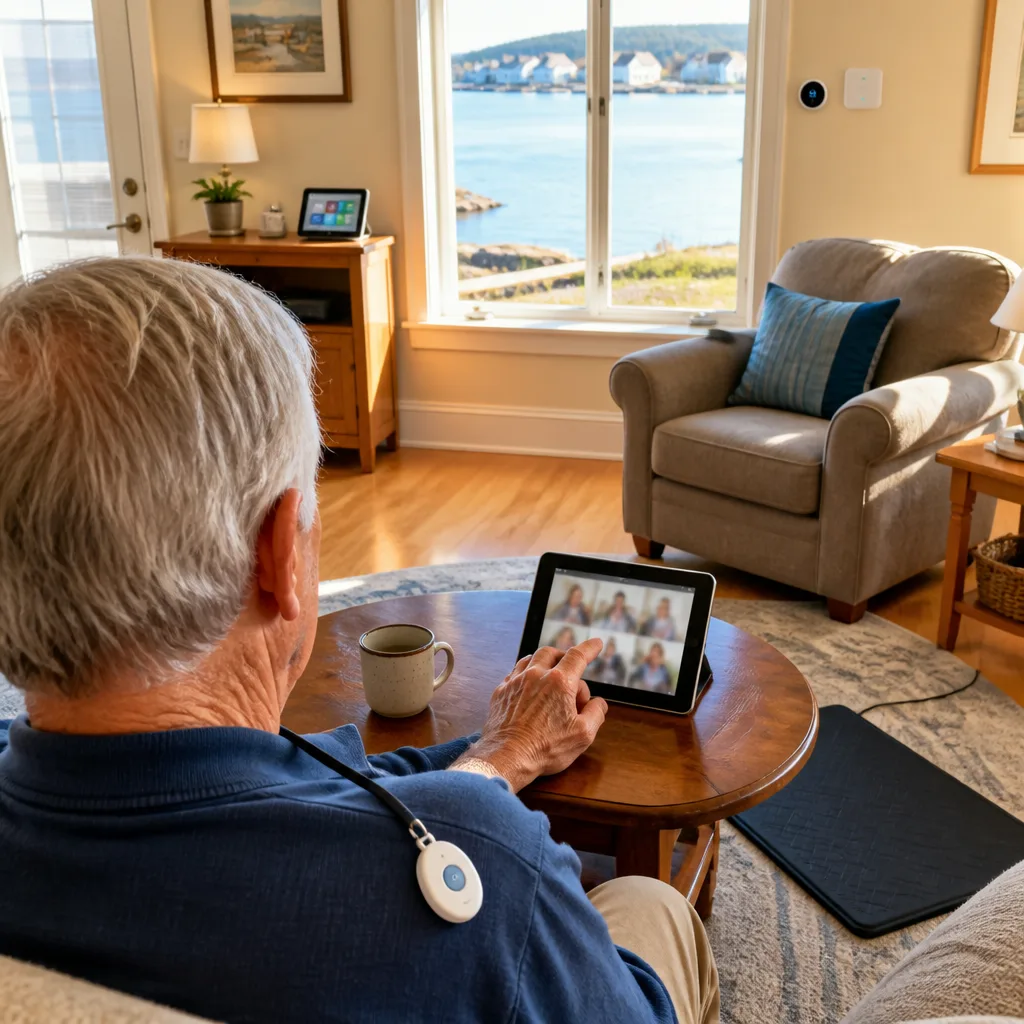
John Monk, 71, who lives in Lowestoft, wears a fall-detecting pendant and has a tablet with family pictures that he can tap to make a video call. His wife, Heather, 63, said the kit gave her freedom to run errands without constant worry. John's condition — Parkinson’s plus a memory impairment that made phone use difficult — meant the pair felt trapped until the technology was installed.
"Before I had the technology, I didn't go anywhere without the wife, really. I was hanging on to her apron strings, just in case something happened," John said.
Heather described the change in practical terms: she can now "pop to the corner shop" without the same level of anxiety. The couple have been married 42 years. Staff who installed the system also fitted a smart speaker, which the pair use to share music and other simple voice interactions.
Scale and savings
Suffolk reports that about 6,900 people are currently using the system and more than 14,000 have been referred for it. So far the scheme has received investment of £12.4 million and the council says it has delivered £20 million in savings, with a further £4 million expected this year.
| Metric | Figure |
|---|---|
| Users currently on Cassius | 6,900 |
| Referrals to date | 14,000+ |
| Investment | £12.4m |
| Reported savings | £20m (plus £4m anticipated) |
The figures reflect the council’s argument that well-designed assistive technology can reduce pressure on in-person social care, limit emergency responses and support delayed or avoided moves into residential care.
What the package includes
- Sensors to monitor movement and activity in the home
- Pressure mats to detect presence on beds or chairs
- An electronic tablet “care phone” with photo-based calling
- A wearable pendant for fall detection and manual alerts
- Smart speaker functionality for voice interactions and music
For users such as John, the tablet interface with family photos reduces the cognitive load required to make contact. The pendant automatically raises alerts if a fall is detected and can be pressed for help. Together, these elements let a person call for assistance quickly and let carers check status remotely without intrusive visits.
Context and consequences
Across the UK and in Canadian provinces, local governments and health authorities face pressure from ageing populations and a shortage of domiciliary care staff. The Suffolk model is an example of technology being used to stretch limited human resources while aiming to preserve quality of life for people with chronic conditions.
There are trade-offs and implementation questions. Systems must be reliable, respect privacy, be accessible to people with cognitive or sensory impairments, and avoid creating dependence on technology suppliers. Councils must also weigh upfront investment against long-term savings and ensure flow-through to clinical services when incidents occur.
Still, stories such as John and Heather Monk’s show how straightforward consumer-friendly interfaces combined with simple sensors can shift the balance from intensive home support to independent living. For health and social-care planners, the lesson is not just that technology can help, but that it must be integrated into a wider care pathway to deliver both human and fiscal benefits.
The Cassius roll-out in Suffolk provides a practical case study for other jurisdictions considering how to deliver safe, cost-effective support at home for older adults and people with neurological conditions.