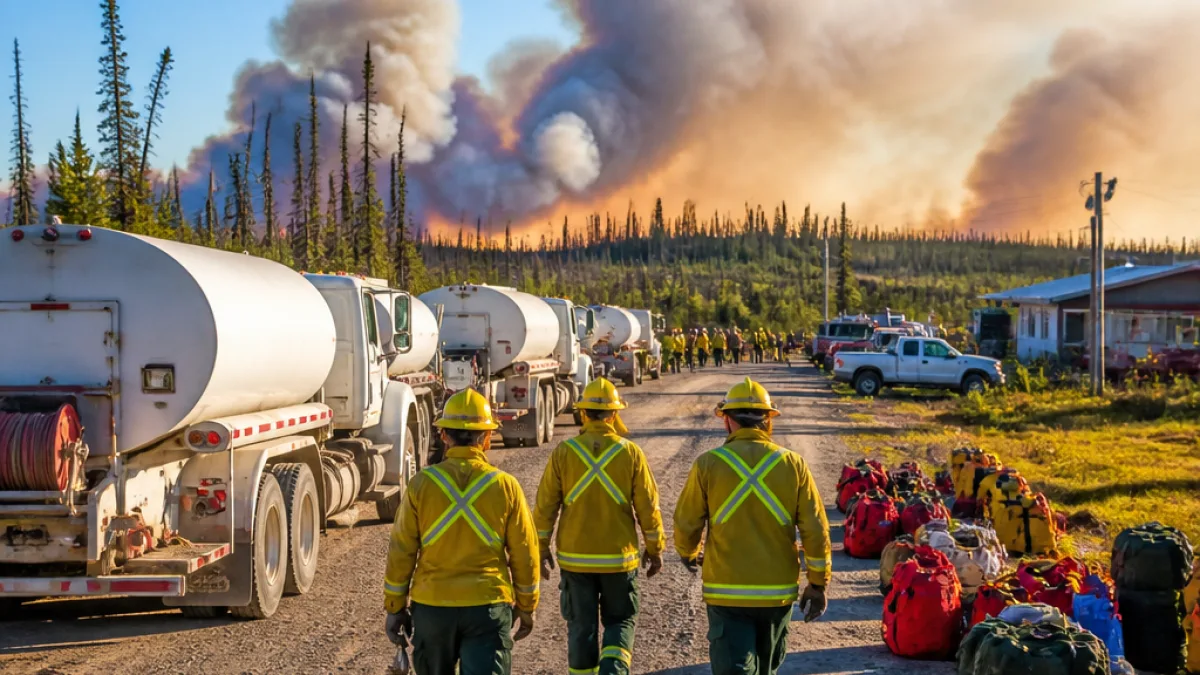
Fire crews and equipment from Alberta have been dispatched to assist efforts battling wildfires burning in Central British Columbia, Northwestern Ontario and the Northwest Territories, officials say. The move reflects a regional approach to wildfire management as some jurisdictions face more intense activity this season.
Alberta’s quieter season frees resources
Alberta has experienced comparatively little wildfire activity this year, thanks in part to a wetter spring and summer, according to the latest situation overview. Smaller ignitions that have occurred in the province were generally brought under control quickly, which has allowed Alberta to lend personnel and apparatus to provinces and territories where fires are proving more challenging.
Even with fewer local incidents, public safety officials caution against complacency. Dry conditions can develop rapidly, and human-caused fires remain a risk wherever people use open flame in the backcountry.
Where help is being sent
Interprovincial support is a regular part of Canada’s wildfire response, enabling jurisdictions that are managing lighter workloads to reinforce crews where needed. The recent deployments from Alberta are targeted to three broad areas currently reporting active fires:
- Central British Columbia — ongoing wildfire activity requiring reinforcements.
- Northwestern Ontario — active fires in the region prompting additional resources.
- Northwest Territories — fires continue to burn and are receiving outside assistance.
| Region | Situation |
|---|---|
| Alberta | Relatively quiet — able to deploy crews |
| Central British Columbia | Active wildfires requiring support |
| Northwestern Ontario | Active wildfires requiring support |
| Northwest Territories | Active wildfires requiring support |
Advice for people heading outdoors
Officials are reminding campers, hikers and other outdoor users to remain vigilant. Basic precautions can reduce the risk of a spark becoming a wildfire:
- Check and obey local fire restrictions before travelling into the backcountry.
- Never leave a campfire unattended; ensure it is fully extinguished before you leave.
- Avoid using open flames or spark-producing equipment in high-risk areas.
- Report any signs of smoke or an unattended fire to local authorities immediately.
These steps are particularly important because weather can change quickly in northern and interior regions; what is safe in the morning can become hazardous by afternoon if winds rise or humidity drops.
Co-operation across borders
Mutual aid between provinces and territories is a cornerstone of Canada’s wildfire response, allowing personnel and specialized equipment to be shifted where they are most needed. Alberta’s current contribution is an example of that system in action: while its own season has been milder, its crews now support colleagues fighting larger or more complex blazes elsewhere.
For communities in the Northwest Territories, assistance from outside jurisdictions can be decisive when fires threaten remote areas or when local resources are stretched thin. The movement of equipment and trained crews helps bring greater capacity for containment, evacuation planning and infrastructure protection.
What to watch for locally
Residents and visitors in the Northwest Territories should monitor local media and official channels for updates on any nearby fires and for potential evacuation orders or air-quality advisories. Even if a fire is not immediately close, smoke can travel long distances and affect air quality in communities and hamlets across the North.
Where possible, reduce outdoor burning and adhere to municipal and territorial rules on open fires. If you encounter an unreported ignition, contact local emergency services so the situation can be assessed quickly.
As the fire season evolves, interprovincial co-operation and individual caution remain critical. The transfer of Alberta resources to British Columbia, Ontario and the Northwest Territories underscores how rapidly conditions can change and the importance of coordinated response efforts.
Warren Lafferty, WE NEWS — Northwest Territories Correspondent