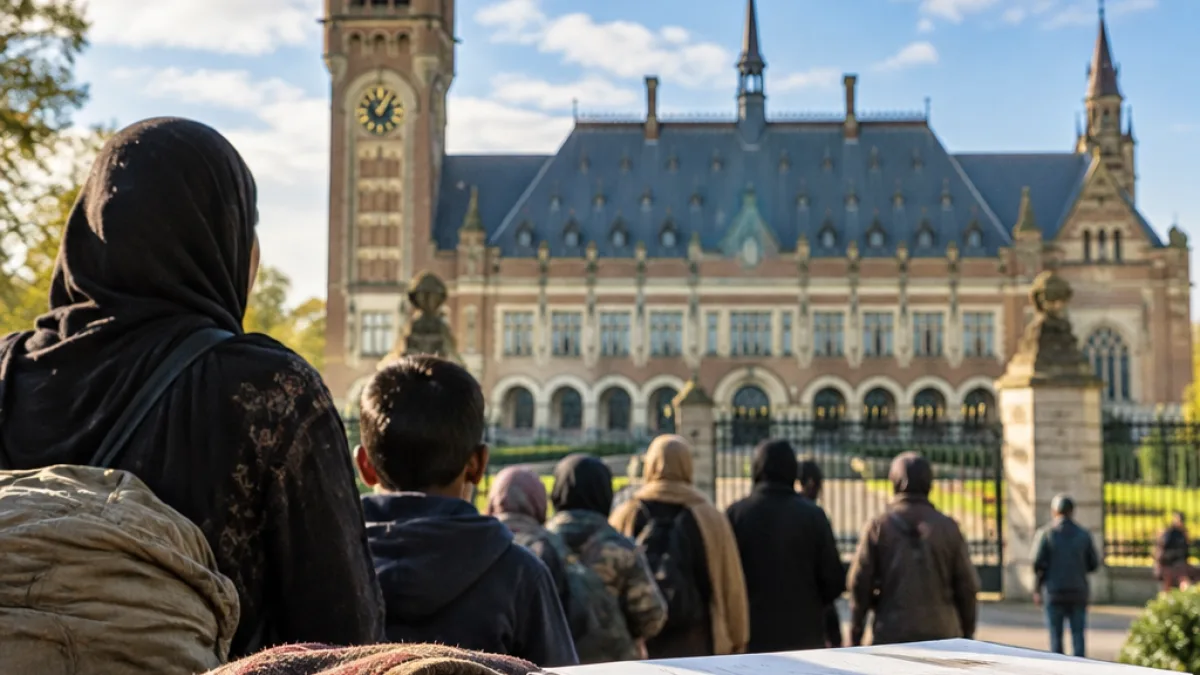
The International Court of Justice (ICJ) has found Myanmar responsible for genocide against the Rohingya, ruling that the country breached several international obligations designed to prevent and punish the destruction of protected groups. The judgment, delivered in The Hague on 19 November 2026, relates to the military operation against the Rohingya minority in Rakhine state in 2017.
The decision was reached by a vote of nine judges to six, according to ICJ president Judge Yuji Iwasawa. The court concluded that Myanmar’s conduct could not reasonably be explained without finding an intention to destroy a substantial part of the Rohingya population in northern Rakhine. The ruling also found Myanmar in breach of several more specific provisions connected to the Genocide Convention.
“The only reasonable inference that can explain Myanmar’s actions is an intention to destroy a substantial part of ... the Rohingya population in northern Rakhine State.”
Findings on the 2017 operation
The judges determined that the Rohingya constitute a distinct ethnic group, with their own language and culture and a shared sense of identity. That finding was central to the case because the Genocide Convention protects groups defined by national, ethnic, racial or religious characteristics.
In its assessment of the 2017 campaign, the court found that Myanmar’s security forces killed thousands of Rohingya civilians and committed sexual violence and extreme violence against children. Rohingya civilians were also attacked while attempting to escape the fighting. The court said the operation caused serious physical and psychological harm to a significant number of people within the protected group.
The judgment distinguished between civilian involvement that could not automatically be treated as state-directed conduct and the actions of the government and security forces. However, it found that Myanmar’s authorities and security forces had failed to prevent the acts established in the case. The wider conflict led to the displacement of the Rohingya, with refugees living outside Myanmar and legal issues relating to their treatment continuing to receive international attention.
Orders for accountability and reparations
The ICJ instructed Myanmar to take steps to stop any further violations of its obligations under the Genocide Convention. It also called for investigations into suspected wrongdoing by Myanmar nationals and members of the security forces, followed where justified by prosecutions.
| Area | Measure ordered or requested by the court |
|---|---|
| Accountability | Investigate suspected wrongdoing and prosecute where necessary |
| Reparations | Make efforts to compensate victims or their associates where possible and appropriate |
| Return | Facilitate the safe return of Rohingya refugees |
The court further called on Myanmar to pursue reparations for victims and those associated with them where that is possible and appropriate. The value and form of any compensation will have to be addressed through the legal process. The ruling also places safe and voluntary return at the centre of the remedy sought for Rohingya refugees, rather than treating displacement as a permanent consequence of the 2017 violence.
A binding judgment with difficult enforcement
The ICJ’s ruling is final and binding under the court’s framework, but the judgment’s practical effect will depend heavily on implementation by Myanmar. The court has limited enforcement mechanisms, meaning that an order to investigate, prosecute, compensate and enable safe returns does not by itself guarantee immediate compliance.
For the Rohingya, the decision establishes an authoritative judicial finding on the nature of the crimes and the responsibility of the state involved. It also creates a legal basis for further consideration of reparations and other remedies. For the international community, the judgment tests whether a binding ruling on genocide can translate into protection, accountability and a safe return for a displaced minority.