
Professor Musa Manzi of the University of the Witwatersrand has been recognised for adapting seismic technologies to image deeply buried mineral deposits and improve miner safety, work that is now being applied in national projects mapping large areas of the Karoo and identifying deep gold and platinum from mine tunnels for the first time.
Closer sensors, cheaper and greener exploration
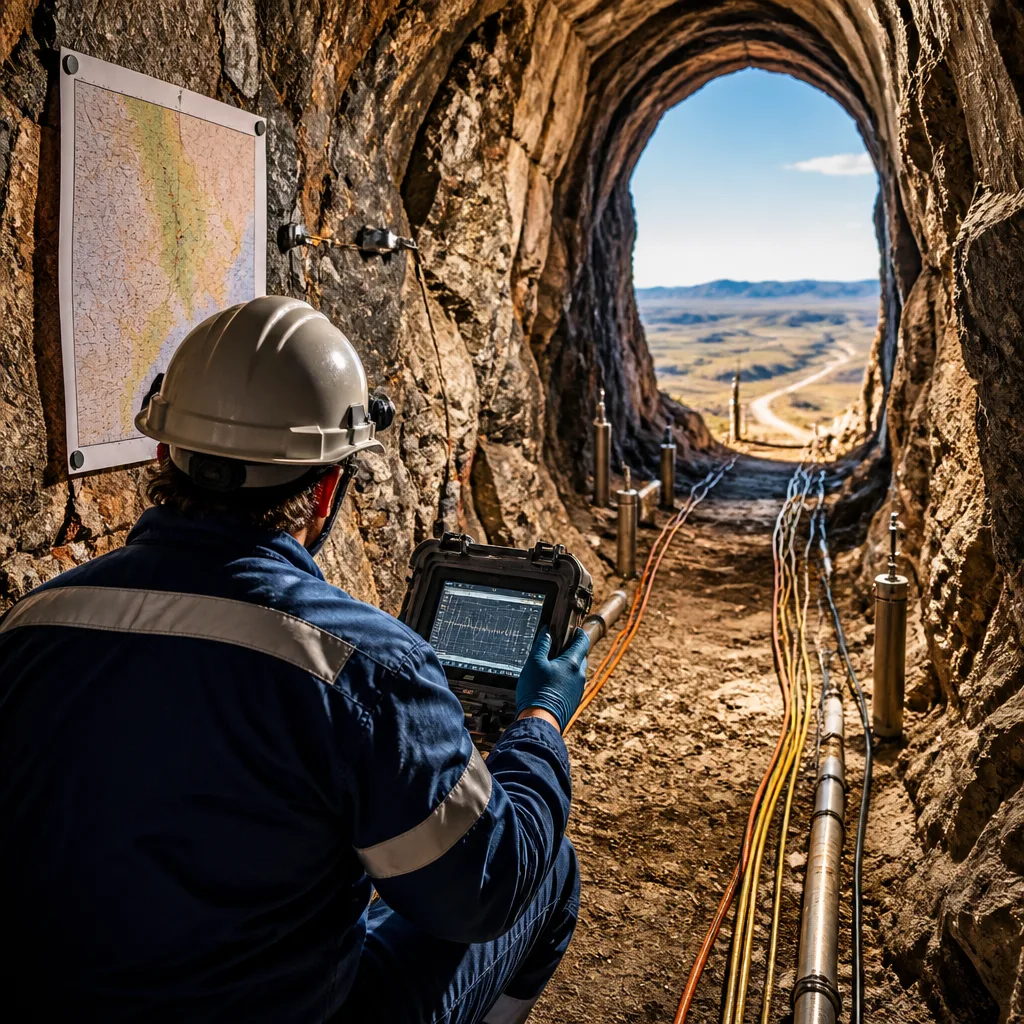
The Wits Seismic Research Centre, under Manzi’s direction, has shifted the way seismic surveys are done by placing sensors not only on the surface but also inside boreholes and along mine tunnels. By moving the technology closer to deep targets, the centre says it can acquire clearer images of subsurface structures while reducing the footprint and cost of exploration.
Techniques now used by the centre include:
- Landstreamer deployments for rapid surface seismic acquisition;
- Fibre‑optic sensing to record seismic signals in difficult environments;
- GPS‑timing systems adapted for GPS‑denied underground spaces to synchronise recordings.
These adaptations enable the team to collect seismic data where conventional surface surveys fail — notably in underground mining environments — and to do so with a smaller environmental footprint.
Projects mapping the Karoo and probing deep ore
The centre’s methods are being deployed in the Karoo GeoScan Project, which aims to map large regions of the Karoo’s subsurface geology using novel, environmentally friendly seismic technologies. Separately, under the EraMin3 Future Project, researchers are using data acquired from mine tunnels to discover deep‑seated gold and platinum deposits that had not been imaged before.
| Project | Focus / Outcome |
|---|---|
| Karoo GeoScan Project | Mapping large regions of the Karoo’s subsurface using environmentally friendly seismic techniques |
| EraMin3 Future Project | Discovering deep‑seated gold and platinum from mine tunnels for the first time |
Research driven by miner safety
Manzi’s engagement with seismic research is rooted in safety concerns. The source material recounts that an early underground research visit he planned was cancelled after a methane explosion in which miners died. That event prompted him to investigate where methane was coming from and how seismic methods might identify hazardous areas so miners could be kept away from them.
“I was asking, where is the methane gas coming from and how is it getting into the mine? Why are people dying working in these environments? Can I look at the fundamental principles of physics and the maths and see how I can develop and innovate a seismic technology that would prevent miners from entering areas that are prone to methane gas explosions?”
His subsequent PhD work developed seismic attributes from legacy 3D seismic data to identify geological structures associated with hazard or resource. That early focus on safety remains part of the centre’s mission: find the ore body, but protect the miners.
Recognition and national relevance
Manzi was jointly recognised with Professor Tjaart Krüger from the University of Pretoria with the 2025/2026 TW Kambule‑NSTF Researcher Award, an acknowledgment of the innovative use of seismic technologies to image geological structures and mineral deposits. The techniques have national relevance: they can reduce exploration costs, limit environmental disturbance and provide new ways to manage underground hazards — issues that matter across South Africa’s mining provinces.
For South Africans on tight data and resource budgets, practical innovations that cut operational cost and protect workers are as important as the discovery of new deposits. The work at Wits demonstrates an applied research trajectory that ties cutting‑edge sensing to pressing national priorities: safer mines, cheaper exploration and less environmental damage.










