
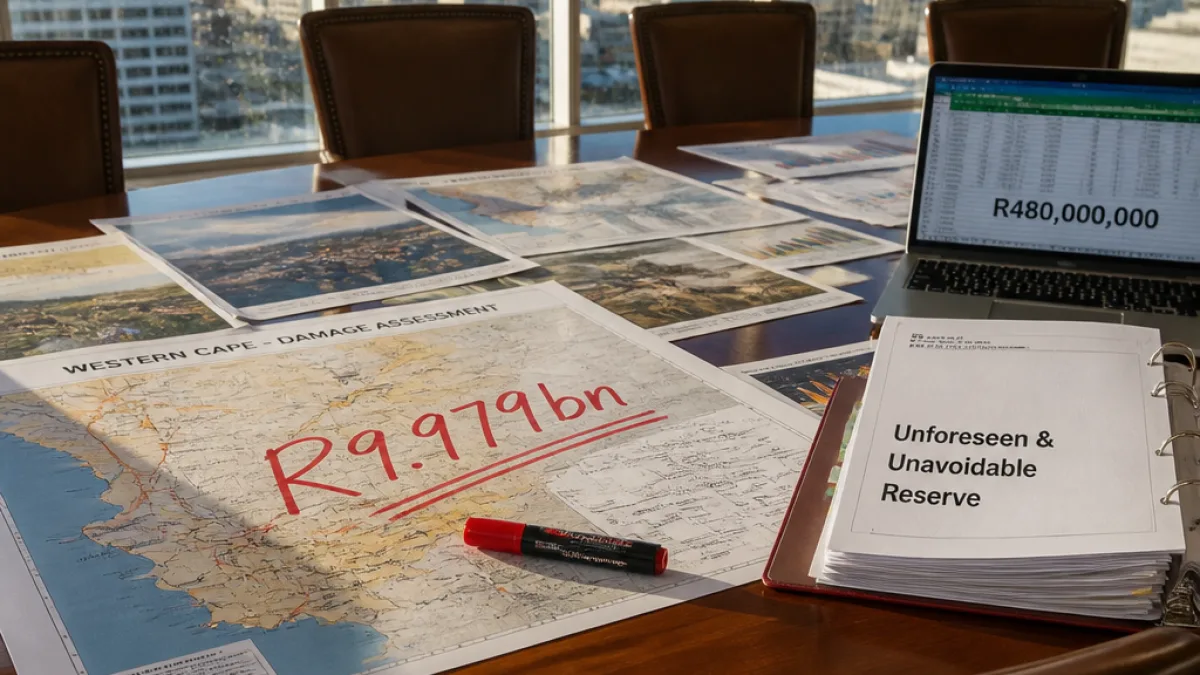
Western Cape Premier Alan Winde has told provincial cabinet that the severe storms which struck the province in May caused an estimated R9.979 billion in damage and losses, a figure that will place significant pressure on provincial and municipal finances as recovery work begins.
Province to reprioritise budgets and seek national support
Cabinet documents and the premier’s statement set out the scale of the impact and the immediate financial steps the provincial government is taking. Winde said the cost of repairs and recovery is expected to exceed the Western Cape Government’s current affordability levels, and that provincial budgets will therefore have to be reprioritised to ensure critical work continues.
The provincial Department of Local Government has submitted a formal funding request to the national Department of Cooperative Governance and Traditional Affairs (COGTA) through the National Disaster Management Centre (NDMC). Additional correspondence has also been sent requesting that the province’s application be tabled before the relevant National Treasury committee for consideration under the national provisions that deal with unforeseeable and unavoidable expenditure.
“As a province, we cannot wait for lengthy disaster relief processes from National Government to be finalised. We must act decisively. We have excellent financial management mechanisms in place and a contingency reserve which we now have to exhaust because our economy and communities cannot be held ransom by damaged infrastructure,”
The premier said cabinet approved provincial financial commitments totalling R480 million from the Western Cape’s 2026/27 Unforeseen and Unavoidable Reserve to accelerate response and recovery operations while the NDMC considers additional relief.
What the province has done so far
- Submitted a funding application to COGTA via the NDMC for disaster relief.
- Requested that the application be placed before the National Treasury committee for consideration under unforeseeable and unavoidable expenditure rules.
- Approved R480 million from the province’s contingency reserve for immediate recovery work.
- Announced budget reprioritisation to fund critical infrastructure repairs and support affected communities.
Winde emphasised the urgency of acting without waiting for lengthy national processes. The provincial commitment is intended to sustain immediate restoration of essential services and public infrastructure while a decision on national funding is awaited.
Local impact and fiscal implications
The R9.979 billion figure covers damage and losses recorded across the province in the aftermath of the May storms. The premier did not publish a breakdown by district or municipality in the cabinet summary made available on Wednesday, nor did he provide a final estimate of any funding shortfall the province will face once national support is confirmed or declined.
However, Winde’s remarks underline that the scale of the event will force difficult fiscal choices: reprioritising departmental spending, drawing on contingency reserves and pursuing national relief avenues. That mix will determine how quickly damaged roads, bridges, municipal infrastructure and other public services can be restored.
| Item | Amount |
|---|---|
| Estimated total damage and losses (May storms) | R9.979 billion |
| Provincial allocation from contingency reserve | R480 million |
Provincial officials said the R480 million will allow departments to intensify response and recovery efforts in the short term. The funds are intended to support “critical interventions needed to restore essential services and public infrastructure”, the cabinet summary stated.
What residents can expect
Residents in affected areas should expect accelerated repair work where it is feasible and safe to do so, funded initially from the provincial reserve. For larger reconstruction projects or those requiring substantial capital investment, progress will depend on whether national disaster relief funding is approved and how quickly any allocation can be disbursed.
Municipalities should publish more detailed local plans and timelines for repairs. Households and businesses awaiting municipal services or infrastructure repairs are advised to follow updates from their local municipality and the provincial Department of Local Government for information on priorities and temporary measures.
The province’s decision to tap contingency reserves and press for national support reflects a broader challenge facing disaster-hit regions: balancing immediate relief with long-term fiscal sustainability. The coming weeks will show whether national mechanisms can move quickly enough to meet the scale of need in the Western Cape.
Reporting from Cape Town.














