
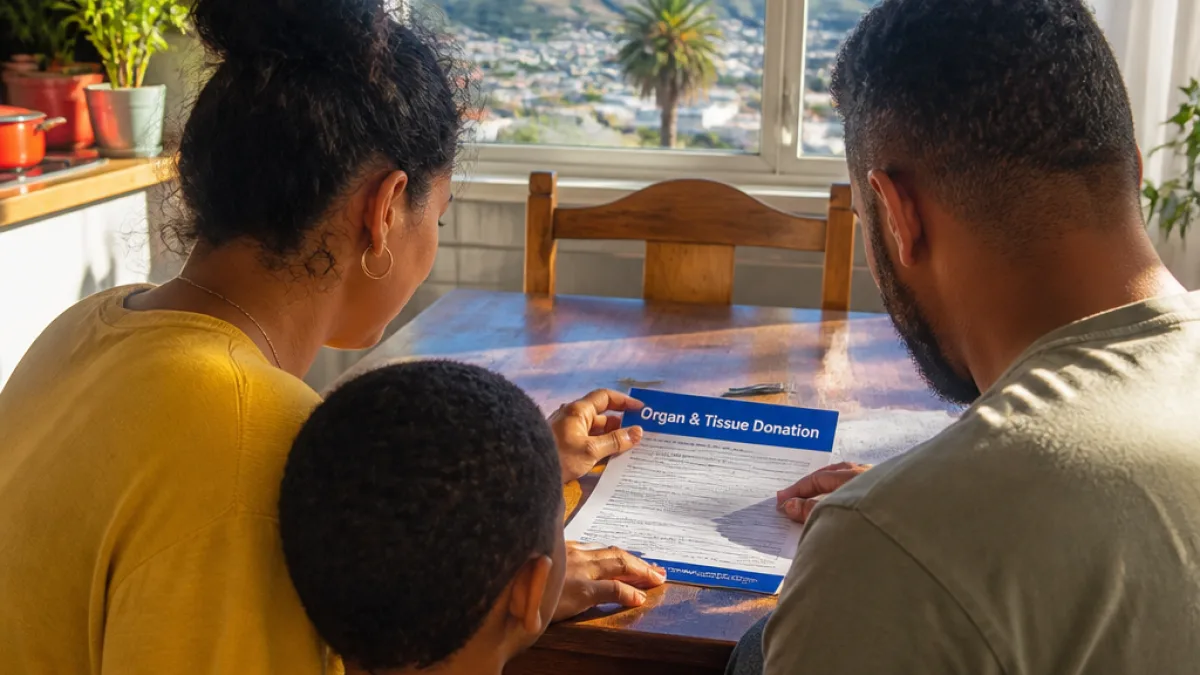
The Western Cape Department of Health and Wellness is encouraging residents to talk openly with family members about organ and tissue donation during Organ and Tissue Donation Awareness Month, saying that having a clear conversation before illness or tragedy strikes can make life‑and‑death decisions easier for loved ones.
Why one conversation matters
Health officials note that many families confronted with the possibility of a deceased relative donating organs or tissue have never discussed the person’s wishes. For some families, the immediate question is whether their loved one would have consented:
“We don’t know.”
That uncertainty can be a barrier to donation. The department says discussing donation preferences in advance helps families make informed decisions during a traumatic time, and increases the chance that a deceased donor’s organs or tissues can be used to save or significantly improve other people’s lives.
Local context and history
The Western Cape has a long transplant history, including the world’s first human‑to‑human heart transplant at Groote Schuur Hospital in Cape Town in 1967. Organ and tissue donation and transplantation have been part of the province’s healthcare offering for decades and continue to provide life‑extending treatment options for people with organ failure.
Potential impact of a single donor
The department reminds residents that a single deceased donor can potentially assist several recipients, restoring health and enabling people to return to family life, education or work. For those on transplant waiting lists, donation can mean the difference between prolonged illness and a renewed quality of life.
- Discuss preferences with next of kin and include your wishes in advance care planning.
- Record decisions where possible and ensure family members know how to access them.
- Seek information from your healthcare provider about how donation works and which organs or tissues can be donated.
What donation can achieve
While the department did not publish statistics in its awareness message, it emphasised qualitative outcomes: transplantation can allow recipients to return home, continue schooling or employment, reach life milestones and have more time with loved ones.
| Organ / Tissue | Typical benefit to recipient |
|---|---|
| Kidney | Restores kidney function, may remove need for dialysis |
| Liver | Treats liver failure, can be life‑saving |
| Heart | Replaces failed heart function, improves survival |
| Tissue (e.g. cornea, skin) | Improves vision, aids wound healing and reconstruction |
Practical steps for families in the Western Cape
Health officials advise that residents should:
- have a straightforward conversation with next of kin about whether they would be willing to donate;
- consider recording their wishes in a formal advance directive or telling their healthcare provider;
- carry information about emergency contacts and medical directives to make the process smoother if an unexpected death occurs.
The department’s appeal is framed as a public‑health and humane measure: organ and tissue donation is not only a clinical intervention but also an act that can offer families and recipients additional time together.
For Western Cape residents uncertain about the mechanics or ethics of donation, public hospitals and primary‑care clinics can provide information, and specialists at transplant centres — including Groote Schuur — can answer specific clinical questions. The awareness month offers a prompt to begin the conversation well before it is needed.
Clear communication with family members reduces the burden of decision‑making during grief and increases the likelihood that medically suitable organs and tissues can be used to benefit others.
Reporting from the Western Cape.












