
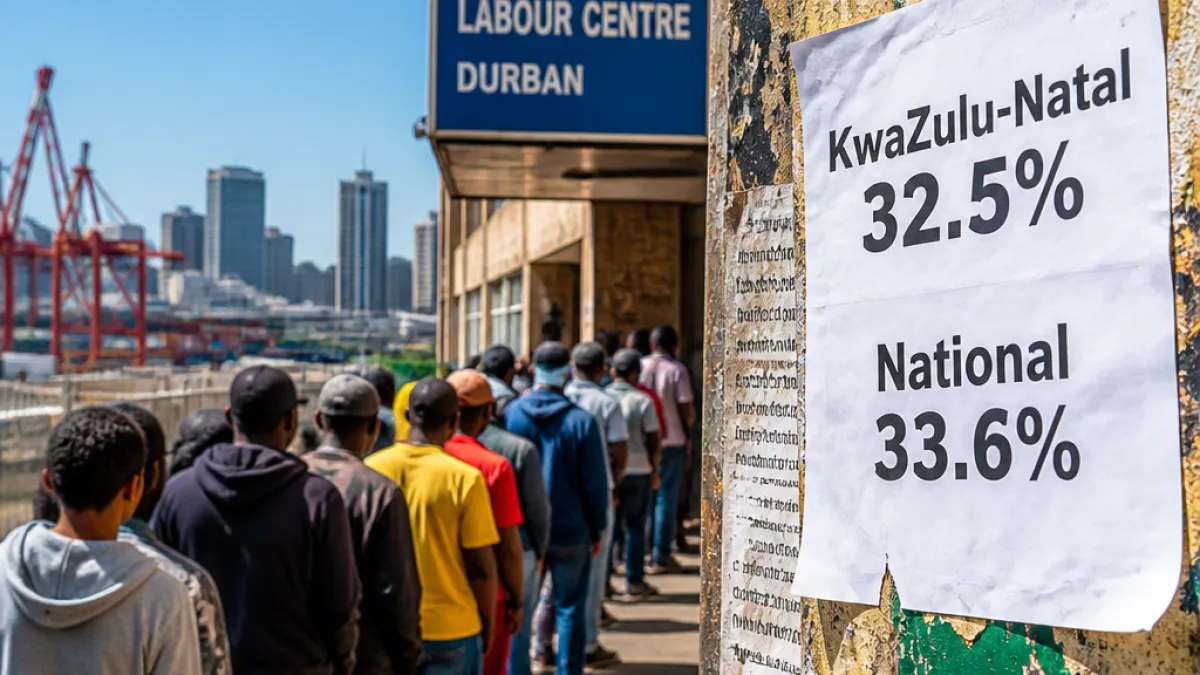
Durban. KwaZulu‑Natal’s unemployment rate rose to 32.5% in the second quarter of 2026, up 1.3 percentage points from the first quarter, according to the latest Quarterly Labour Force Survey (QLFS) released by Statistics South Africa.
Province records modest employment gains amid rising joblessness
The QLFS shows the province recorded 2.725 million employed people in Q2 — an increase of 3,000 from Q1 and 22,000 year‑on‑year. The numbers underline a mixed picture: more people in work compared with a year ago, but a larger share of the province’s economically active population is unemployed.
At metro level, eThekwini bucked the provincial trend by recording employment growth. The metro’s employed population rose from 1.259 million in Q1 to 1.290 million in Q2 — a gain of 30,000 jobs and 90,000 more than in the same quarter last year. eThekwini’s official unemployment rate stood at about 21.2% in Q2.
National context: rising joblessness across South Africa
Nationally, the QLFS reports an increase in the official unemployment rate to 33.6% in Q2 2026, up from 32.7% in Q1. The number of unemployed people rose by 345,000, taking the total to about 8.5 million.
The survey highlights diverging trends in the country’s biggest economic centres. While Cape Town recorded a quarterly decline of 19,000 jobs, eThekwini experienced growth. Gauteng’s employment fell by 22,000 between Q1 and Q2, and by 92,000 year‑on‑year; the province’s unemployment rate remained high at 33.5%.
- KwaZulu‑Natal (Q2 2026): unemployment rate 32.5%; employed 2.725 million (up 3,000 from Q1)
- eThekwini: employed 1.290 million (up 30,000 QoQ; up 90,000 YoY); unemployment ~21.2%
- National: unemployment rate 33.6%; unemployed up by 345,000
What the figures mean locally
For KwaZulu‑Natal the rise in the unemployment rate despite small employment gains signals that more people are actively seeking work. The labour market can appear to improve if employment grows faster than the working‑age population, but when the number of jobseekers grows faster than new jobs, the unemployment rate rises — a dynamic visible in the Q2 results.
The growth in eThekwini’s employment suggests concentrated job creation in the metro, likely tied to services, construction and municipal projects, but the broader provincial rise shows gains are not yet widespread. The gap between the metro’s unemployment rate and the provincial average highlights spatial inequality in access to work opportunities.
Implications for policy and households
Rising unemployment carries immediate consequences: more households under financial strain, greater demand for social relief, and pressure on municipal and provincial services. For local government the figures underline the need to scale up employment‑intensive programmes, support small businesses, and strengthen skills and training aligned to market demand.
For residents, the survey underlines the importance of available support and information. Those seeking work can register with their nearest public employment service, check municipal job opportunity notices, and explore accredited skills development programmes through sector‑specific training centres.
| Indicator | Q1 2026 | Q2 2026 |
|---|---|---|
| KwaZulu‑Natal employed | 2.722 million | 2.725 million |
| eThekwini employed | 1.259 million | 1.290 million |
| National unemployment rate | 32.7% | 33.6% |
Outlook
Statistics South Africa’s QLFS points to a challenging short‑term labour market: employment declines in some large provinces and rising national unemployment. For KwaZulu‑Natal the priority for policymakers is to translate metro gains into provincial job creation, particularly in rural and smaller urban areas where unemployment remains acute.
Provincial and municipal leaders, labour representatives and the private sector will be watching upcoming economic policy announcements and budget allocations closely for measures that could stimulate hiring. For households, the QLFS is a reminder that access to information about training, public works and business support programmes remains crucial.
Priya Govender is the KwaZulu‑Natal correspondent in Durban.













