
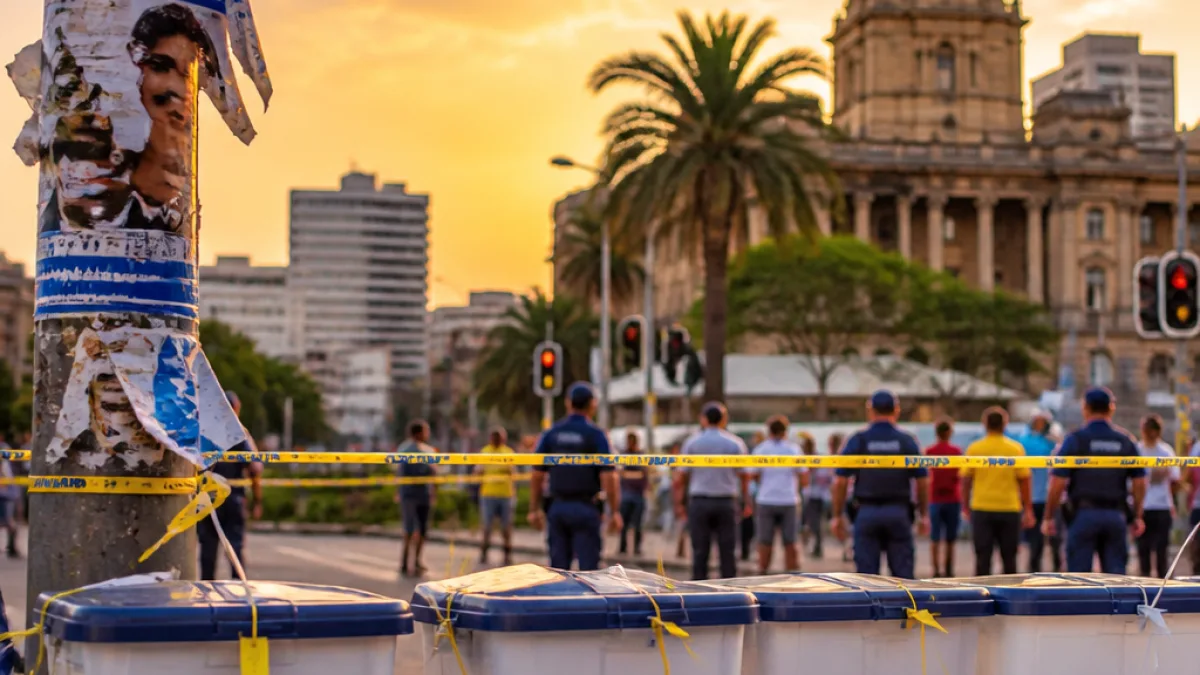
KwaZulu‑Natal Premier Thami Ntuli has appealed for calm after warning that political assassinations in the province have intensified as the 4 November local government elections approach, saying the ballot is a time to select leaders rather than fight for positions.
Premier flags eThekwini as epicentre
Speaking on Tuesday, Ntuli singled out the eThekwini metropolitan area as the province’s focal point for politically motivated killings. His remarks come amid growing concern that violence tied to local political competition could undermine the electoral process and deepen social tensions.
"The upcoming 4 November local government elections are a time for choosing leaders, not a season for squabbling over positions," said Premier Thami Ntuli.
The premier’s intervention follows increased public alarm about targeted killings linked to local political contestation. While Ntuli did not provide detailed numbers in his statement, his description of eThekwini as the epicentre underscores the scale of the problem in the metro that includes Durban and surrounding suburbs.
Impact on communities and the vote
Violence around candidate selection and ward contests can have chilling effects on voter turnout, community safety and delivery of municipal services. Residents in affected areas often face fear and disruption as tensions rise between rival political groupings during candidate nominations and campaigning.
Local councillors and aspirants commonly play visible roles in service delivery, dispute resolution and local governance. When the contests for these positions become violent, ordinary residents bear the cost — through intimidation, displacement, or interrupted municipal operations.
Security response and expectations
Provincial and municipal structures will be under pressure to ensure a safe environment for campaigning and voting. The South African Police Service (SAPS) is typically responsible for crime prevention and investigation, while independent electoral agencies oversee the integrity of the ballot.
Authorities have previously deployed additional policing resources in volatile areas during election cycles and have used specialised units to investigate politically linked violence. The premier’s appeal for peace is likely aimed both at preventing further bloodshed and at encouraging cooperation between political parties, communities and law enforcement.
- What residents can do: Report threats and suspicious activity to local police stations; keep evidence such as messages and photos; avoid confrontations; and remain alert during campaign events.
- What parties can do: Encourage candidates to reject violence, withdraw inflammatory rhetoric, and collaborate with independent bodies to police their ranks.
- What officials can do: Ensure rapid investigation of killings, transparent communication about safety measures, and visible policing in hotspots ahead of 4 November.
Why local elections matter
Local government polls determine who will run municipalities that deliver basic services — water, sanitation, refuse removal and local roads. For many communities in KwaZulu‑Natal, the post elected on 4 November will directly shape service delivery for the next five years. That centrality helps explain the intensity of competition at ward level and why disputes sometimes turn violent.
| Key date | Event |
|---|---|
| 4 November 2026 | Local government elections |
Calls for accountability
Ntuli’s plea for peace implicitly calls on political organisations to act against members who engage in violence. Holding perpetrators to account will require thorough police investigations and swift judicial action where evidence supports prosecution.
Civil society groups, faith leaders and community structures also play a role in calming tensions. In past election cycles, interventions by community elders and religious leaders have helped mediate local disputes and reduce the risk of violent clashes.
Looking ahead
With less than three months to go until the vote, the provincial administration and security agencies will need to balance visible deterrence with proactive prevention. For residents, the immediate priorities are personal safety and ensuring that the electoral process can proceed without fear of intimidation.
As the situation develops, further statements from provincial government, SAPS and electoral authorities are expected to outline specific measures to protect voters, candidates and election officials in KwaZulu‑Natal.
For now, the premier’s message is simple and stark: the ballot box is the place for political contestation, not the bullet or the blade.












