
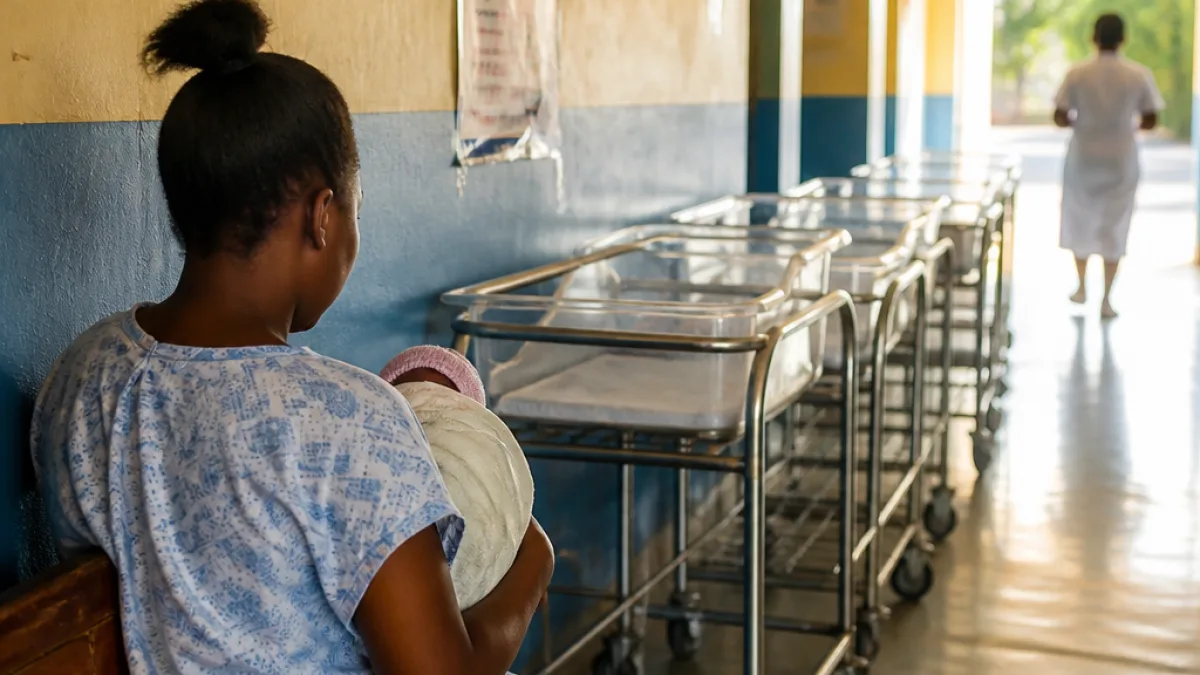
A survey commissioned by the DG Murray Trust and Embrace and conducted by Social Surveys Africa has found that an estimated 1.79‑million women who gave birth in KwaZulu‑Natal and Gauteng over the past 10 years experienced mistreatment during labour and delivery. The findings, released in March and analysed further this month, underscore long‑standing concerns about respect, dignity and safety in public maternity care.
What the numbers show
The study breaks the scale of the problem into stark daily terms: the estimated figure equates to roughly 490 women being mistreated every day across the two provinces over the decade under review. The survey also found that recognition and reporting of abuse are extremely low — only about a third of those who experienced mistreatment realised their treatment was wrong, and barely 7% went on to report it.
Health authorities have responded by preparing a training intervention aimed at shifting attitudes and practice in maternity settings.
“We wish to make it a mandatory course for not only midwives but all health service providers working in maternity settings because respectful care starts with attitude from all officials,” said Fikile Ndlovu, the deputy director general for maternal health.
Government training and its aims
The National Department of Health plans to launch an online course on the department’s Knowledge Hub on 22 September. The short course is structured into three lessons with embedded videos and takes about 3.5 hours to complete. The department has indicated it intends for the course to become mandatory for staff who work with pregnant women, including midwives, doctors and other personnel who come into contact with patients in maternity wards.
The department emphasises that respectful care includes everyone who interacts with mothers, from security staff and cleaners to clinical personnel.
- Make respectful maternity care training available on the Knowledge Hub.
- Require completion by a broad range of staff working in maternity settings.
- Use short, flexible modules with videos so staff can train at their own pace.
Local impact and context
For KwaZulu‑Natal the figures form part of a troubling pattern reported by women and advocacy groups: poor communication, lack of privacy, disrespectful language and sometimes physically rough treatment in labour. Because only a minority of women recognise the treatment as improper or lodge complaints, official records are likely to understate the problem.
The survey covered two provinces and cannot be extrapolated without adjustment to the rest of the country, but it does highlight how systemic the issue is where public maternity services are under pressure. Maternal health outcomes and patient experience are closely linked: disrespect and abuse during childbirth can discourage women from using formal health services for future pregnancies or for other care.
What this means for mothers and families
Women in KZN who experience poor treatment during childbirth may face long‑term consequences, including diminished trust in health services and psychological distress. Families who witness or learn of mistreatment can be deterred from seeking care, potentially increasing risks for mother and baby. The planned training is aimed at improving staff attitudes and behaviours — a necessary, though not sufficient, measure alongside staff resourcing and facility upgrades.
| Metric | Value |
|---|---|
| Estimated women mistreated (KZN + Gauteng, last 10 years) | 1.79‑million |
| Estimated women mistreated per day | 490 |
| Proportion who recognised treatment as wrong | ~33% |
| Proportion who reported mistreatment | 7% |
| Training launch (Knowledge Hub) | 22 September; 3 lessons, ~3.5 hours total |
Next steps and what to watch for
Implementation and oversight will determine whether the online course reduces mistreatment in practice. Key questions remain: will completion be enforced and tracked; will non‑clinical staff such as security and cleaners be included; and will the training be accompanied by measures to improve staffing levels, supervision and accountability in maternity wards?
Advocacy groups and researchers say that training must be part of a broader package that includes strengthening complaint mechanisms, improving staffing and infrastructure, and ensuring independent monitoring so that women who experience abuse can seek redress.
The survey’s publication has pushed respectful maternity care back onto the agenda. For many women in KwaZulu‑Natal, the coming months will show whether policy pronouncements translate into safer, kinder childbirth experiences on the ground.












