
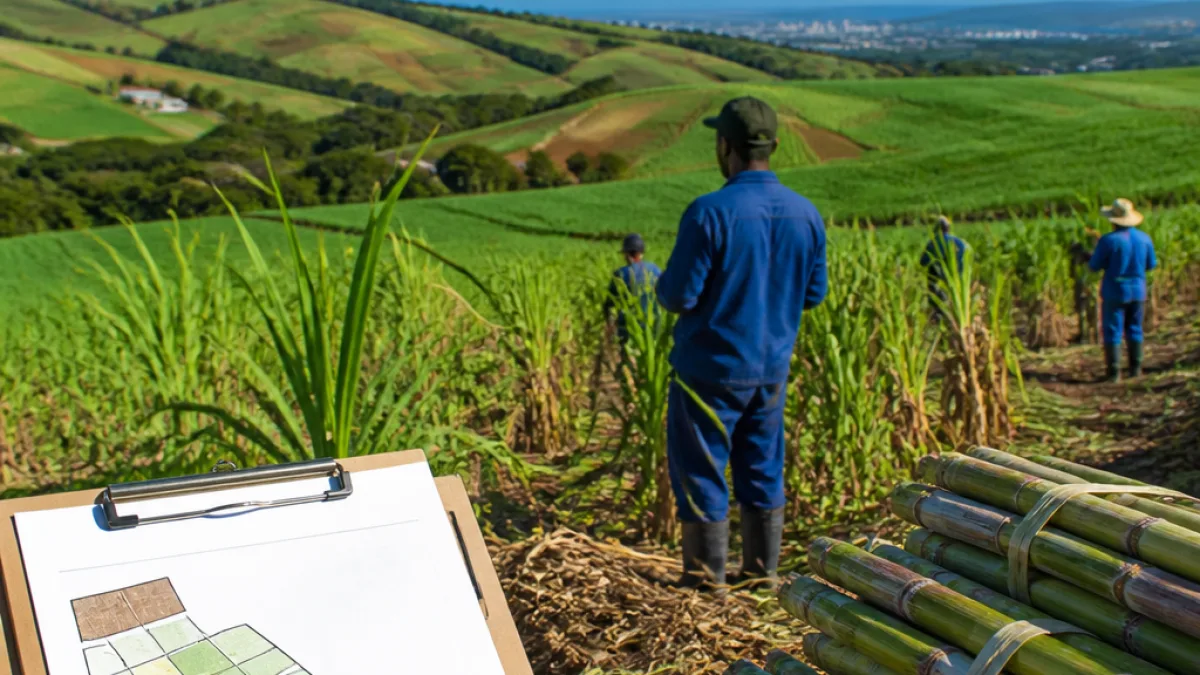
About 25,653 small‑scale sugarcane growers in South Africa play an outsized role in rural economies of KwaZulu‑Natal and Mpumalanga, but many are producing well below potential, a six‑year study has found.
Research maps barriers to higher yields
The research, led by senior entomologist Lawrence Nkosikhona Malinga at the South African Sugarcane Research Institute, was done in collaboration with the provincial Department of Agriculture and Rural Development, the South African Farmers Development Association and South African Canegrowers. It sets out clear, actionable reasons why smallholder productivity lags and points to interventions that could raise profitability and strengthen rural livelihoods.
According to the study, the country’s small‑scale sugar sector supports more than a million livelihoods through its agricultural and milling operations and sustains roughly 65,000 direct and 270,000 indirect jobs. Yet growers face multiple constraints that limit output, reduce margins and blunt the sector’s contribution to rural economic development.
Four interlinked problems
The project identified several problems that go beyond simple access to technical advice. Most prominent are:
- Weed pressure: incorrect herbicide choice, wrong dosages, late or insufficient applications and the cost of chemicals mean many growers manage weeds only after they appear rather than preventing them.
- Poor planning systems: weak crop management planning undermines timely operations and increases costs.
- Contractor dependence: reliance on external contractors for key tasks can reduce growers’ control over timing and quality of operations.
- Limited access to seedcane and technical support: shortages of good quality seedcane and patchy extension services constrain productivity gains.
Each of these factors interacts with others. For example, insufficient planning can increase reliance on contractors and raise the likelihood of late herbicide application, which in turn exacerbates weed competition for water, nutrients and sunlight.
Why weeds matter
Weed control emerged as a particularly damaging constraint. Poor control reduces cane growth while labour and input costs remain high. The report warns that incorrect dosing and ineffective application of herbicides can also drive herbicide resistance — a technical challenge many growers are not familiar with.
Because financial pressures often lead growers to underapply chemicals or delay application, weeds frequently gain a foothold. The consequence is lower yields per hectare and diminished farm profitability.
Lessons for support programmes
Rather than a single fix, the researchers recommend a combination of measures aimed at strengthening planning, improving access to quality inputs and building farmer knowledge. The study emphasises that education levels and language differences affect how growers receive and use technical guidance, so extension services must be adapted accordingly.
| Constraint | Effect |
|---|---|
| Weed pressure | Lower yields; higher costs; risk of herbicide resistance |
| Poor planning | Untimely operations; increased contractor reliance |
| Contractor dependence | Loss of control over timing/quality; variable costs |
| Limited seedcane & support | Poor establishment; limited adoption of best practices |
The research team notes the importance of tailoring interventions to local conditions and capabilities. Simple improvements in planning and timing, combined with better access to seedcane and focused extension support, could yield meaningful gains without necessarily requiring large capital outlays.
What this means for KZN growers
KwaZulu‑Natal growers are embedded in regional milling networks and local economies; improvements at farm level would ripple through employment and household incomes. The study’s findings give provincial agriculture departments, grower associations and development agencies a clearer set of priorities for supporting smallholders.
Practical next steps the research implies include strengthening extension services with materials in local languages, training on herbicide selection and dosing, coordinated seedcane distribution and fostering grower cooperatives to reduce contractor dependence and improve bargaining power.
For farmers in KZN, these are not abstract recommendations. They relate directly to daily decisions about planting, weed control and whom to call when a key operation must be done on time. Implemented carefully, the study suggests such changes could help unlock higher productivity across the region’s smallholder sugar sector.
Reporting from Durban, this analysis highlights where policy and industry support could most effectively raise yields and protect the livelihoods of thousands of rural households in KwaZulu‑Natal.













