South Africa has reaffirmed its commitment to stronger collaboration with fellow BRICS countries to advance science, technology and innovation, the Department of Science, Technology and Innovation (DSTI) said on Tuesday.
Commitment made at BRICS ministerial meeting
Deputy Minister of Science, Technology and Innovation Dr Nomalungelo Gina made the pledge while addressing the BRICS Science, Technology and Innovation Ministerial Meeting in Chennai, India. South Africa welcomed the unanimous adoption of the Chennai Declaration, which sets out a framework for deeper cooperation on scientific and technological matters among BRICS members.
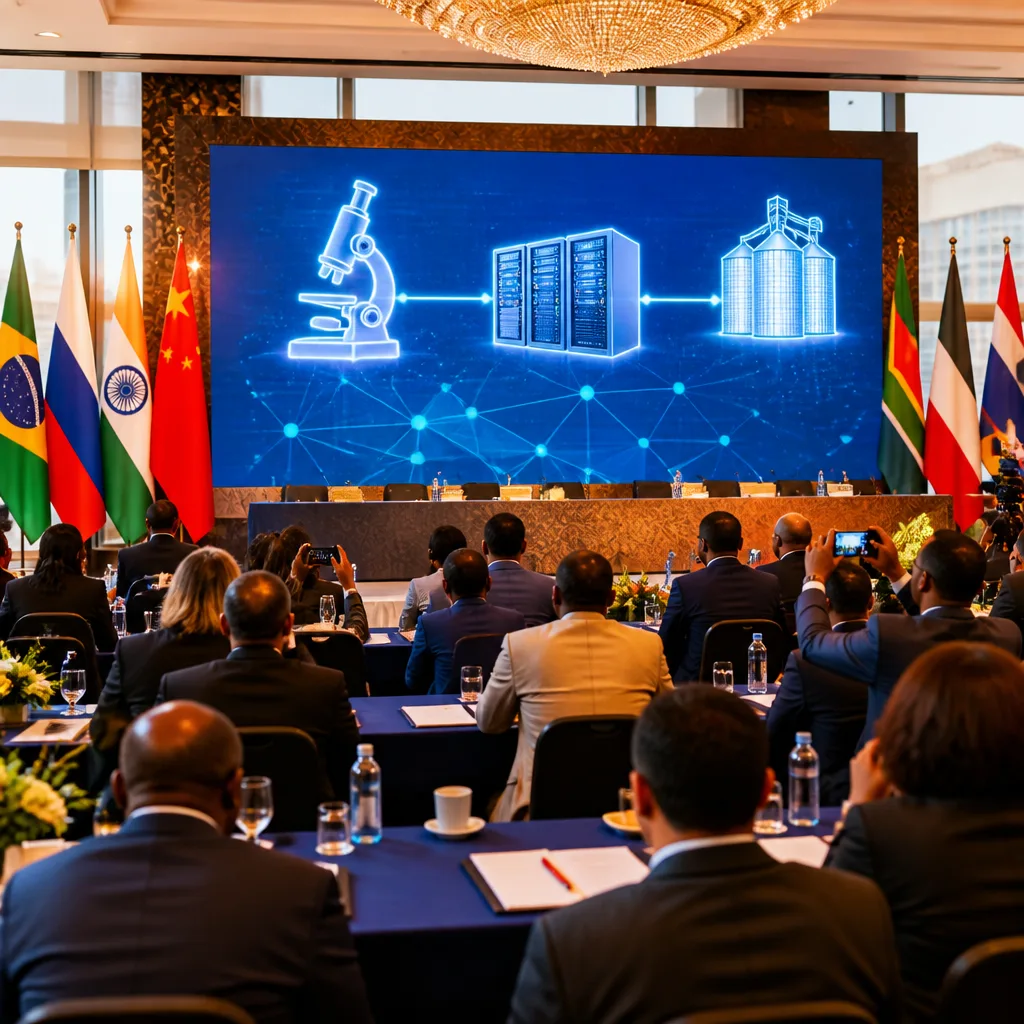
The department highlighted two initiatives that emerged from the meeting: the operationalisation of the BRICS Global Research Advanced Infrastructure Network (BRICS GRAIN) and the proposal for a BRICS Science and Research Repository. According to the DSTI, both projects aim to improve access to research infrastructure, facilitate knowledge exchange and promote collaborative research across member states.
What these initiatives mean
At face value, BRICS GRAIN and a shared research repository are designed to tackle common constraints faced by researchers in middle-income and emerging economies: limited access to large-scale equipment, fragmented data and barriers to cross-border collaboration. The DSTI said South Africa will work with partners to translate the ministerial commitments into practical programmes that support scientific excellence, emerging technologies, innovation and inclusive development.
Officials did not provide timetables or funding details in the statement. But if implemented, the initiatives could affect how South African universities, science councils and firms access advanced facilities and datasets, potentially lowering the cost of participating in high-end research projects and allowing greater cross-border collaboration on shared challenges such as climate resilience, public health and industrial innovation.
- Chennai Declaration: a ministerial agreement to deepen BRICS cooperation in science and technology.
- BRICS GRAIN: proposed network to improve access to advanced research infrastructure among BRICS members.
- BRICS Science and Research Repository: envisaged platform for sharing research outputs and data.
Practical questions remain
The announcement raises several practical questions for South Africa's research ecosystem. Who will manage access to shared facilities? How will costs be apportioned between nations and institutions? Will South African researchers be given priority for time on specialised equipment, or will access be merit-based across the BRICS grouping? The DSTI committed to working with partners to turn the declaration into concrete programmes, but details remain to be announced.
For South African researchers and technology firms, the potential benefits include expanded access to expensive equipment and large datasets and broader collaborative networks. For government and funders, the challenge will be aligning national research priorities with multinational projects and ensuring equitable benefit for local talent and innovation-led jobs.
Why it matters for South Africa
South Africa has long argued that collaboration — regional and international — is essential to build resilient research capacity. Shared infrastructure can be particularly valuable for middle-income countries where duplicating high-cost facilities is impractical. The DSTI underlined that the department remains committed to working with BRICS partners to ensure the ministerial commitments produce tangible programmes that advance emerging technologies, innovation and inclusive development.
The next steps will likely involve technical working groups, memoranda of understanding and consultations with universities, science councils and industry representatives to shape access rules, governance arrangements and possible financing models.
For now, the Chennai meeting has delivered a political signal: BRICS members have agreed to aim for deeper scientific cooperation. The hard work of turning that signal into accessible research infrastructure and equitable collaboration has only just begun.