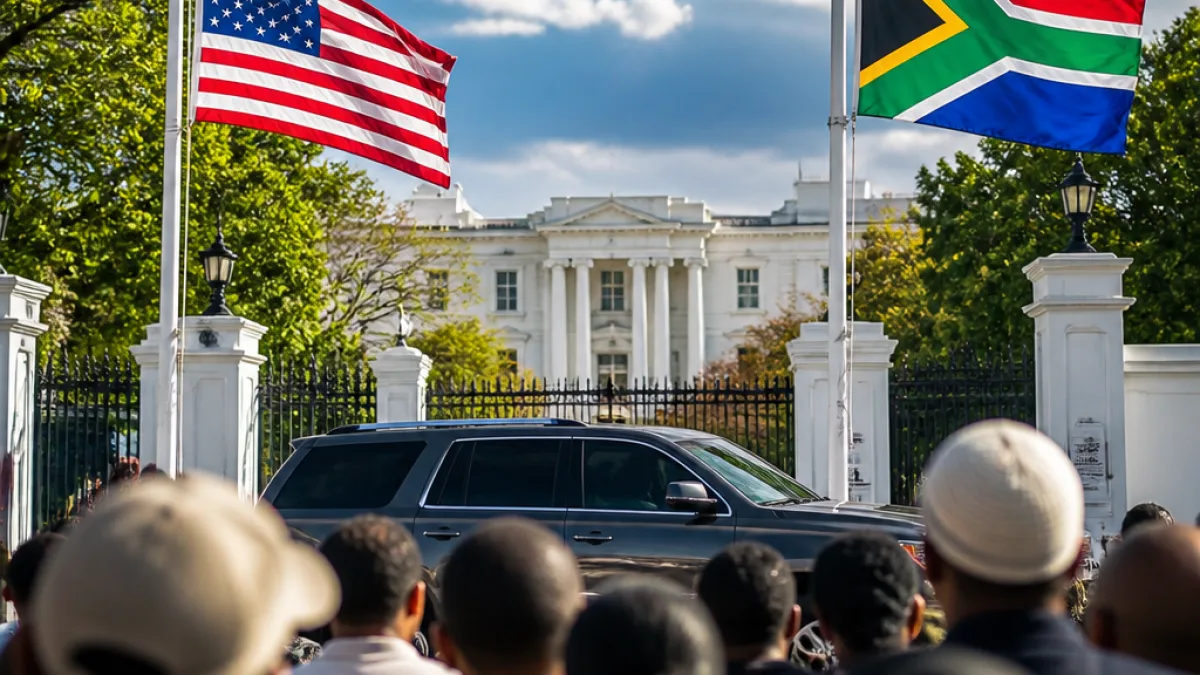
Pressure is mounting on the South African government to consider declaring United States Ambassador Leo Brent Bozell III persona non grata, following criticism of his public comments on the country’s domestic affairs and foreign policy.
The controversy has drawn opposition from the African National Congress (ANC), the Economic Freedom Fighters (EFF) and a parliamentary committee. Critics have accused the ambassador of crossing diplomatic boundaries by commenting on South Africa’s legislation, judicial decisions and international relations.
ANC warns against foreign direction
ANC national spokesperson Mahlengi Bhengu-Motsiri said no foreign diplomat had the authority to instruct South Africans on how the country should be governed. She said the ambassador’s statements raised concerns about diplomatic protocol and the principle that sovereign states should not interfere in one another’s internal affairs.
“No foreign representative has the authority to dictate to the South African people how their country should be governed,” Bhengu-Motsiri said.
The ANC’s position adds political weight to calls for Pretoria to assess whether Bozell’s conduct is compatible with the responsibilities of diplomatic office. The available information does not indicate that the government has decided to expel the ambassador or formally declared him persona non grata.
EFF links dispute to US visa restrictions
The EFF has also condemned Washington’s position. Its spokesperson, Sinawo Thambo, was responding to the latest United States announcement of visa restrictions against unnamed South African officials. The party said the measure amounted to an attempt to punish South Africa for pursuing an independent foreign policy and implementing policies intended to address inequalities inherited from colonialism and apartheid.
Thambo said the EFF believed South Africa should determine its own domestic and foreign policy without receiving instructions from another country. The party accused the United States of using its diplomatic and economic influence to intervene in South African affairs.
- ANC: questioned whether the ambassador’s public statements were consistent with diplomatic responsibilities.
- EFF: rejected the US visa restrictions and accused Washington of targeting South Africa’s independent policy choices.
- Government position: no decision to declare the ambassador persona non grata has been provided in the available information.
A broader sovereignty dispute
The dispute reflects a wider argument over the limits of diplomatic engagement. Foreign ambassadors routinely communicate their governments’ positions, but their public comments can become politically sensitive when they concern national legislation, court decisions or a host country’s foreign-policy choices.
In this case, the criticism has moved beyond one party or institution. The ANC, the governing party, and the EFF, an opposition party, have both objected to what they regard as unacceptable pressure from Washington. A parliamentary committee has also criticised Bozell’s comments, according to the available report.
The issue is further complicated by the United States’ decision to impose visa restrictions on South African officials whose identities have not been disclosed in the available information. The measure has intensified accusations that Washington is using its international influence to pressure Pretoria over domestic and foreign-policy decisions.
Declaring a diplomat persona non grata is a serious step in international relations. It would signal that the host government no longer accepts the diplomat’s presence, but the source content does not set out whether such a recommendation has formally reached the President, the Department of International Relations and Cooperation or another government authority.
For now, the confrontation remains centred on public criticism and demands for a stronger official response. The key unresolved questions are whether Pretoria will act against the ambassador, seek a diplomatic explanation from Washington, or allow the dispute to continue through political statements and existing diplomatic channels.