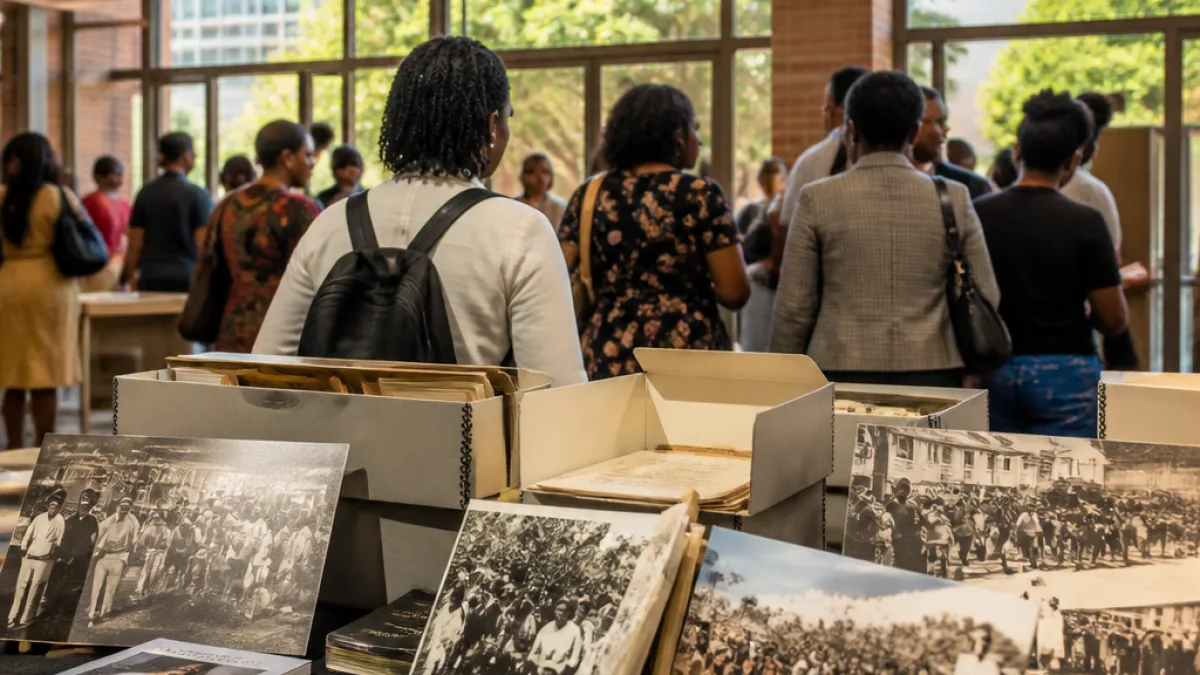
Bloemfontein is hosting a two-day gathering focused on the future of African liberation heritage, with academics, heritage practitioners and other stakeholders expected to consider how museums and archives can better serve communities in a changing society.
The fifth African Liberation Heritage Indaba is being held on 28 and 29 October 2026 at the University of the Free State’s South Campus. It is being convened by the Nelson Mandela Museum in partnership with the university’s Department of History, the Centre for Gender and Africa Studies, and the Free State Department of Sport, Arts, Culture and Recreation.
The programme is scheduled to be opened by Free State MEC for Sport, Arts, Culture and Recreation Ntombizanele Beauty Sifuba. The gathering takes place during a period in which the life and contribution of Oliver Reginald Tambo are being commemorated, adding a liberation-history focus to discussions about the role of heritage institutions in present-day South Africa and the wider continent.
Reconsidering the role of museums
This year’s central theme is “Re-imagining our heritage institutions for a new era.” The organisers’ stated objective is to explore ways of turning museums and archives into more innovative, inclusive and accessible spaces capable of reaching new audiences.
That discussion places the emphasis not only on the preservation of historical material, but also on how the public encounters and understands that material. The programme is intended to create space for participants to exchange knowledge and develop ideas aimed at strengthening the role of heritage institutions in social transformation and education.
The issues to be considered during the indaba include:
- Protecting family histories and considering how heritage institutions can preserve and present those legacies;
- Modernising museums and related institutions so they remain relevant centres of knowledge;
- Expanding economic inclusion and examining how heritage can support social and economic development;
- Improving community participation in the interpretation and sharing of history; and
- Using heritage work to promote social cohesion and respond to current societal challenges.
Local institutional partnership
The Bloemfontein event brings together provincial government and university structures with the Nelson Mandela Museum. That partnership gives the indaba both a public-sector and academic dimension, while its subject matter is rooted in the preservation and interpretation of Africa’s liberation history.
The University of the Free State’s involvement also places teaching, research and the public understanding of history at the centre of the discussions. The participating departments and centre are positioned to contribute academic perspectives, while the provincial department provides a government and cultural-policy connection.
The organisers describe the event as a forum for sharing ideas rather than a celebration limited to the past. Its stated focus is on how heritage institutions can respond to contemporary needs, involve the public more actively and contribute to nation-building. Those priorities are reflected in the programme’s attention to education, accessibility, community engagement and social responsibility.
Key details
| Item | Information |
|---|---|
| Event | Fifth African Liberation Heritage Indaba |
| Dates | 28 and 29 October 2026 |
| Venue | University of the Free State South Campus, Bloemfontein |
| Theme | Re-imagining heritage institutions for a new era |
| Opening official | Free State MEC Ntombizanele Beauty Sifuba |
For Bloemfontein, the indaba provides a local platform for debate on how historical institutions can remain meaningful to present and future audiences. Its organisers are using the gathering to connect liberation heritage with questions of education, inclusion, public participation and social responsibility.
The two-day programme is therefore expected to examine both the custodial responsibilities of museums and archives and their potential to become more active spaces for learning, dialogue and social cohesion. The discussions will centre on developing ideas that can strengthen the transformative and emancipatory purpose of heritage institutions.