Air quality index shows moderate pollution; PM2.5 exceeds WHO annual guideline
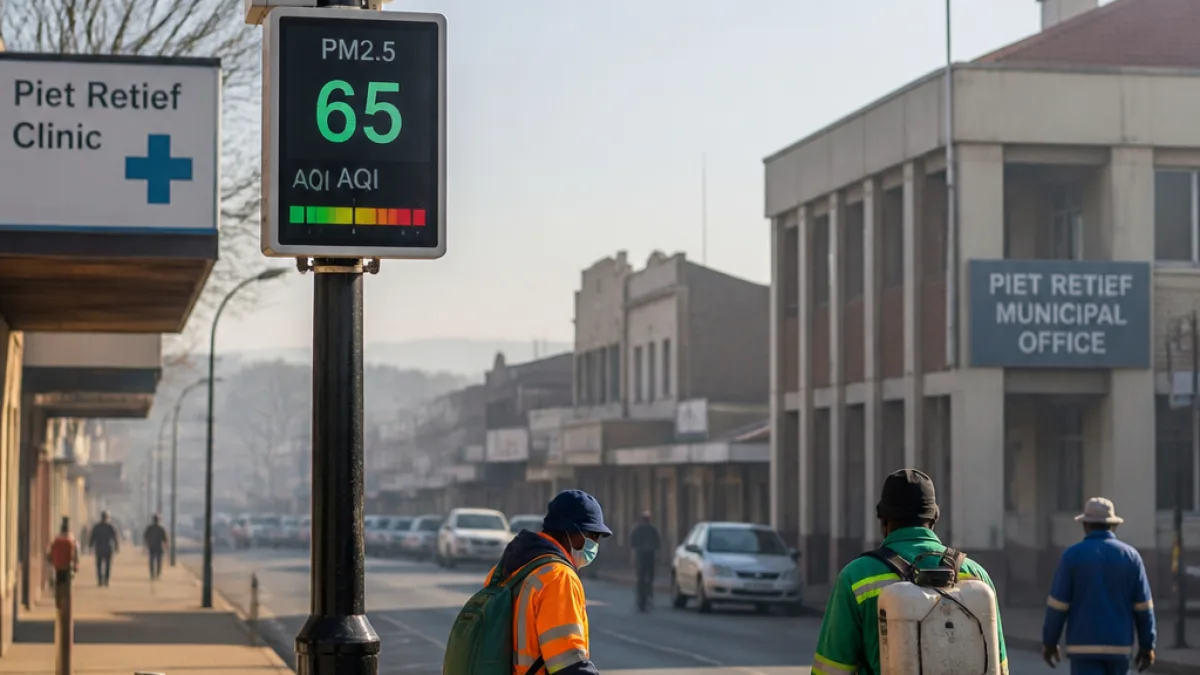
Real‑time air quality measurements for Piet Retief indicate levels that local residents and health services should note. According to IQAir, the city’s particulate matter (PM2.5) concentration is currently more than 3.6 times the World Health Organization (WHO) annual PM2.5 guideline value, while hourly Air Quality Index (AQI⁺ US) readings sit in the moderate band.
"PM2.5 concentration is currently 3.6 times the World Health Organization annual PM2.5 guideline value," IQAir reported.
The platform shows short‑term readings around an AQI of 65–67, with the site listing forecast values and weather conditions for the coming days. Today’s reported AQI is 65, with a high of 22°C, a low of 9°C, winds around 12 km/h and relative humidity near 47%. The two‑day forecast in the IQAir data lists an AQI of 61 for Monday and 58 for Tuesday.
What the numbers mean locally
An AQI in the mid‑60s falls into the moderate category. That means most people can continue typical outdoor activities, but those who are particularly sensitive — including young children, older adults and people with existing respiratory or cardiovascular conditions — may experience mild effects and should consider reducing prolonged or heavy exertion outdoors.
Fine particulate matter (PM2.5) is of particular concern because the tiny particles can penetrate deep into the lungs and enter the bloodstream. Local clinics and community health workers should be aware of the heightened PM2.5 figure flagged by IQAir and advise vulnerable patients accordingly.
Practical precautions for residents and visitors
- Avoid heavy outdoor exercise during peak pollution hours if you are sensitive to air pollution.
- Keep windows closed at times when PM2.5 and AQI readings are higher, particularly overnight if local readings rise.
- People with asthma or chronic lung disease should have reliever medication accessible and follow individual care plans.
- Those working outdoors — including agricultural and construction workers — should monitor local readings and adjust work intensity where possible.
Forecast snapshot
| Day | AQI | High | Low | Wind | Humidity |
|---|---|---|---|---|---|
| Today | 65 | 22°C | 9°C | 12 km/h | 47% |
| Monday | 61 | 26°C | 6°C | 13 km/h | 45% |
| Tuesday | 58 | 30°C | 9°C | 13 km/h | 36% |
IQAir’s broader South African city ranking places towns in Mpumalanga and Gauteng among the more affected locations nationally. While Piet Retief is not at the top of that list, the elevated PM2.5 multiple relative to WHO long‑term guidance is a reminder that air quality can pose a quieter but persistent health risk in the region.
Local context and wider implications
Piet Retief sits in a part of the province where household combustion, agricultural burning, dust from rural roads and emissions transported from industrial areas can influence local air quality. For residents who rely on outdoor work and local tourism enterprises, periods of poorer air quality can reduce the comfort of outdoor activities and affect vulnerable visitors.
Monitoring from independent platforms such as IQAir supplements official sources and can help health practitioners, employers and municipal officials plan short‑term responses when readings rise. Local environmental and health authorities may wish to review the data and consider public advisories when PM2.5 levels remain above WHO guidance.
For up‑to‑date readings and hourly forecasts, IQAir provides real‑time monitoring information specific to Piet Retief. Residents should combine that information with local advice from clinics and the municipal health office to manage exposure, particularly for children, older adults and those with chronic health conditions.