
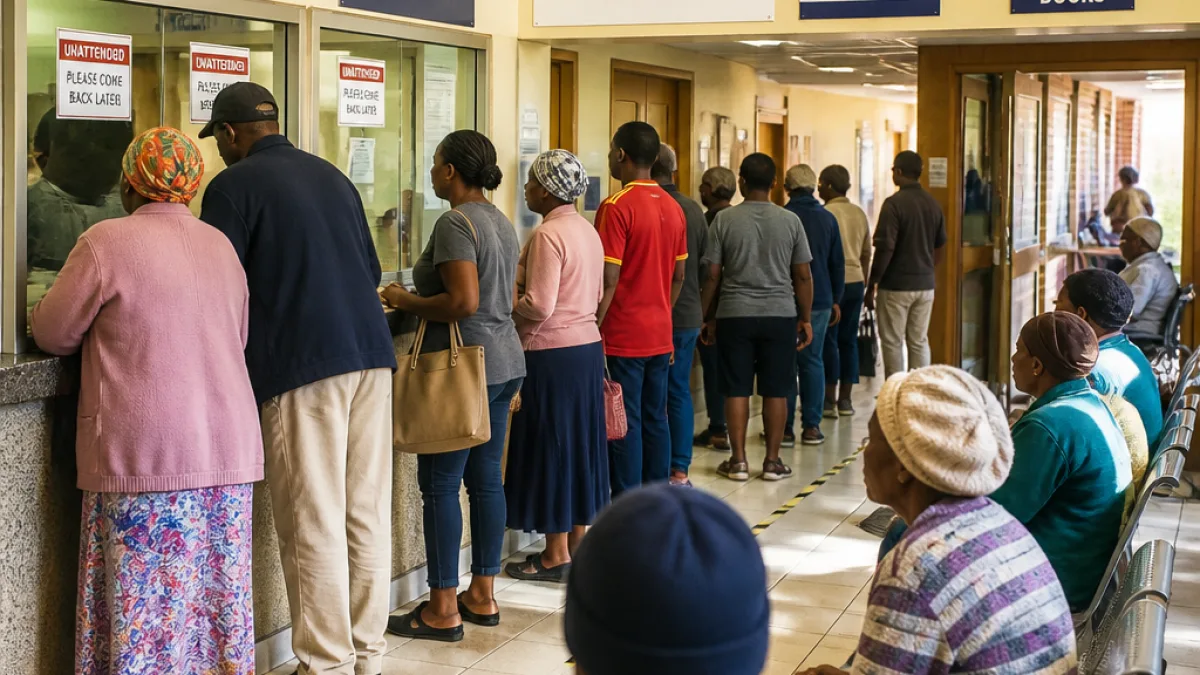
Rob Ferreira Hospital patients continue to endure lengthy delays to receive routine care despite recent repairs to infrastructure, according to reporting by Lowvelder and confirmation from the provincial Department of Health.
Repairs do not end queue problems
The Department of Health has confirmed that repairs to hot water systems and broken doors at the hospital have been carried out. However, patients and community members say that the more pressing problems remain in service delivery: long queues at file collection counters and the hospital pharmacy.
Those using the facility told Lowvelder they regularly arrive early in the morning only to wait several hours to collect files or medication. Many attribute the delays to a shortage of staff, with one account claiming that sometimes only a single official is available to serve more than 20 people.
What patients report
- File collection queues are often unattended for long periods, leaving patients waiting before they can see a clinician.
- Pharmacy waits of three to four hours are common; some patients said they were told to return the following day.
- Patients say elderly and those in pain are not consistently prioritised at collection points.
“They need to improve these departments. People cannot wait for hours at file collection before they can see a doctor, and then another three hours to collect medication,”
said Devon Brummer (63), who described long delays at the file counters and the pharmacy. Another patient, Nokuthula Mnisi (58), said she has to arrive by 05:00 to secure her place and still sometimes only receives her file after 10:00, before a further multi-hour wait at the pharmacy.
Reported wait times
Patients and community sources gave the following estimates of delays at the two problem areas:
| Service point | Typical wait reported |
|---|---|
| File collection | Up to 5 hours |
| Pharmacy | 3–4 hours (sometimes longer; patients told to return) |
Staffing and service concerns
Several patients described counters being left unattended at times when the queues were long, and staff taking breaks without apparent cover. They said clinicians inside consulting rooms try to expedite care, but bottlenecks at file collection and dispensing undermine that effort.
The hospital has been the subject of public scrutiny before: previous reports and a South African Human Rights Commission (SAHRC) report have highlighted worrying conditions. Community frustration centres on the perception that administrative and dispensing systems have not been corrected, even where building repairs have been completed.
Health department response and unanswered questions
The provincial Department of Health confirmed the completion of repairs to hot water systems and doors. It did not, in the material published, provide a detailed response on staffing levels at the file collection counters and pharmacy, or on plans to reduce waiting times.
Questions remain about whether the hospital has sufficient pharmacy staff on each shift, whether queue management or triage systems are in place to prioritise elderly and ill patients, and what short- and medium-term measures will be taken to address the repeated reports of multi-hour delays.
Impact on patients and the community
Lengthy waits at a regional hospital have practical consequences: missed work, increased travel costs, and the risk that patients with chronic conditions go without timely medication. For older adults and people with mobility or health challenges, spending most of a day waiting at multiple service points can be debilitating.
While infrastructure maintenance is important, patients’ accounts indicate that administrative and human-resource challenges are the current cause of the most severe disruptions to care at Rob Ferreira.
What patients can do
- Arrive early where possible and ask at reception about any priority queues for elderly or critically ill patients.
- Keep a record of long waits and incidents — dates and times — to support submissions to the hospital management, the district health office or the Health Ombud.
- Contact the hospital patient liaison or the provincial health department for formal complaints if problems persist.
Reporting by Lowvelder highlighted these concerns; the Department of Health confirmed the recent repairs but has not published a full plan to address the persistent service delays. The situation at Rob Ferreira Hospital remains a live health-service issue for Mbombela residents, and callers for more focused operational fixes are growing louder.












