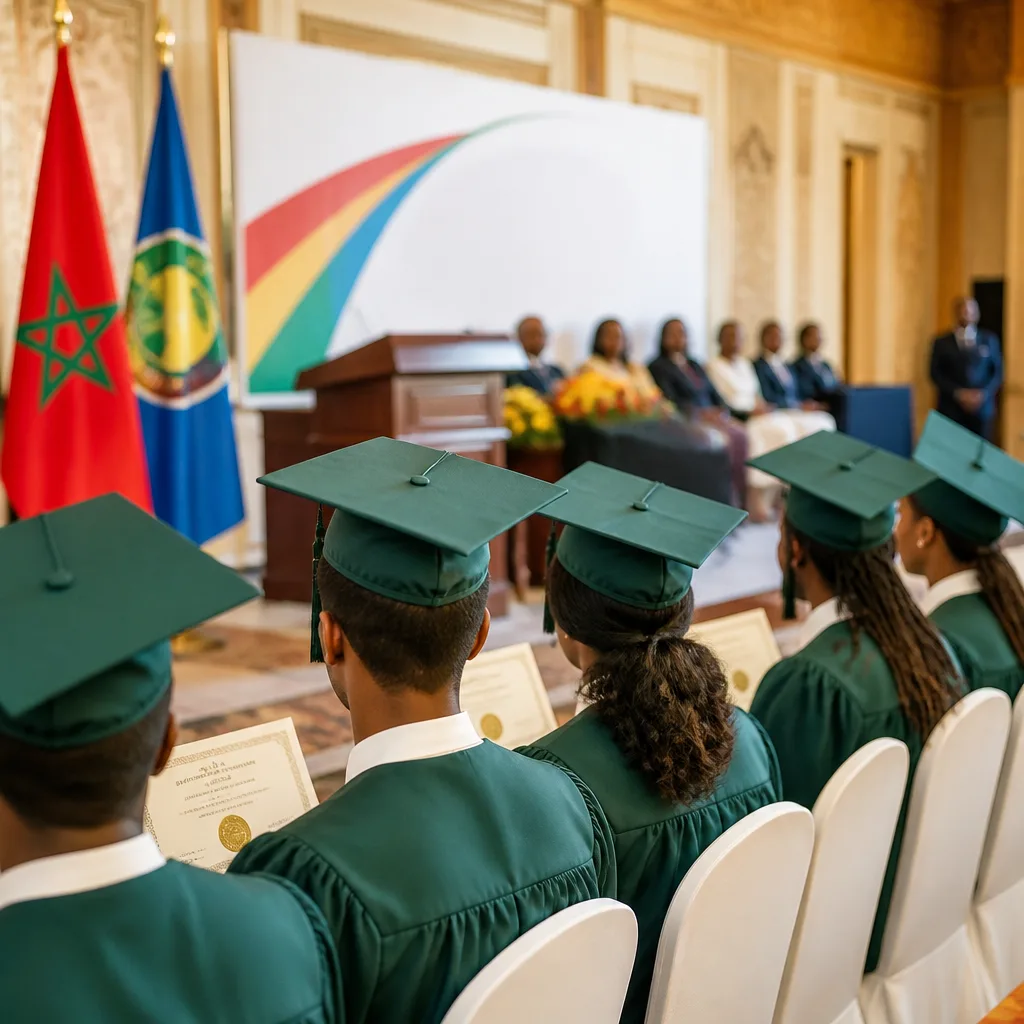
The Embassy of the Organisation of Eastern Caribbean States (OECS) in Morocco held its first graduate recognition and farewell ceremony in Rabat on Saturday, honouring 14 graduates and placing education and human-capital development at the centre of growing South–South cooperation.
Scholarship programme at the heart of ties
The event, hosted at the Rabat Marriott Hotel, gathered Eastern Caribbean graduates, diplomats, Moroccan institutional representatives and academic partners to mark the completion of studies while underscoring the broader strategic value of Morocco’s educational partnership with the OECS.
At the core of the relationship is Morocco’s scholarship initiative, which annually allocates 120 scholarships to students from OECS member states. The scheme gives young people from the Eastern Caribbean access to Moroccan universities and higher education institutions, offering study placements that reach beyond classroom learning.
- 14 graduates celebrated at the inaugural OECS Embassy ceremony in Morocco.
- 120 scholarships awarded each year by Morocco to OECS students.
- Cooperation extends to sectors including agriculture, health, renewable energy, water and fisheries, and skills development.
From classrooms to capacity-building
Organisers described the ceremony as more than an academic celebration: it was a public affirmation of a relationship increasingly built around knowledge transfer, institutional cooperation and solidarity between regions of the Global South. The partnership spans not only higher education but a range of practical areas for capacity-building.
The graduates recognised at the ceremony represent the human face of a diplomatic relationship that organisers say aims to translate scholarship access into broader development benefits. Areas identified as fields of cooperation include:
- Agriculture
- Health
- Renewable energy
- Water and fisheries
- Skills development and capacity-building
“It is a pleasure to welcome you to the 2026 Graduate Recognition and Farewell Ceremony, as we come together to celebrate our graduates and
The ceremony was presided over by Ian M. Queeley, Ambassador Extraordinary and Plenipotentiary of the Eastern Caribbean States to Morocco, who described the occasion as an important recognition of the determination that brought the graduates to their milestone.
Diplomacy through education
The event’s organisers framed the recognition as part of a deliberate diplomatic strategy: using scholarships and academic exchange to foster people-to-people ties and cultivate expertise that can be brought back to OECS member states. By training students in Moroccan institutions, the partnership seeks to support domestic development goals in the Eastern Caribbean through practical skills and institutional links.
For education planners and policymakers, the model highlights how scholarship programmes can serve multiple functions: expanding tertiary access for students from small states, creating technical expertise in priority sectors, and anchoring bilateral relations in long-term human-capital investments.
While the ceremony recognised a modest cohort of 14 graduates, officials stressed the wider reach of the scholarship scheme and its potential ripple effects across economies and public services in OECS member states. The Moroccan scholarships are positioned not only as individual opportunities but as inputs to capacity-building that may support areas such as food security, public health systems and renewable-energy deployment.
Implications for regional education policy
For South African education stakeholders, and those across the continent, the Morocco–OECS partnership offers a case study in South–South cooperation that leverages scholarship funding to meet labour-market and development needs. It underscores the importance of aligning scholarships with national and regional development priorities and of maintaining institutional links that allow returning graduates to share knowledge and translate training into local projects.
As diplomatic missions and education institutions increasingly frame scholarships as strategic tools, monitoring outcomes — such as graduates’ contributions to priority sectors and the sustainability of institutional partnerships — will be central to assessing the long-term value of such programmes.
| Metric | Value |
|---|---|
| Graduates recognised at ceremony | 14 |
| Annual scholarships provided by Morocco to OECS students | 120 |
The Rabat ceremony signalled a diplomatic emphasis on learners and practitioners as central to long-term cooperation. By showcasing graduates as ambassadors of shared learning, both sides underline the tangible human-capital outcomes that scholarship schemes can produce.