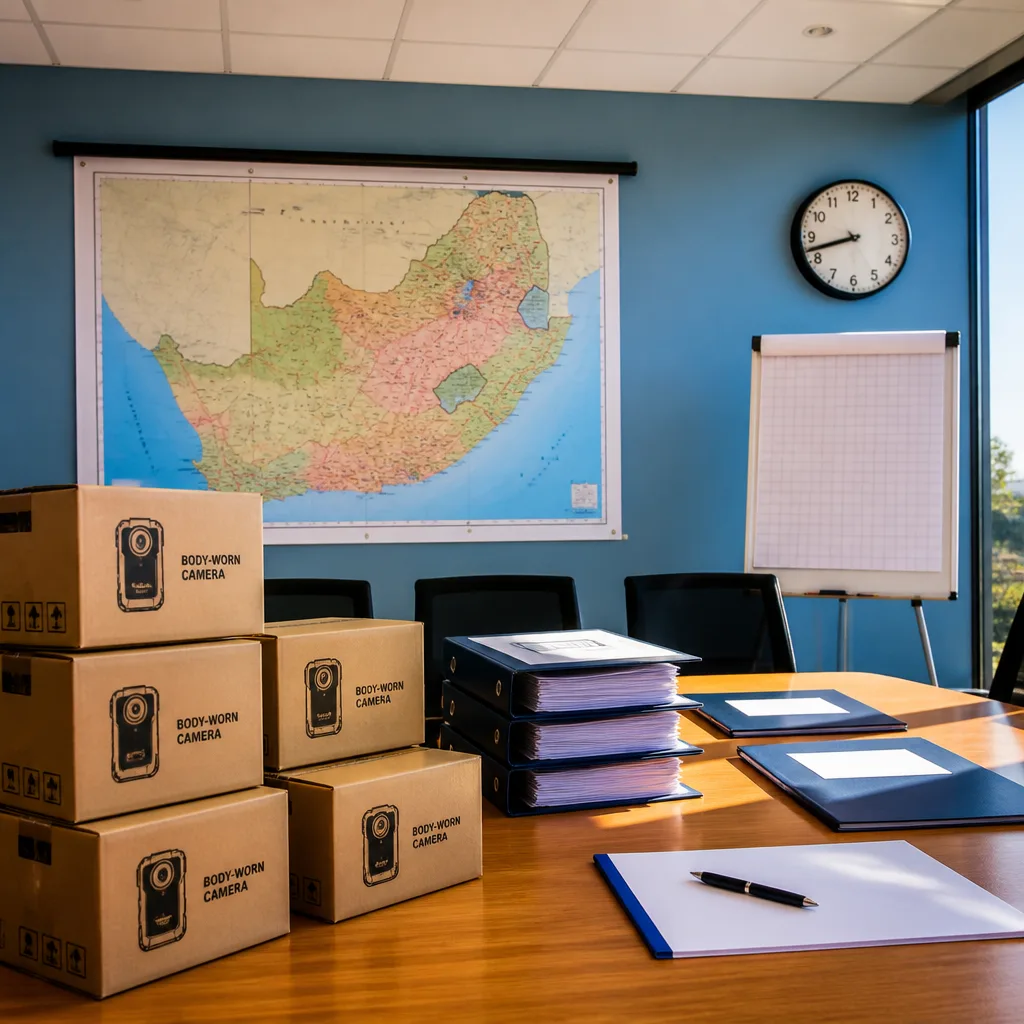
Police Minister Firoz Cachalia has accepted that the South African Police Service (SAPS) currently cannot provide a timetable for the planned national deployment of body‑worn cameras for officers.
Rollout remains without a firm schedule
The minister’s admission, reported on 12 August 2026, confirms that a long‑anticipated programme to equip officers with body cameras has not reached a stage where a national commencement date can be given. The announcement means that a policy widely seen as a tool for improving transparency and evidentiary standards in policing will remain in planning rather than in practice for the foreseeable future.
Accountability and evidence implications
Body‑worn cameras have been promoted by oversight bodies, civil society and policing advocates as a mechanism to bolster accountability, protect officers and members of the public, and provide contemporaneous records of interactions. With the national rollout on hold, those potential benefits remain unrealised at scale.
- No timeline has been committed for the national deployment.
- No confirmed start date means continued reliance on existing investigative and oversight tools.
- Operational, logistical and budgetary questions are likely still outstanding.
Unanswered operational questions
Details that typically shape a rollout—funding allocations, procurement approaches, training for officers, data storage and retention policies, and protocols for access to footage—were not provided alongside the minister’s admission. Without such specifics, provinces and stations cannot plan for equipment, connectivity or the administrative burden that comes with managing digital evidence.
| Aspect | Current status (as reported) |
|---|---|
| National timetable | None committed |
| Deployment status | Planning stage; no national rollout underway |
| Public details | Not disclosed in report |
Context: why timing matters
When implemented effectively, body‑worn cameras can assist prosecutors by providing contemporaneous footage of crime scenes and police‑public interactions. They can also be central to internal disciplinary enquiries and to resolving public complaints. The absence of a clear schedule therefore affects a range of justice and oversight processes.
Implementing such a system at national scale requires more than hardware: it typically involves policy development on when cameras must be switched on, privacy safeguards for bystanders, clear rules on retention and disclosure of footage in investigations and court proceedings, and budget provision for long‑term storage and management of digital files. The minister’s statement indicates those elements are not yet fixed for South Africa’s national programme.
Possible consequences and next steps
In the short term, provincial or station‑level experiments may continue, but without national coordination these will be fragmented. Civil‑society organisations, oversight institutions and affected communities are likely to press for clarified timelines and transparent procurement and policy plans.
For the SAPS, the absence of a committed schedule will also prolong uncertainty about training needs and future operational practice. For investigators and the courts, delayed deployment means continued reliance on traditional evidence‑gathering methods where contemporaneous video is unavailable.
Minister Cachalia’s admission places the body‑camera programme back into the policy and planning domain. Observers and oversight bodies will be watching for formal timelines, published policy frameworks and budgetary commitments that would move the project from intent to implementation.