
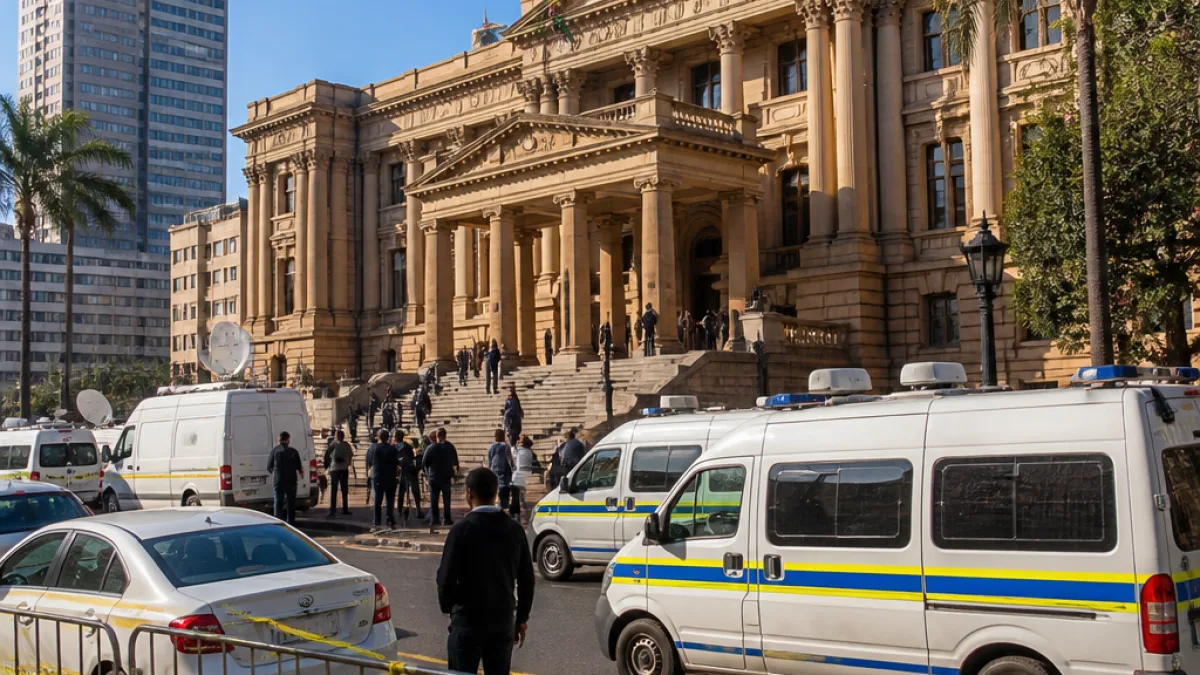
The Madlanga Commission has opened a new phase of its inquiry in KwaZulu‑Natal to investigate allegations that members of the South African Police Service operated so‑called "hit squads" that carried out extrajudicial killings while posing as a legitimate crime‑fighting Task Team.
Commission to focus on alleged organised killings
Commission spokesperson Jeremy Michaels said the fresh line of questioning will examine claims that these units targeted suspects linked to cash‑in‑transit (CIT) robberies, taxi operators and drug syndicates. Proceedings were due to resume on Wednesday morning, with the first witness in this phase expected to appear at 09:30.
"These ‘hit squads’ allegedly target suspects in cash‑in‑transit (CIT) robberies, as well as taxi operators and drug syndicates under the guise of a Task Team," Michaels said.
The commission has already heard testimony on alleged corruption, criminal networks and abuses of authority within law enforcement structures. This new investigation will seek to establish whether killings were carried out extrajudicially, who authorised such operations and whether they were concealed behind legitimate crime‑fighting operations.
Why this matters in KwaZulu‑Natal
KwaZulu‑Natal has a long history of politically linked violence, taxi‑related conflicts and organised crime. Allegations that some police members may have been involved in targeted killings touch on both the province's struggle with organised criminal networks and broader questions about state accountability and rule of law.
- Targets named by the commission: suspects linked to CIT robberies, taxi operators and drug syndicates.
- Alleged modus operandi: operations conducted under the guise of a Task Team.
- Immediate next step: first witness in the new phase to appear when proceedings resume at 09:30.
What the inquiry will examine
The commission will interrogate a range of issues including:
- whether police officers acted outside the law when carrying out operations described as targeting organised crime;
- links between law enforcement and organised criminal networks; and
- the chain of authorisation and any attempts to conceal unlawful killings as legitimate police work.
Evidence already presented to the commission has explored how criminal networks may have intersected with political and policing structures in the province. The current phase aims to determine the extent and mechanics of any alleged extrajudicial operations.
Local impact and public concern
For communities across Durban and other urban and rural parts of KwaZulu‑Natal, the allegations raise anxieties about the safety of citizens and the reliability of policing. If substantiated, claims of police‑led hit squads would require systemic reform within the SAPS and clearer oversight mechanisms to rebuild public trust.
| Area of concern | What the commission will probe |
|---|---|
| Use of force | Whether killings were lawful or extrajudicial |
| Chain of command | Who authorised Task Team operations |
| Criminal networks | Links between police members and organised crime |
The outcome of this stage could have wide repercussions: recommendations may lead to disciplinary action, criminal investigations or proposals for legislative and oversight changes.
What to watch for as proceedings continue
Observers and victims' families will be watching for the identity and testimony of witnesses, any documentary evidence linking police members to unlawful killings, and the commission's findings on authorisation and cover‑ups. The Madlanga Commission has already signalled that it will examine whether killings were concealed behind legitimate crime‑fighting operations.
As the inquiry progresses, affected communities and civil society organisations are expected to scrutinise how authorities respond to the commission's recommendations, and whether subsequent action will address the root causes of violence and impunity in the province.
Further testimony and developments in this phase of the inquiry are likely in coming days. The commission's hearings remain a critical forum for establishing facts about alleged abuses and for charting a path towards accountability in KwaZulu‑Natal policing.














