
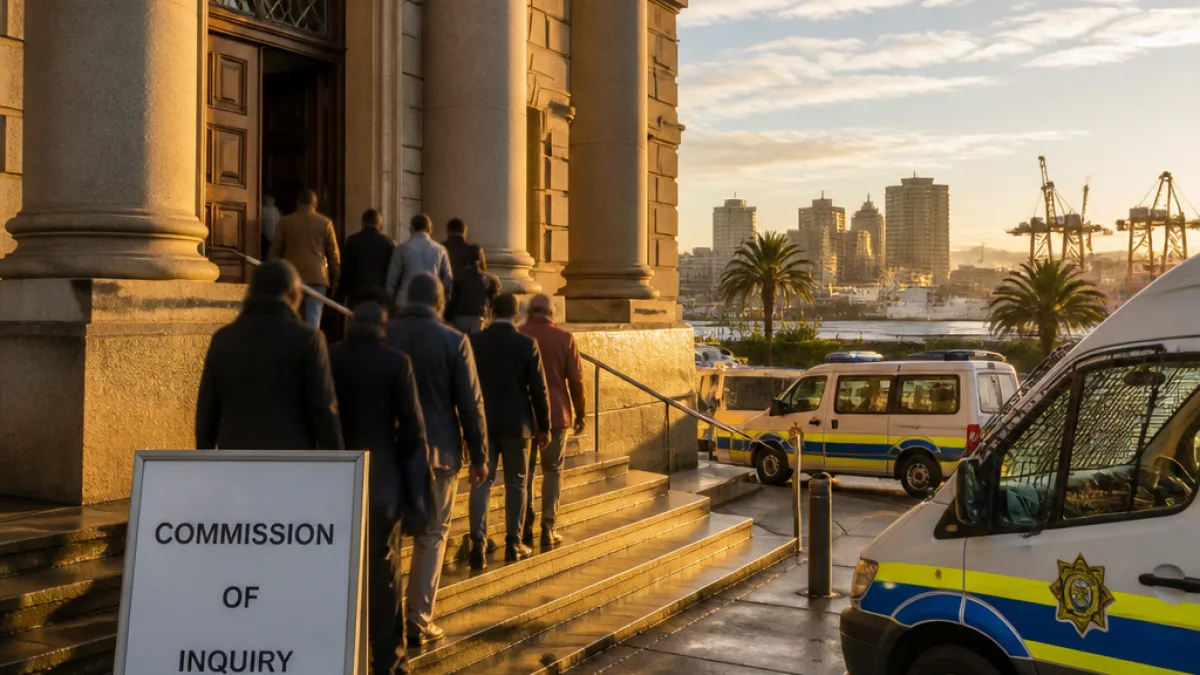
The Madlanga Commission will on Wednesday open a new line of inquiry into alleged police "hit squads" operating in KwaZulu‑Natal, with evidence expected to examine accusations of extrajudicial killings and other abuses allegedly carried out by members of the South African Police Service (SAPS).
New phase examines alleged Task Team operations
Commission spokesperson Jeremy Michaels confirmed the inquiry will investigate claims that units operating under the guise of a "Task Team" targeted people allegedly linked to cash‑in‑transit (CIT) robberies, taxi operators and drug syndicates. Proceedings are scheduled to resume at 09:30 on Wednesday, with the first witness in this phase expected to testify then.
“These ‘hit squads’ allegedly target suspects in cash‑in‑transit (CIT) robberies, as well as taxi operators and drug syndicates under the guise of a Task Team,” Michaels said.
The move brings fresh attention to long‑standing concerns about organised and politically connected violence in KZN, where assassinations, taxi‑industry bloodshed and targeted killings have repeatedly drawn scrutiny. The commission has already heard testimony about alleged corruption, criminal networks and abuses of authority within law enforcement structures; the new hearings aim to establish how far such operations reached and whether killings were concealed as legitimate crime‑fighting action.
What the commission will probe
The specific lines of inquiry in this phase are expected to include:
- Whether SAPS members operated in organised groups that carried out unlawful killings;
- Who authorised or oversaw such operations, if they occurred;
- Whether alleged actions were concealed behind legitimate crime‑fighting activities, such as Task Team mandates;
- Links between alleged squads, organised crime and political actors in the province.
So far, the commission has amassed evidence concerning criminal networks and allegations of state capture within law enforcement structures. This phase could broaden the probe from corruption and collusion to include direct human rights violations involving state actors.
Local context and significance
KwaZulu‑Natal has a complex history of violence that often intersects with politics, organised crime and transport industry disputes. Investigations that clarify whether state agents acted outside the law are likely to have far‑reaching implications for policing oversight, accountability mechanisms and community trust in the province.
Victims’ families, civil society organisations and political parties have long demanded thorough probes into politically linked assassinations and targeted killings. The Madlanga Commission’s findings could inform prosecutions, disciplinary action within the SAPS, and policy reforms to prevent abuse of official operations in future.
Practical detail for affected communities
Hearings are open to the public unless otherwise indicated. Members of the public and media planning to attend should check the commission’s schedule and directives; court bans, protective orders or witness protection arrangements may limit what is reported during live testimony. Those with specific information relevant to the inquiry are encouraged to use official channels set up by the commission to submit evidence.
Quick summary
| Allegation | Reported targets |
|---|---|
| Extrajudicial killings by alleged SAPS 'hit squads' | People linked to CIT robberies; taxi operators; drug syndicates |
The commission’s next testimonies will aim to establish who authorised any such operations, how they were carried out and whether deaths were misrepresented as lawful actions against criminals.
As the hearings progress, the inquiry may call further witnesses and examine documentation that could clarify chains of command and possible concealment of unlawful acts. The outcomes will be closely watched across KZN, where communities and political actors await clarity on whether state instruments were misused in the pursuit of criminal‑justice objectives.
Reporting from Durban.














